Notice: تابع WP_Block_Type_Registry::register به طورنادرست فراخوانی شد. نامهای نوع بلوک نباید حروف بزرگ داشته باشند. لطفاً برای اطلاعات بیشتر، اشکال زدایی در وردپرس را مشاهده کنید. (این پیام در نگارش 5.0.0 افزوده شده است.) in /home/ethicsho/public_html/wp-includes/functions.php on line 5313
Warning: Use of undefined constant TDC_PATH_LEGACY - assumed 'TDC_PATH_LEGACY' (this will throw an Error in a future version of PHP) in /home/ethicsho/public_html/wp-content/plugins/td-composer/td-composer.php on line 109
Warning: Use of undefined constant TDSP_THEME_PATH - assumed 'TDSP_THEME_PATH' (this will throw an Error in a future version of PHP) in /home/ethicsho/public_html/wp-content/plugins/td-composer/td-composer.php on line 113 بایگانیهای 3443 - خانه اخلاق پژوهان جوان Notice: Trying to access array offset on value of type bool in /home/ethicsho/public_html/wp-content/plugins/wp-ulike/inc/general-functions.php on line 807
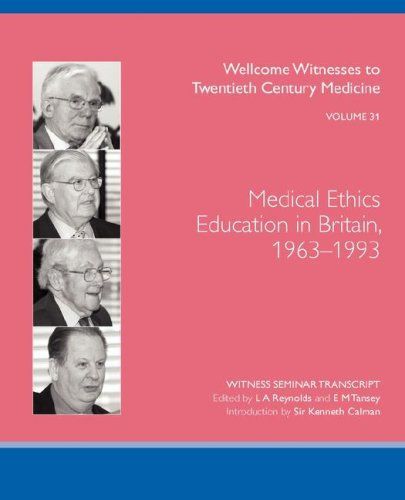
Changing attitudes toward human experimentation along with other controversial moral issues emerged after the Second World War and, in 1963, led to the establishment of the London Medical Group, organized by Ted Shotter, with similar Medical Groups elsewhere from 1967. These became forums for discussion and debate arising from dilemmas encountered in medical settings. Medical ethics did not become a recognized subject in the syllabus of Britain’s medical schools until 1993. This Witness Seminar transcript records the development of international ethical codes, the response to them over the period 1963-93 by students and doctors and the extent of resistance encountered from deans, hospital administrators and others; the Groups’ influence on medical practice; the impact on both Medical Group organizers and participants in their subsequent careers; the local and regional variations and their significant lasting contributions. The meeting was chaired by Dr Stephen Lock and included former Medical Group members, scientists, physicians and policy makers, such as Professors Kenneth Boyd, Bill Fulford, Roger Higgs, Sir Ian Kennedy, David Morton and Sir Malcolm Macnaughton. An introduction by Professor Sir Kenneth Calman and appendices of the Very Revd Edward Shotter’s reflections on the influence of the Medical Groups as a report for the Institute of Medical Ethics complete the transcript.
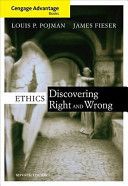
Study ethics from a classic ethics text, written by one of contemporary philosophy’s most skilled teachers, Louis P. Pojman, now revised by best-selling author and editor of the INTERNET ENCYCLOPEDIA OF PHILOSOPHY, James Fieser. ETHICS: DISCOVERING RIGHT AND WRONG, Seventh Edition, offers a concise yet comprehensive overview of the fundamental objectives and outlooks of ethical theory. Written with Pojman’s hallmark engaging, conversational manner with strong supporting pedagogy, this book challenges students to develop their own moral theories and to reason through ethical problems for themselves. The text even-handedly raises critical questions and fosters independent thinking within a rigorous presentation that draws numerous examples from both classical and contemporary sources. This edition maintains the text’s clarity and strengths with its non-dogmatic style and generous presentation of various positions. This revision includes more feminist and multicultural ethical perspectives.
Once regarded as a conservative critic of culture, then enlisted by the court theoreticians of Nazism, Nietzsche has come to be revered by postmodern thinkers as one of their founding fathers, a prophet of human liberation who revealed the perspectival character of all knowledge and broke radically with traditional forms of morality and philosophy. In Nietzsche: The Ethics of an Immoralist, Peter Berkowitz challenges this new orthodoxy, asserting that it produces a one-dimensional picture of Nietzsche’s philosophical explorations and passes by much of what is provocative and problematic in his thought. Berkowitz argues that Nietzsche’s thought is rooted in extreme and conflicting opinions about metaphysics and human nature. Discovering a deep unity in Nietzsche’s work by exploring the structure and argumentative movement of a wide range of his books, Berkowitz shows that Nietzsche is a moral and political philosopher in the Socratic sense whose governing question is, “What is the best life?” Nietzsche, Berkowitz argues, puts forward a severe and aristocratic ethics, an ethics of creativity, that demands that the few human beings who are capable acquire a fundamental understanding of and attain total mastery over the world. Following the path of Nietzsche’s thought, Berkowitz shows that this mastery, which represents a suprapolitical form of rule and entails a radical denigration of political life, is, from Nietzsche’s own perspective, neither desirable nor attainable. Out of the colorful and richly textured fabric of Nietzsche’s books, Peter Berkowitz weaves an interpretation of Nietzsche’s achievement that is at once respectful and skeptical, an interpretation that brings out the love of truth, the courage, and the yearning for the good that mark Nietzsche’s magisterial effort to live an examined life by giving an account of the best life.
Can philosophy enable us to lead better lives through a systematic understanding of our human nature? John Cottingham’s thought-provoking study examines three major philosophical approaches to this problem. Starting with the attempts of Classical philosophers to cope with the recalcitrant forces of the passions, he moves on to examine the moral psychology of Descartes, and concludes by analyzing the insights of modern psychoanalytic theory into the human predicament. His study provides a fresh and challenging perspective on moral philosophy and psychology for students and specialists alike.
ما از اخلاق چه انتظاری داریم؟ این سوال شاید تاحدودی برای عموم مردم و یا متخصصان این رشته قابل پاسخ باشد؛ اینکه خوب بودن را به ما بیاموزد و در تنظیم روابط فردی م...

جشن کتاب تهران به ایستگاه سی و یکم رسیده است. حال و احوال نشر کتاب خوب نیست و باید فرهنگدوستان را به خرید و هدیه دادن کتاب ترغیب نمود. خانه اخلاقپژوهان جوان ب...

بنیاد کتابهای اخلاق اسلامی عمدتا پالایش جان از آلودگیها و آراستن آن به زیباییها است. اندیشه محوری این قبیل کتابها آن است که انسان فعلی آنی نیست که باید باشد...

-
0 Comments