Notice: تابع WP_Block_Type_Registry::register به طورنادرست فراخوانی شد. نامهای نوع بلوک نباید حروف بزرگ داشته باشند. لطفاً برای اطلاعات بیشتر، اشکال زدایی در وردپرس را مشاهده کنید. (این پیام در نگارش 5.0.0 افزوده شده است.) in /home/ethicsho/public_html/wp-includes/functions.php on line 5313
Warning: Use of undefined constant TDC_PATH_LEGACY - assumed 'TDC_PATH_LEGACY' (this will throw an Error in a future version of PHP) in /home/ethicsho/public_html/wp-content/plugins/td-composer/td-composer.php on line 109
Warning: Use of undefined constant TDSP_THEME_PATH - assumed 'TDSP_THEME_PATH' (this will throw an Error in a future version of PHP) in /home/ethicsho/public_html/wp-content/plugins/td-composer/td-composer.php on line 113 بایگانیهای 3430 - خانه اخلاق پژوهان جوان Notice: Trying to access array offset on value of type bool in /home/ethicsho/public_html/wp-content/plugins/wp-ulike/inc/general-functions.php on line 807
This new resource is written for physical therapy and occupational therapy administrators, curriculum coordinators and educators. Stemming from the summer 2003 “Dreamcatchers” Conference, Creighton University’s “Leadership in Ethics Education,” the authors have assembled a veritable “who’s who” of PT and OT academics to share their insights regarding contemporary issues in health and rehabilitation ethics. Going beyond the “nuts and bolts” of teaching ethics, the text aims to present pedagogical strategies that will ultimately change the face of how educators think, and consequently, how they teach ethics to the next generation of health professionals.
Examining the emergence and development of legal positivism as a distinctive and particularly powerful tradition in legal thought, this book places particular emphasis on its relationship to traditional understandings of the common law and on forms of idealism. The focus throughout is on the consequences positivism holds for the idea of the rule of law and of law’s role in maintaining (and perhaps creating) conditions of stable social order. The book examines the shifts in thinking about the rule of law and the wider significance of law, brought about by changing conceptions of the nature of law: from an understanding of law in which the primary focus is on rights, to an articulation of the legal order as a body of deliberately posited rules and, finally, to an understanding of law as a corpus of systematic rules and principles, underpinned by an abiding concern with individual rights.
The author’s purpose is to understand the philosophical foundations of Hegel’s social theory by articulating the normative standards at work in his claim that the three central social institutions of the modern era–the nuclear family, civil society, and the constitutional state–are rational or good. Its central question is: what, for Hegel, makes a rational social order rational? In addressing this question the book aspires to be faithful to Hegel’s texts and to articulate a compelling theory of rational social institutions; its aim is not only to interpret Hegel correctly but also to demonstrate the richness and power that his vision of the rational social order possesses.Frederick Neuhouser’s task is to understand the conceptions of freedom on which Hegel’s theory rests and to show how they ground his arguments in defense of the modern social world. In doing so, the author focuses on Hegel’s most important and least understood contribution to social philosophy, the idea of “social freedom.”Neuhouser’s strategy for making sense of social freedom is to show its affinities with Rousseau’s conception of the general will. The main idea that Hegel appropriates from Rousseau is that rational social institutions must satisfy two conditions: first, they must furnish the basic social preconditions of their members’ freedom; and, second, all social members must be able subjectively to affirm their freedom-conditioning institutions as good and thus to regard the principles that govern their social participation as coming from their own wills.
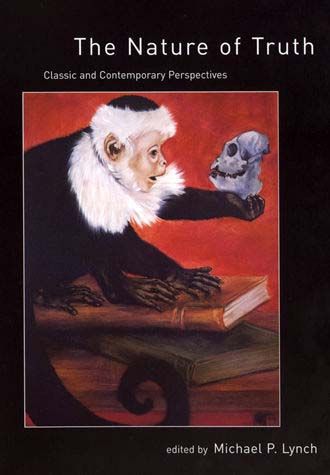
“What is truth?” has long been the philosophical question par excellence. The Nature of Truth collects in one volume the twentieth century’s most influential philosophical work on the subject. The coverage strikes a balance between classic works and the leading edge of current philosophical research.The essays center around two questions: Does truth have an underlying nature? And if so, what sort of nature does it have? Thus the book discusses both traditional and deflationary theories of truth, as well as phenomenological, postmodern, and pluralist approaches to the problem. The essays are organized by theory. Each of the seven sections opens with a detailed introduction that not only discusses the essays in that section but relates them to other relevant essays in the book. Eleven of the essays are previously unpublished or substantially revised. The book also includes suggestions for further reading.Contributors:Linda Martin Alcoff, William P. Alston, J. L. Austin, Brand Blanshard, Marian David, Donald Davidson, Michael Devitt, Michael Dummett, Hartry Field, Michel Foucault, Dorothy Grover, Anil Gupta, Martin Heidegger, Terence Horgan, Jennifer Hornsby, Paul Horwich, William James, Michael P. Lynch, Charles Sanders Pierce, Hilary Putnam, W. V. O. Quine, F. P. Ramsey, Richard Rorty, Bertrand Russell, Scott Soames, Ernest Sosa, P. F. Strawson, Alfred Tarski, Ralph C. Walker, Crispin Wright.
ما از اخلاق چه انتظاری داریم؟ این سوال شاید تاحدودی برای عموم مردم و یا متخصصان این رشته قابل پاسخ باشد؛ اینکه خوب بودن را به ما بیاموزد و در تنظیم روابط فردی م...

جشن کتاب تهران به ایستگاه سی و یکم رسیده است. حال و احوال نشر کتاب خوب نیست و باید فرهنگدوستان را به خرید و هدیه دادن کتاب ترغیب نمود. خانه اخلاقپژوهان جوان ب...

بنیاد کتابهای اخلاق اسلامی عمدتا پالایش جان از آلودگیها و آراستن آن به زیباییها است. اندیشه محوری این قبیل کتابها آن است که انسان فعلی آنی نیست که باید باشد...

-
0 Comments