Notice: تابع WP_Block_Type_Registry::register به طورنادرست فراخوانی شد. نامهای نوع بلوک نباید حروف بزرگ داشته باشند. لطفاً برای اطلاعات بیشتر، اشکال زدایی در وردپرس را مشاهده کنید. (این پیام در نگارش 5.0.0 افزوده شده است.) in /home/ethicsho/public_html/wp-includes/functions.php on line 5313
Warning: Use of undefined constant TDC_PATH_LEGACY - assumed 'TDC_PATH_LEGACY' (this will throw an Error in a future version of PHP) in /home/ethicsho/public_html/wp-content/plugins/td-composer/td-composer.php on line 109
Warning: Use of undefined constant TDSP_THEME_PATH - assumed 'TDSP_THEME_PATH' (this will throw an Error in a future version of PHP) in /home/ethicsho/public_html/wp-content/plugins/td-composer/td-composer.php on line 113 بایگانیهای 3342 - خانه اخلاق پژوهان جوان Notice: Trying to access array offset on value of type bool in /home/ethicsho/public_html/wp-content/plugins/wp-ulike/inc/general-functions.php on line 807
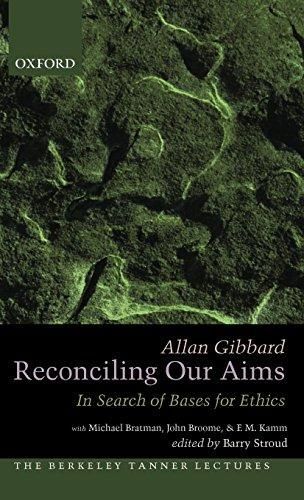
In these three Tanner lectures, distinguished ethical theorist Allan Gibbard explores the nature of normative thought and the bases of ethics. In the first lecture he explores the role of intuitions in moral thinking and offers a way of thinking about the intuitive method of moral inquiry that both places this activity within the natural world and makes sense of it as an indispensable part of our lives as planners. In the second and third lectures he takes up the kind of substantive ethical inquiry he has described in the first lecture, asking how we might live together on terms that none of us could reasonably reject. Since working at cross purposes loses fruits that might stem from cooperation, he argues, any consistent ethos that meets this test would be, in a crucial way, utilitarian. It would reconcile our individual aims to establish, in Kant’s phrase, a “kingdom of ends.” The volume also contains an introduction by Barry Stroud, the volume editor, critiques by Michael Bratman (Stanford University), John Broome (Oxford University), and F. M. Kamm (Harvard University), and Gibbard’s responses.
We tend to suppose that the ancient Greeks had primitive ideas of the self, of responsibility, freedom, and shame, and that now humanity has advanced from these to a more refined moral consciousness. Bernard Williams’s original and radical book questions this picture of Western history. While we are in many ways different from the Greeks, Williams claims that the differences are not to be traced to a shift in these basic conceptions of ethical life. We are more like the ancients than we are prepared to acknowledge, and only when this is understood can we properly grasp our most important differences from them, such as our rejection of slavery.The author is a philosopher, but much of his book is directed to writers such as Homer and the tragedians, whom he discusses as poets and not just as materials for philosophy. At the center of his study is the question of how we can understand Greek tragedy at all, when its world is so far from ours.Williams explains how it is that when the ancients speak, they do not merely tell us about themselves, but about ourselves. Shame and Necessity gives a new account of our relations to the Greeks, and helps us to see what ethical ideas we need in order to live in the modern world.
Tenure is the abortion issue of the academy, igniting arguments and inflaming near-religious passions. To some, tenure is essential to academic freedom and a magnet to recruit and retain top-flight faculty. To others, it is an impediment to professorial accountability and a constraint on institutional flexibility and finances. But beyond anecdote and opinion, what do we really know about how tenure works?In this unique book, Richard Chait and his colleagues offer the results of their research on key empirical questions. Are there circumstances under which faculty might voluntarily relinquish tenure? When might new faculty actually prefer non-tenure track positions? Does the absence of tenure mean the absence of shared governance? Why have some colleges abandoned tenure while others have adopted it? Answers to these and other questions come from careful studies of institutions that mirror the American academy: research universities and liberal arts colleges, including both highly selective and less prestigious schools.Lucid and straightforward, The Questions of Tenure offers vivid pictures of academic subcultures. Chait and his colleagues conclude that context counts so much that no single tenure system exists. Still, since no academic reward carries the cachet of tenure, few institutions will initiate significant changes without either powerful external pressures or persistent demands from new or disgruntled faculty.
ما از اخلاق چه انتظاری داریم؟ این سوال شاید تاحدودی برای عموم مردم و یا متخصصان این رشته قابل پاسخ باشد؛ اینکه خوب بودن را به ما بیاموزد و در تنظیم روابط فردی م...

جشن کتاب تهران به ایستگاه سی و یکم رسیده است. حال و احوال نشر کتاب خوب نیست و باید فرهنگدوستان را به خرید و هدیه دادن کتاب ترغیب نمود. خانه اخلاقپژوهان جوان ب...

بنیاد کتابهای اخلاق اسلامی عمدتا پالایش جان از آلودگیها و آراستن آن به زیباییها است. اندیشه محوری این قبیل کتابها آن است که انسان فعلی آنی نیست که باید باشد...

-
0 Comments