Notice: تابع WP_Block_Type_Registry::register به طورنادرست فراخوانی شد. نامهای نوع بلوک نباید حروف بزرگ داشته باشند. لطفاً برای اطلاعات بیشتر، اشکال زدایی در وردپرس را مشاهده کنید. (این پیام در نگارش 5.0.0 افزوده شده است.) in /home/ethicsho/public_html/wp-includes/functions.php on line 5313
Warning: Use of undefined constant TDC_PATH_LEGACY - assumed 'TDC_PATH_LEGACY' (this will throw an Error in a future version of PHP) in /home/ethicsho/public_html/wp-content/plugins/td-composer/td-composer.php on line 109
Warning: Use of undefined constant TDSP_THEME_PATH - assumed 'TDSP_THEME_PATH' (this will throw an Error in a future version of PHP) in /home/ethicsho/public_html/wp-content/plugins/td-composer/td-composer.php on line 113 بایگانیهای 3290 - خانه اخلاق پژوهان جوان Notice: Trying to access array offset on value of type bool in /home/ethicsho/public_html/wp-content/plugins/wp-ulike/inc/general-functions.php on line 807
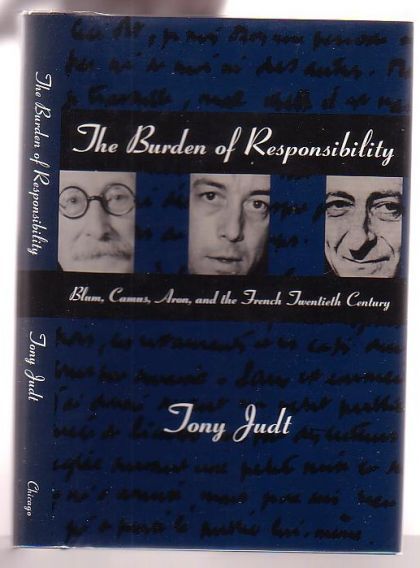
Using the lives of the three outstanding French intellectuals of the twentieth century, renowned historian Tony Judt offers a unique look at how intellectuals can ignore political pressures and demonstrate a heroic commitment to personal integrity and moral responsibility unfettered by the difficult political exigencies of their time.Through the prism of the lives of Leon Blum, Albert Camus, and Raymond Aron, Judt examines pivotal issues in the history of contemporary French societyantisemitism and the dilemma of Jewish identity, political and moral idealism in public life, the Marxist moment in French thought, the traumas of decolonization, the disaffection of the intelligentsia, and the insidious quarrels rending Right and Left. Judt focuses particularly on Blum’s leadership of the Popular Front and his stern defiance of the Vichy governments, on Camus’s part in the Resistance and Algerian War, and on Aron’s cultural commentary and opposition to the facile acceptance by many French intellectuals of communism’s utopian promise. Severely maligned by powerful critics and rivals, each of these exemplary figures stood fast in their principles and eventually won some measure of personal and public redemption.Judt constructs a compelling portrait of modern French intellectual life and politics. He challenges the conventional account of the role of intellectuals precisely because they mattered in France, because they could shape public opinion and influence policy. In Blum, Camus, and Aron, Judt finds three very different men who did not simply play the role, but evinced a courage and a responsibility in public life that far outshone their contemporaries.
Modernity has challenged the ancient ideal of a universal quest for wisdom, and today’s world of conflicting cultures and values has raised further doubts regarding the possibility of objective ethical standards. Robert Kane refocuses the debate on the philosophical quest for wisdom, and argues that ethical principles about right action and the good life can be seen to emerge from that very quest itself. His book contends that the search for wisdom involves a persistent striving to overcome narrowness of vision that comes from the inevitable limitations of finite points of view. When applied to questions of value and the good life, this striving has ethical implications about the way we should treat ourselves and others. This study argues for the merits of this central thesis against alternative theories in contemporary normative ethics, and discusses its practical applications for social ethics, political philosophy, law and moral education.
Biotechnology-the use of biological organisms and processes to provide useful products in industry and medicine-is revolutionizing our lives. From the making of cheese and wine to the production of new medicines and crops, the application of biotechnological processes to industry is wide and varied and will continue to expand in the coming decades. But no discussion of biotechnology would be complete without discussion of the ethical issues that surround this growing field. Biotechnology in the 21st Century examines the different global aspects of the biotech industry-healthcare, agriculture, data processing, and ethics-and provides the reader with the knowledge necessary to form his or her own conclusions about this exciting new field of science. Book jacket.
Democracy is not naturally plausible. Why turn such important matters over to masses of people who have no expertise? Many theories of democracy answer by appealing to the intrinsic value of democratic procedure, leaving aside whether it makes good decisions. In Democratic Authority, David Estlund offers a groundbreaking alternative based on the idea that democratic authority and legitimacy must depend partly on democracy’s tendency to make good decisions. Just as with verdicts in jury trials, Estlund argues, the authority and legitimacy of a political decision does not depend on the particular decision being good or correct. But the “epistemic value” of the procedure–the degree to which it can generally be accepted as tending toward a good decision–is nevertheless crucial. Yet if good decisions were all that mattered, one might wonder why those who know best shouldn’t simply rule. Estlund’s theory–which he calls “epistemic proceduralism”–avoids epistocracy, or the rule of those who know. He argues that while some few people probably do know best, this can be used in political justification only if their expertise is acceptable from all reasonable points of view. If we seek the best epistemic arrangement in this respect, it will be recognizably democratic–with laws and policies actually authorized by the people subject to them.
ما از اخلاق چه انتظاری داریم؟ این سوال شاید تاحدودی برای عموم مردم و یا متخصصان این رشته قابل پاسخ باشد؛ اینکه خوب بودن را به ما بیاموزد و در تنظیم روابط فردی م...

جشن کتاب تهران به ایستگاه سی و یکم رسیده است. حال و احوال نشر کتاب خوب نیست و باید فرهنگدوستان را به خرید و هدیه دادن کتاب ترغیب نمود. خانه اخلاقپژوهان جوان ب...

بنیاد کتابهای اخلاق اسلامی عمدتا پالایش جان از آلودگیها و آراستن آن به زیباییها است. اندیشه محوری این قبیل کتابها آن است که انسان فعلی آنی نیست که باید باشد...

-
0 Comments