Notice: تابع WP_Block_Type_Registry::register به طورنادرست فراخوانی شد. نامهای نوع بلوک نباید حروف بزرگ داشته باشند. لطفاً برای اطلاعات بیشتر، اشکال زدایی در وردپرس را مشاهده کنید. (این پیام در نگارش 5.0.0 افزوده شده است.) in /home/ethicsho/public_html/wp-includes/functions.php on line 5313
Warning: Use of undefined constant TDC_PATH_LEGACY - assumed 'TDC_PATH_LEGACY' (this will throw an Error in a future version of PHP) in /home/ethicsho/public_html/wp-content/plugins/td-composer/td-composer.php on line 109
Warning: Use of undefined constant TDSP_THEME_PATH - assumed 'TDSP_THEME_PATH' (this will throw an Error in a future version of PHP) in /home/ethicsho/public_html/wp-content/plugins/td-composer/td-composer.php on line 113 بایگانیهای 3270 - خانه اخلاق پژوهان جوان Notice: Trying to access array offset on value of type bool in /home/ethicsho/public_html/wp-content/plugins/wp-ulike/inc/general-functions.php on line 807
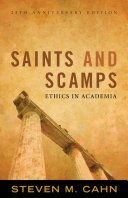
Saints and Scamps has been widely acclaimed as one of the best academic ethics books in print. In its 25th anniversary edition, Steven M. Cahn has updated and expanded upon his critical look at the duties and responsibilities of college professors; presenting us with a masterfully decisive and learned probe into the ethical standards and practices of the academic world and bringing Saints and Scamps to a new generation. Cahn discusses every issue, from grades to degree requirements, from tenure to the ethics of teaching. For Cahn, being a professor is so much more than research and scholarship; it is also about being a good teacher and shepherding in the next generation of students. He shows us what makes a wonderful professor and what constitutes professorial malpractice, and he does so with a wit and charm that is both entertaining and convincing. This is not just a book for college professors, but a book that should be read by parents, students, school administrators, and anyone interested in what teachers do and how they should do it. In this new edition, Cahn continues to do what he has done so brilliantly in the past; he shows us the ethical guidelines that every professor should follow.
Immanuel Kant (1724-1804) is arguably the most influential of the Enlightenment Philosophers. In this outstanding introduction, Paul Guyer introduces and assesses all the major aspects of Kant’s thought. Beginning with a helpful overview of Kant’s life and times, Guyer introduces the “Copernican revolution” Kant brought about in metaphysics and epistemology, carefully introducing his arguments about the nature of experience, space and time in his most influential but difficult work,The Critique of Pure Reason.He gives a much-needed explanation of Kant’s famous theory of transcendental idealism, a cornerstone of his philosophy as a whole. He then examines Kant’s moral philosophy, clearly explaining Kant’s celebrated “categorical imperative” and his theories of duty, freedom of the will, and rights. Finally, he covers Kant’s aesthetics, in particular his arguments about the nature of beauty and the sublime and their relation to human freedom and happiness. A concluding chapterconsiders Kant’s legacy and his influence on the shape of contemporary philosophy. Kant is an ideal starting point for anyone coming to the philosopher for the first time, as well as those studying Kant in related disciplines.
Adam Smith (1723-90) is celebrated all over the world as the author ofThe Wealth of Nationsand the founder of modern economics. A few of his ideas–that of the “invisible hand” of the market and that “It is not from the benevolence of the butcher, the brewer, or the baker that we expect our dinner, but from their regard to their own interest” have become iconic. Yet Smith saw himself primarily as a philosopher rather than an economist and would never have predicted that the ideas for which he is now best known were his most important. This book shows the extent to whichThe Wealth of Nationsand Smith’s other great work,The Theory of Moral Sentiments,were part of a larger scheme to establish a grand “Science of Man,” one of the most ambitious projects of the European Enlightenment, which was to encompass law, history, and aesthetics as well as economics and ethics, and which was only half complete on Smith’s death in 1790. Nick Phillipson reconstructs Smith’s intellectual ancestry and shows what Smith took from, and what he gave to, in the rapidly changing intellectual and commercial cultures of Glasgow and Edinburgh as they entered the great years of the Scottish Enlightenment. Above all he explains how far Smith’s ideas developed in dialogue with those of his closest friend, the other titan of the age, David Hume.
ما از اخلاق چه انتظاری داریم؟ این سوال شاید تاحدودی برای عموم مردم و یا متخصصان این رشته قابل پاسخ باشد؛ اینکه خوب بودن را به ما بیاموزد و در تنظیم روابط فردی م...

جشن کتاب تهران به ایستگاه سی و یکم رسیده است. حال و احوال نشر کتاب خوب نیست و باید فرهنگدوستان را به خرید و هدیه دادن کتاب ترغیب نمود. خانه اخلاقپژوهان جوان ب...

بنیاد کتابهای اخلاق اسلامی عمدتا پالایش جان از آلودگیها و آراستن آن به زیباییها است. اندیشه محوری این قبیل کتابها آن است که انسان فعلی آنی نیست که باید باشد...

-
0 Comments