Notice: تابع WP_Block_Type_Registry::register به طورنادرست فراخوانی شد. نامهای نوع بلوک نباید حروف بزرگ داشته باشند. لطفاً برای اطلاعات بیشتر، اشکال زدایی در وردپرس را مشاهده کنید. (این پیام در نگارش 5.0.0 افزوده شده است.) in /home/ethicsho/public_html/wp-includes/functions.php on line 5313
Warning: Use of undefined constant TDC_PATH_LEGACY - assumed 'TDC_PATH_LEGACY' (this will throw an Error in a future version of PHP) in /home/ethicsho/public_html/wp-content/plugins/td-composer/td-composer.php on line 109
Warning: Use of undefined constant TDSP_THEME_PATH - assumed 'TDSP_THEME_PATH' (this will throw an Error in a future version of PHP) in /home/ethicsho/public_html/wp-content/plugins/td-composer/td-composer.php on line 113 بایگانیهای 3210 - خانه اخلاق پژوهان جوان Notice: Trying to access array offset on value of type bool in /home/ethicsho/public_html/wp-content/plugins/wp-ulike/inc/general-functions.php on line 807
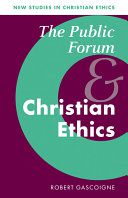
This book addresses the question of the communication of Christian ethics in the public forum of liberal, pluralist societies. Drawing on debates in philosophy, theology and sociological theory, it relates the problem of communication to fundamental questions about the nature of liberal societies and the identity of Christian faith and the Christian community. With particular emphasis on Kantian and neo-Kantian ethics, it explores the link between autonomy and community in liberal societies. The theology of communio, expressed in revealed Christian traditions, can reconcile autonomy and community. Any Christian attempt to communicate this vision must also reflect on Christianity’s own identity, especially the ways in which its own self-consciousness grows in critical interaction with secularity. In this light, Christian ethical communication is both a witness to a distinctive identity, founded in the revelation of the triune God, and a vision of universal human solidarity which can reconcile autonomy and community.
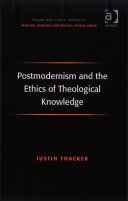
This book establishes the necessary integration of theological knowledge with theological ethics. It does this as a response to the postmodern critique of Christianity, as exemplified in Rorty and Lyotard. They argue that any claim to know God is necessarily tyrannical. Contemporary responses to such postmodern thinking often fail to address adequately the ethical critique that is made. This book redresses that balance by suggesting that our knowedge of God and love of the Other are so intimately connected that we cannot have one without the other. In the absence of love, then, we simply do not know God. Justin Thacker proposes that an effective theological response to postmodernity must address both knowledge and ethics in an integrated fashion as presented in this book.
The recent revival of natural law theory in modern moral philosophy has been an exciting and important development. This book brings together an international group of moral philosophers who make original contributions to the project of developing natural law ethics as a comprehensive treatment of modern ethical theory and practice.
ما از اخلاق چه انتظاری داریم؟ این سوال شاید تاحدودی برای عموم مردم و یا متخصصان این رشته قابل پاسخ باشد؛ اینکه خوب بودن را به ما بیاموزد و در تنظیم روابط فردی م...

جشن کتاب تهران به ایستگاه سی و یکم رسیده است. حال و احوال نشر کتاب خوب نیست و باید فرهنگدوستان را به خرید و هدیه دادن کتاب ترغیب نمود. خانه اخلاقپژوهان جوان ب...

بنیاد کتابهای اخلاق اسلامی عمدتا پالایش جان از آلودگیها و آراستن آن به زیباییها است. اندیشه محوری این قبیل کتابها آن است که انسان فعلی آنی نیست که باید باشد...

-
0 Comments