Notice: تابع WP_Block_Type_Registry::register به طورنادرست فراخوانی شد. نامهای نوع بلوک نباید حروف بزرگ داشته باشند. لطفاً برای اطلاعات بیشتر، اشکال زدایی در وردپرس را مشاهده کنید. (این پیام در نگارش 5.0.0 افزوده شده است.) in /home/ethicsho/public_html/wp-includes/functions.php on line 5313
Warning: Use of undefined constant TDC_PATH_LEGACY - assumed 'TDC_PATH_LEGACY' (this will throw an Error in a future version of PHP) in /home/ethicsho/public_html/wp-content/plugins/td-composer/td-composer.php on line 109
Warning: Use of undefined constant TDSP_THEME_PATH - assumed 'TDSP_THEME_PATH' (this will throw an Error in a future version of PHP) in /home/ethicsho/public_html/wp-content/plugins/td-composer/td-composer.php on line 113 بایگانیهای 320 - خانه اخلاق پژوهان جوان Notice: Trying to access array offset on value of type bool in /home/ethicsho/public_html/wp-content/plugins/wp-ulike/inc/general-functions.php on line 807
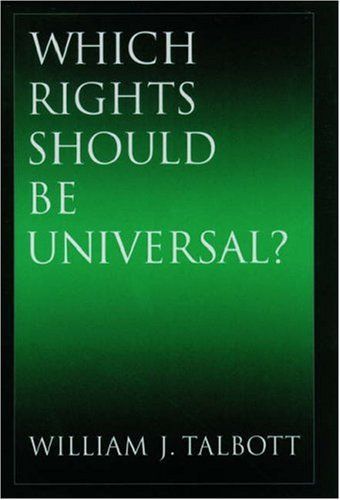
“We hold these truths to be self-evident…” So begins the U.S. Declaration of Independence. What follows those words is a ringing endorsement of universal rights, but it is far from self-evident. Why did the authors claim that it was? William Talbott suggests that they were trapped by a presupposition of Enlightenment philosophy: That there was only one way to rationally justify universal truths, by proving them from self-evident premises. With the benefit of hindsight, it is clear that the authors of the U.S. Declaration had no infallible source of moral truth. For example, many of the authors of the Declaration of Independence endorsed slavery. The wrongness of slavery was not self-evident; it was a moral discovery. In this book, William Talbott builds on the work of John Rawls, Jurgen Habermas, J.S. Mill, Amartya Sen, and Henry Shue to explain how, over the course of history, human beings have learned how to adopt a distinctively moral point of view from which it is possible to make universal, though not infallible, judgments of right and wrong. He explains how this distinctively moral point of view has led to the discovery of the moral importance of nine basic rights. Undoubtedly, the most controversial issue raised by the claim of universal rights is the issue of moral relativism. How can the advocate of universal rights avoid being a moral imperialist? In this book, Talbott shows how to defend basic individual rights from a universal moral point of view that is neither imperialistic nor relativistic. Talbott avoids moral imperialism by insisting that all of us, himself included, have moral blindspots and that we usually depend on others to help us to identify those blindspots. Talbott’s book speaks to not only debates on human rights but to broader issues of moral and cultural relativism, and will interest a broad range of readers.
“Public health ethics is a discipline concerned with the health of the public or a population as a whole, rather than focusing on the individual. This book introduces a number of this new field’s central concepts and explores the key and controversial issues arising. Topics covered include the nature of public health ethics, the concepts of disease and prevention, risk and precaution, health inequalities and justice, screening, vaccination and disease control, smoking and issues relating to the environment and public health. With insightful contributions from leading experts, Public Health Ethics presents thought-provoking reviews of these topics, at the same time as encouraging and identifying areas for future discussion in this emerging discipline. This is a valuable addition to the library of anyone working in the fields of public health, health policy, ethics, philosophy and social science”–
Leading figures in ancient philosophy present nineteen original papers on three key themes in the work of Richard Sorabji. The papers dealing with Metaphysics range from Democritus to Numenius on basic questions about the structure and nature of reality: necessitation, properties, and time. The section on Soul includes one paper on the individuation of souls in Plato and five papers on Aristotle’s and Aristotelian theories of cognition, with a special emphasis on perception. The section devoted to Ethics concentrates upon Stoicism and the complex views the Stoics held on such topics as motivation, akrasia, oikeiosis, and the emotions. It also includes one paper on the influence of Greek ethics in Modern Philosophy. The volume also contains a fascinating “intellectual autobiography” by Sorabji himself, and a full Bibliography of his works.
The Ethics of Nationalism blends a philosophical discussion of the ethical merits and limits of nationalism with a detailed understanding of nationalist aspirations and a variety of national conflict zones. The author discusses the controversial and contemporary issues of rights of secession,the policies of the state in privileging a particular national group, the kinds of accommodations of minority national, and multi cultural identity groups that are justifiable and appropriate. These insights are then applied to two central nationalist aspirations: nation-building and nationalself-determination projects. The discussion of nation-building projects invloves a theory of the appropriate policies and principles that the state should follow in giving preferences to a particular national group. The discussion of national self-determination projets analyses the kind of prodedualright to secession that should be institutionalized in domestic constitutions or international law, and the psooibilities for accomodation rival caims to national recognition in the changing international order.
ما از اخلاق چه انتظاری داریم؟ این سوال شاید تاحدودی برای عموم مردم و یا متخصصان این رشته قابل پاسخ باشد؛ اینکه خوب بودن را به ما بیاموزد و در تنظیم روابط فردی م...

جشن کتاب تهران به ایستگاه سی و یکم رسیده است. حال و احوال نشر کتاب خوب نیست و باید فرهنگدوستان را به خرید و هدیه دادن کتاب ترغیب نمود. خانه اخلاقپژوهان جوان ب...

بنیاد کتابهای اخلاق اسلامی عمدتا پالایش جان از آلودگیها و آراستن آن به زیباییها است. اندیشه محوری این قبیل کتابها آن است که انسان فعلی آنی نیست که باید باشد...

-
0 Comments