Notice: تابع WP_Block_Type_Registry::register به طورنادرست فراخوانی شد. نامهای نوع بلوک نباید حروف بزرگ داشته باشند. لطفاً برای اطلاعات بیشتر، اشکال زدایی در وردپرس را مشاهده کنید. (این پیام در نگارش 5.0.0 افزوده شده است.) in /home/ethicsho/public_html/wp-includes/functions.php on line 5313
Warning: Use of undefined constant TDC_PATH_LEGACY - assumed 'TDC_PATH_LEGACY' (this will throw an Error in a future version of PHP) in /home/ethicsho/public_html/wp-content/plugins/td-composer/td-composer.php on line 109
Warning: Use of undefined constant TDSP_THEME_PATH - assumed 'TDSP_THEME_PATH' (this will throw an Error in a future version of PHP) in /home/ethicsho/public_html/wp-content/plugins/td-composer/td-composer.php on line 113 بایگانیهای 318 - خانه اخلاق پژوهان جوان Notice: Trying to access array offset on value of type bool in /home/ethicsho/public_html/wp-content/plugins/wp-ulike/inc/general-functions.php on line 807
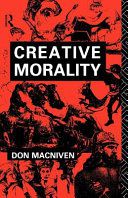
Creative Moralityis a philosophical study of moral dilemmas which is designed to heighten our awareness of the ethical systems on which most of us base our moral decisions. Don MacNiven provides a theoretical basis for critical discussion of these systems and contributes to the development of a comprehensive ethical theory which is suitable for contemporary moral problems. Western moral thought has relied upon two basic ethical perspectives to resolve dilemmas utilitarianism and Kantianism. Don MacNiven argues that no real progress can be made with modern moral problems unless these traditions are coherently synthesized. He examines a diverse range of topics such as academic honesty, confidentiality of medical records, terrorism, experiments with human subjects, euthanasia, bribery and environmental issues. The book develops a new moral epistemology based on the hypothesis that moral thought is inherently creative rather than mechanical. The hypothetical dilemmas usedin the book are based on real life situations, so that theory can be tested against reality. The solutions offered from all perspectives are hypothetical rather than definitive, involving the restructuring of personal and social affairs in ways that adequately express their conflicting values. In order to solve moral dilemmas, MacNiven argues, we need both personal and social growth, which requires creativity in both thought and action. Creative Moralitymakes an important contribution to the development of a comprehensive ethical theory which can address complex moral problems. It integrates ethical theory and practice in unique ways that will appeal to the general educated reader as well as the professional ethicist.
Willliam O. Stephens explores the moral philosophy of Epictetus and shows how, for Epictetus, happiness results from focusing our concern on what is up to us while not worrying about what is beyond our control. He concludes that the strength of Epictetus’ philosophy lies in his conception of happiness as freedom from fear, worry, grief, and dependence upon luck.
This book deals with foundational issues in the history of the nature of action, the intentionality of action, the compatibility of freedom of action with determinism, and the explanation of action. Ginet’s is a volitional view: that every action has as its core a “simple” mental action. He develops a sophisticated account of the individuation of actions and also propounds a challenging version of the view that freedom of action is incompatible with determinism.
Why do people behave in moral ways in some circumstances, but not in others? In order to account fully for morality, Dennis Krebs departs from traditional approaches to morality that suggest that children acquire morals through socialization, cultural indoctrination, and moral reasoning. He suggests that such approaches can be subsumed, refined, and revised gainfully within an evolutionary framework.
ما از اخلاق چه انتظاری داریم؟ این سوال شاید تاحدودی برای عموم مردم و یا متخصصان این رشته قابل پاسخ باشد؛ اینکه خوب بودن را به ما بیاموزد و در تنظیم روابط فردی م...

جشن کتاب تهران به ایستگاه سی و یکم رسیده است. حال و احوال نشر کتاب خوب نیست و باید فرهنگدوستان را به خرید و هدیه دادن کتاب ترغیب نمود. خانه اخلاقپژوهان جوان ب...

بنیاد کتابهای اخلاق اسلامی عمدتا پالایش جان از آلودگیها و آراستن آن به زیباییها است. اندیشه محوری این قبیل کتابها آن است که انسان فعلی آنی نیست که باید باشد...

-
0 Comments