Notice: تابع WP_Block_Type_Registry::register به طورنادرست فراخوانی شد. نامهای نوع بلوک نباید حروف بزرگ داشته باشند. لطفاً برای اطلاعات بیشتر، اشکال زدایی در وردپرس را مشاهده کنید. (این پیام در نگارش 5.0.0 افزوده شده است.) in /home/ethicsho/public_html/wp-includes/functions.php on line 5313
Warning: Use of undefined constant TDC_PATH_LEGACY - assumed 'TDC_PATH_LEGACY' (this will throw an Error in a future version of PHP) in /home/ethicsho/public_html/wp-content/plugins/td-composer/td-composer.php on line 109
Warning: Use of undefined constant TDSP_THEME_PATH - assumed 'TDSP_THEME_PATH' (this will throw an Error in a future version of PHP) in /home/ethicsho/public_html/wp-content/plugins/td-composer/td-composer.php on line 113 بایگانیهای 3165 - خانه اخلاق پژوهان جوان Notice: Trying to access array offset on value of type bool in /home/ethicsho/public_html/wp-content/plugins/wp-ulike/inc/general-functions.php on line 807
This landmark text is the first introduction to concepts and issues in critical discourse analysis for educational researchers. The central premise is that critical discourse analysis must be conducted “systematically,” which means conducting inquiry into the ways in which language form and function correlate with social practices. Bringing together the work of New Literacy Studies, situated literacy, critical discourse theory and analysis with theories of learning, the text is distinctive in providing not just useful analytic accounts of discourse in classroom and other settings, but going on to identify ways in which these forms of language are connected to theories of learning. Contributions from two pioneers in the field–James Gee and Norman Fairclough–are combined with empirically grounded chapters that illustrate variations of their approaches to critical discourse analysis. Each chapter presents examples of systematical critical discourse analysis and its relevance in education settings, and provides detailed information on analytic procedures. An Introduction to Critical Discourse Analysis in Education: *introduces key concepts in critical discourse analysis and answers some of the frequently asked questions; *situates critical discourse analysis within educational research; and *provides detailed analytic procedures, to demystify the process, allow researchers to have a conversation about issues of trustworthiness of interpretations and value to educational contexts, and enable replication of studies. The new synthesis of theoretical and empirical studies in critical discourse analysis and education the book presents will interest newcomers to critical discourse analysis, as well as researchers and educators interested in discourse, identity, and learning. The descriptive, critical ethnographic and interpretive approaches to critical discourse analysis developed in each chapter make the book accessible yet theoretically rich. Pedagogical features make critical discourse analysis accessible to students. The text is cross-disciplinary, intended for courses in qualitative methodology, discourse analysis, critical discourse studies, and literacy education. It will appeal not only to education researchers but to a wide readership within literacy studies, linguistics, sociology, and other social sciences concerned with contemporary approaches to describing and explaining the role of language in learning and education.
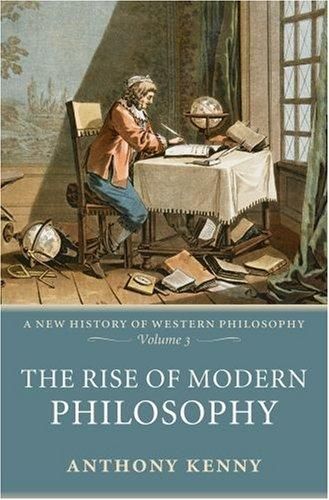
Sir Anthony Kenny’s engaging new multi-volume history of Western philosophy now advances into the modern era. The Rise of Modern Philosophy captures the fascinating story of the emergence, from the early sixteenth to the early nineteenth century, of the great ideas and intellectual systems that shaped modern thought. Kenny introduces us to some of the world’s most original and influential thinkers and helps us gain an understanding of their famous works. The great minds we meet include Rene Descartes, traditionally seen as the founder of modern philosophy; the great British philosophers Hobbes, Locke, and Hume; continental thinkers such as Spinoza, Liebniz, and Hegel; and the towering figure of Immanuel Kant, who perhaps more than any other made philosophy what it is today. Kenny first tells the story of modern philosophy chronologically: his lively, accessible narrative brings the philosophers to life and fills in the historical and intellectual background to their work. It is ideal as the first thing to read for someone new to this wonderfully creative period. Kenny then backtracks to look closely at each of the main areas of philosophical exploration in this period: knowledge and understanding; the nature of the physical universe; metaphysics (the most fundamental questions there are about existence); mind and soul; the nature and content of morality; political philosophy; and God. The book also features many intriguing and beautiful illustrations which evoke the human and social side of philosophy. Anyone who is interested in the evolution of modern thought will find this a book a treasure.
Much discussed but poorly understood, globalization is praised as the answer to all the world’s problems and blamed for everything from pollution to poverty. In Many Globalizations, Peter Berger and Samuel Huntington bring together an array of scholars from around the world, who paint a far subtler and more richly shaded portrait, showing both the power and the unexpected consequences of this great force. Here the stereotypes of globalization as American imperialism on the one hand or economic cure-all on the other fall apart under the close scrutiny of these leading scholars. Looking at globalization in countries such as Chile, Japan, South Africa, Germany, Turkey, Hungary, Taiwan, India, and the United States, they show that an emerging global culture does indeed exist, one that is heavily American in origin and content, but that is far from a centrally directed force like classic imperialism–nor is it simply a “metastasized Disneyland.” They examine the currents that carry this culture, from a worldwide class of young professionals to nongovernmental organizations, and define globalization’s many variations (ranging from Buddhist influences to Islamic modernism) as well as subglobalizations that bind regions together. The authors also draw attention to globalizing forces that have escaped media scrutiny, such as the role of evangelical Protestantism (which both adapts to local languages and cultures, and introduce distinctively American values) and Opus Dei, the conservative Catholic movement that originated in Spain. Analytical, incisive and stimulating, Many Globalizations offers rare insight into perhaps the central issue of modern times, one that is changing the West as much as the developing world.
ما از اخلاق چه انتظاری داریم؟ این سوال شاید تاحدودی برای عموم مردم و یا متخصصان این رشته قابل پاسخ باشد؛ اینکه خوب بودن را به ما بیاموزد و در تنظیم روابط فردی م...

جشن کتاب تهران به ایستگاه سی و یکم رسیده است. حال و احوال نشر کتاب خوب نیست و باید فرهنگدوستان را به خرید و هدیه دادن کتاب ترغیب نمود. خانه اخلاقپژوهان جوان ب...

بنیاد کتابهای اخلاق اسلامی عمدتا پالایش جان از آلودگیها و آراستن آن به زیباییها است. اندیشه محوری این قبیل کتابها آن است که انسان فعلی آنی نیست که باید باشد...

-
0 Comments