Notice: تابع WP_Block_Type_Registry::register به طورنادرست فراخوانی شد. نامهای نوع بلوک نباید حروف بزرگ داشته باشند. لطفاً برای اطلاعات بیشتر، اشکال زدایی در وردپرس را مشاهده کنید. (این پیام در نگارش 5.0.0 افزوده شده است.) in /home/ethicsho/public_html/wp-includes/functions.php on line 5313
Warning: Use of undefined constant TDC_PATH_LEGACY - assumed 'TDC_PATH_LEGACY' (this will throw an Error in a future version of PHP) in /home/ethicsho/public_html/wp-content/plugins/td-composer/td-composer.php on line 109
Warning: Use of undefined constant TDSP_THEME_PATH - assumed 'TDSP_THEME_PATH' (this will throw an Error in a future version of PHP) in /home/ethicsho/public_html/wp-content/plugins/td-composer/td-composer.php on line 113 بایگانیهای 3114 - خانه اخلاق پژوهان جوان Notice: Trying to access array offset on value of type bool in /home/ethicsho/public_html/wp-content/plugins/wp-ulike/inc/general-functions.php on line 807
In this significant contribution to Hegel scholarship, Robert Williams develops the most comprehensive account to date of Hegel’s concept of recognition (Anerkennung). Fichte introduced the concept of recognition as a presupposition of both Rousseau’s social contract and Kant’s ethics. Williams shows that Hegel appropriated the concept of recognition as the general pattern of his concept of ethical life, breaking with natural law theory yet incorporating the Aristotelian view that rights and virtues are possible only within a certain kind of community.He explores Hegel’s intersubjective concept of spirit (Geist) as the product of affirmative mutual recognition and his conception of recognition as the right to have rights. Examining Hegel’s Jena manuscripts, his Philosophy of Right, the Phenomenology of Spirit, and other works, Williams shows how the concept of recognition shapes and illumines Hegel’s understandings of crime and punishment, morality, the family, the state, sovereignty, international relations, and war. A concluding chapter on the reception and reworking of the concept of recognition by contemporary thinkers including Derrida, Levinas, and Deleuze demonstrates Hegel’s continuing centrality to the philosophical concerns of our age.
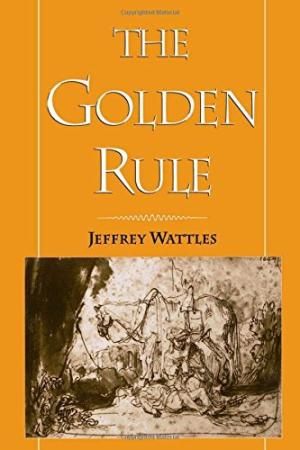
In an age plagued by selfishness, materialism, and violence, ethicists feel impelled to find a universal system of values. To arrive at such a “rule” requires that they struggle with a series of seemingly irreconcilable questions. First, are universal values possible in a pluralistic world, and how does one do justice to both human equality and to individual and cultural differences? How is one to understand the interface between religious moral teachings and the ethics of secular humanism? Finally, can such a system integrate moral intuition and moral reason? In the first scholarly book in English on the golden rule since the seventeenth century, Jeffrey Wattles demonstrates how a clear understanding of the psychological, philosophical, and religious ramifications of the rule can form the synthesis needed to solve these dilemas.The golden rule, “do to others as you would have others do to you,” is widely assumed to have a single meaning, shared by virtually all the world’s religions. It strikes the average person as intuitively true, though most modern philosophers reject it or recast it in more rational form. Wattles surveys the history of the golden rule and its spectrum of meanings in diverse contexts, ranging from Confusius to Plato and Aristotle, from classical Jewish literature to the New Testament. He also considers medieval, Reformation, and modern theological and philosophical responses and objections to the rule, as well as how some early twentieth-century American leaders have tried to use the rule. Wattles draws these diverse interpretation into a synthesis that responds, at the psychological, philosophical, and religious levels, to the challenges to moral living in any given culture. Emotionally, the rules counsels consideration for others feelings by asking that “you place yourself in their shoes.” Intellectually, it activates moral thinking about what is fair. At the same time, it retains a spiritual appeal as “the principle of the practice of the family of God.”Demonstrating how, despite its contentious history, this age-old ethical principle contiues to be relevant in dealing with contemporary issues, The Golden Rule should interest students and scholars working in religious studies, philosophy and ethics, and psychology, as well as anyone looking for an alternative to postmodern cynicism and alienation.
Xiaohe Lu is Professor at the Institute of Philosophy and Executive Director of the Centre for Business Ethics, Shanghai Academy of Social Sciences. Georges Enderle is Arthur and Mary O’Neil Professor of International Business Ethics at the Mendoza College of Business, University of Notre Dame.
Copyright, Contracts, Creators presents an exhaustive and thoroughly researched and documented treatment of copyright protection for independent authors, or freelancers. AALL Spectrum This hardback publication is an interesting exposition on the application of copyright law to the protection of the rights of freelancers. . . Within this subject the book is thoroughly and professionally written and easy to read. It would actually serve as a good introduction to the application of copyright law to literary works as it contains some useful summaries of current law particularly in the UK and the United States. . . If you are interested in copyright law as it applies to author such as freelancers, or just generally want to learn more about the exploitation of copyright works in the digital age I thoroughly recommend this book. Clive Davies, Communications Law . . . deserves the widest possible circulation. . . . much of what [D Agostino] outlines and the solutions she suggests should be read by every freelancer, agency, editor and publishers. . . . D Agostino s writing is quite sprightly and she resists the temptation to be mealy-mouthed and obscure about the issues. D.B. Scott, canadianmags.blogspot.com Copyright, Contracts, Creators provides a new and original analysis on the relationship between owners and creators and recommendations for legislative change to re-balance the relationship. It is a must read for the intellectual property legal community and anyone interested in the promotion of creative works. Marshall Rothstein, Justice of the Supreme Court of Canada Dr Giuseppina D Agostino is a protector of the arts, and her work on intellectual property is designed not only to bring law and order to our digital universe but to bring hope to the artists, poets and writers whose only hope of pursuing their artistry is to earn income for their craft. A wonderful book by one of the most wonderful and forward thinking minds in this subject area. Tony Chapman, Founder and CEO, Capital C, Canada Dr D Agostino has produced an important, carefully documented and courageous study that deserves to be widely read and discussed and (dare one say?) even to have its message heeded. David Vaver, Emeritus Professor of Intellectual Property & IT Law, University of Oxford, UK The digital world has put content within arm s reach of desire. No longer can an author be satisfied that her intellectual property is safely encased in a bound book, nor can a photographer know where his work will be displayed or shared, nor can a writer rest assured that her article will be consumed in the intended magazine or newspaper. The Internet-fueled recycling of existing works into new media is the greatest challenge to copyright law. Copyright, Contracts, Creators evaluates the efficacy of current copyright law to address the contracting and use of creative works. It looks in particular at freelance works and argues that their copyright treatment on a national and international level is inadequate to resolve ambiguities in the contracting and uses of the work. Giuseppina D Agostino discusses how historically laws and courts were more sympathetic to creators, and how the Internet revolution has shifted the scales to favor owners. Consequently, creators often find themselves at opposing ends with copyright owners, and in a disproportionately weaker bargaining position that places tremendous strain on their livelihoods. She argues that this predicament puts society at risk of losing its most valued asset: professional creators. The author calls for a new framework to justify legislative provisions and resolve ambiguities while suggesting principles and mechanisms to address the inadequate treatment of freelance work. Scholars and students of law, cultural studies, and intellectual property will find this volume a critical addition to their libraries. Beyond these, policymakers, lawyers and anyone concerned with the blurring lines of intellectual prope
Designed to offer practical advice on ethical issues to nursing students and practicing nurses, Applied Ethics in Nursing presents suggestions for managing ethical issues in an array of clinical settings and organizational encounters. Key Features Include: ? Easy-to-follow Q & A format ? Example case studies ? Information gathered from focus groups, research, and collaboration with other experts in the field
ما از اخلاق چه انتظاری داریم؟ این سوال شاید تاحدودی برای عموم مردم و یا متخصصان این رشته قابل پاسخ باشد؛ اینکه خوب بودن را به ما بیاموزد و در تنظیم روابط فردی م...

جشن کتاب تهران به ایستگاه سی و یکم رسیده است. حال و احوال نشر کتاب خوب نیست و باید فرهنگدوستان را به خرید و هدیه دادن کتاب ترغیب نمود. خانه اخلاقپژوهان جوان ب...

بنیاد کتابهای اخلاق اسلامی عمدتا پالایش جان از آلودگیها و آراستن آن به زیباییها است. اندیشه محوری این قبیل کتابها آن است که انسان فعلی آنی نیست که باید باشد...

-
0 Comments