Notice: تابع WP_Block_Type_Registry::register به طورنادرست فراخوانی شد. نامهای نوع بلوک نباید حروف بزرگ داشته باشند. لطفاً برای اطلاعات بیشتر، اشکال زدایی در وردپرس را مشاهده کنید. (این پیام در نگارش 5.0.0 افزوده شده است.) in /home/ethicsho/public_html/wp-includes/functions.php on line 5313
Warning: Use of undefined constant TDC_PATH_LEGACY - assumed 'TDC_PATH_LEGACY' (this will throw an Error in a future version of PHP) in /home/ethicsho/public_html/wp-content/plugins/td-composer/td-composer.php on line 109
Warning: Use of undefined constant TDSP_THEME_PATH - assumed 'TDSP_THEME_PATH' (this will throw an Error in a future version of PHP) in /home/ethicsho/public_html/wp-content/plugins/td-composer/td-composer.php on line 113 بایگانیهای 3098 - خانه اخلاق پژوهان جوان Notice: Trying to access array offset on value of type bool in /home/ethicsho/public_html/wp-content/plugins/wp-ulike/inc/general-functions.php on line 807
Here at last is a coherent, unintimidating introduction to the challenging and fascinating landscape of Western philosophy. Written expressly for “anyone who believes there are big questions out there, but does not know how to approach them,” Think provides a sound framework for exploring the most basic themes of philosophy, and for understanding how major philosophers have tackled the questions that have pressed themselves most forcefully on human consciousness. Simon Blackburn, author of the best-selling Oxford Dictionary of Philosophy, begins by making a convincing case for the relevance of philosophy and goes on to give the reader a sense of how the great historical figures such as Plato, Hume, Kant, Descartes, and others have approached its central themes. In a lively and accessible style, Blackburn approaches the nature of human reflection and how we think, or can think, about knowledge, fate, ethics, identity, God, reason, and truth. Each chapter explains a major issue, and gives the reader a self-contained guide through the problems that the philosophers have studied. Because the text approaches these issues from the gound up, the untrained reader will emerge from its pages able to explore other philosophies with greater pleasure and understanding and be able to think–philosophically–for him or herself. Philosophy is often dismissed as a purely academic discipline with no relation to the “real” world non-philosophers are compelled to inhabit. Think dispels this myth and offers a springboard for all those who want to learn how the basic techniques of thinking shape our virtually every aspect of our existence.
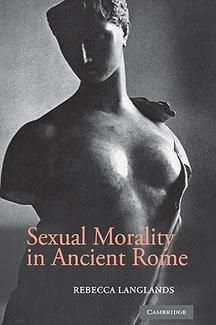
Traditionally, scholars have approached Roman sexuality using categories of sexual ethics drawn from contemporary, Western society. In this book Dr Langlands seeks to move away from these towards a deeper understanding of the issues that mattered to the Romans themselves, and the ways in which they negotiated them, by focusing on the untranslatable concept of pudicitia (broadly meaning ‘sexual virtue’). She offers a series of nuanced close readings of texts from a wide spectrum of Latin literature, including history, oratory, love poetry and Valerius Maximus’ work Memorable Deeds and Sayings. Pudicitia emerges as a controversial and unsettled topic, at the heart of Roman debates about the difference between men and women, the relation between mind and body, and the ethics of power and status differentiation within Roman culture. The book develops strategies for approaching the study of an ancient culture through sensitive critical readings of its literary productions.
In this new edition of the classic book on the moral conduct of war, Sidney Axinn provides a full-length treatment of the military conventions from a philosophical point of view. Axinn considers these basic ethical questions within the context of the laws of warfare: Should a good soldier ever disobey a direct military order? Are there restrictions on how we fight a war? What is meant by “military honour,” and does it really affect the contemporary soldier? Is human dignity possible under battlefield conditions?Axinn answers “yes” to these questions. His objective inA Moral Militaryis to establish a basic framework for moral military action and to assist in analyzing military professional ethics. He argues for the seriousness of the concept of military honour but limits honourable military activity by a strict interpretation of the notion of war crime.With revisions and expansions throughout, including a new chapter on torture,A Moral Militaryis an essential guide on the nature of war during a time when the limits of acceptable behaviour are being stretched in new directions.
ما از اخلاق چه انتظاری داریم؟ این سوال شاید تاحدودی برای عموم مردم و یا متخصصان این رشته قابل پاسخ باشد؛ اینکه خوب بودن را به ما بیاموزد و در تنظیم روابط فردی م...

جشن کتاب تهران به ایستگاه سی و یکم رسیده است. حال و احوال نشر کتاب خوب نیست و باید فرهنگدوستان را به خرید و هدیه دادن کتاب ترغیب نمود. خانه اخلاقپژوهان جوان ب...

بنیاد کتابهای اخلاق اسلامی عمدتا پالایش جان از آلودگیها و آراستن آن به زیباییها است. اندیشه محوری این قبیل کتابها آن است که انسان فعلی آنی نیست که باید باشد...

-
0 Comments