Notice: تابع WP_Block_Type_Registry::register به طورنادرست فراخوانی شد. نامهای نوع بلوک نباید حروف بزرگ داشته باشند. لطفاً برای اطلاعات بیشتر، اشکال زدایی در وردپرس را مشاهده کنید. (این پیام در نگارش 5.0.0 افزوده شده است.) in /home/ethicsho/public_html/wp-includes/functions.php on line 5313
Warning: Use of undefined constant TDC_PATH_LEGACY - assumed 'TDC_PATH_LEGACY' (this will throw an Error in a future version of PHP) in /home/ethicsho/public_html/wp-content/plugins/td-composer/td-composer.php on line 109
Warning: Use of undefined constant TDSP_THEME_PATH - assumed 'TDSP_THEME_PATH' (this will throw an Error in a future version of PHP) in /home/ethicsho/public_html/wp-content/plugins/td-composer/td-composer.php on line 113 بایگانیهای 3088 - خانه اخلاق پژوهان جوان Notice: Trying to access array offset on value of type bool in /home/ethicsho/public_html/wp-content/plugins/wp-ulike/inc/general-functions.php on line 807
This book shows how Darwinian biology supports an Aristotelian view of ethics as rooted in human nature. Defending a conception of “Darwinian natural right” based on the claim that the good is the desirable, the author argues that there are at least twenty natural desires that are universal to all human societies because they are based in human biology. The satisfaction of these natural desires constitutes a universal standard for judging social practice as either fulfilling or frustrating human nature, although prudence is required in judging what is best for particular circumstances.The author studies the familial bonding of parents and children and the conjugal bonding of men and women as illustrating social behavior that conforms to Darwinian natural right. He also studies slavery and psychopathy as illustrating social behavior that contradicts Darwinian natural right. He argues as well that the natural moral sense does not require religious belief, although such belief can sometimes reinforce the dictates of nature.
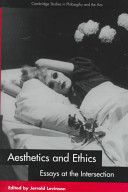
This major collection of essays stands at the border of aesthetics and ethics and deals with charged issues of practical import: art and morality, the ethics of taste, and censorship. As such its potential interest is by no means confined to professional philosophers; it should also appeal to art historians and critics, literary theorists, and students of film. Prominent philosophers in both aesthetics and ethics tackle a wide array of issues. Some of the questions explored in the volume include: Can art be morally enlightening and, if so, how? If a work of art is morally better does that make it better as art? Is morally deficient art to be shunned, or even censored? Do subjects of artworks have rights as to how they are represented? Do artists have duties as artists and duties as human beings, and if so, to whom? How much tension is there between the demands of art and the demands of life?
In this important study Nicholas Wolterstorff interprets and discusses the ethics of belief which Locke developed in the latter part of Book IV of his “Essay Concerning Human Understanding.” After lengthy discussion on the origin of ideas, the nature of language, and the nature of knowledge, Locke got around to arguing what he indicated in the opening Epistle to the Reader to be his overarching aim: how we ought to govern our belief, especially (though by no means only) on matters of religion and morality. Professor Wolterstorff shows that what above all placed this topic on Locke’s agenda was the collapse, in his day, of a once-unified moral and religious tradition in Europe into warring factions. Locke’s epistemology was thus a culturally and socially engaged one; it was his response to the cultural crisis of his day. Convinced also that of genuine knowledge we human beings have very little, Locke argued that instead of following tradition we ought to turn “to the things themselves” and let “Reason be your guide.” This view of Locke, in which centrality is given to the last book of the “Essay,” invites an interpretation of the origins of modern philosophy different from most of the current ones. Accordingly, after discussing Hume’s powerful attack on Locke’s recommended practice, Wolterstorff argues for Locke’s originality and discusses his contribution to the modernity of post-sixteenth-century philosophy.
Is it possible to study ethics objectively, or are moral judgements inevitably subjective? Are ancient theories of ethics of any contemporary relevance? Which ethical theory offers the most convincing explanation of how best to live one’s life? Eight Theories of Ethics is a comprehensive introduction to the theories of ethics encountered by first-time students. Gordon Graham introduces the fundamental concepts that underpin ethics, such as relativism and objectivity, and then devotes his attention to each of the eight major theories of ethics: * egoism* hedonism* naturalism and virtue theory* existentialism* Kantianism* utilitarianism* contractualism* religion. Throughout the book, Gordon Graham draws on examples from great moral philosophers such as Aristotle, Kant and Mill, and also from contemporary debates over human nature, the environment and citizenship. Eight Theories of Ethics is written in an engaging and student-friendly style, with detailed suggestions for further reading at the end of each chapter – including original sources and contemporary discussions. It is ideal for anyone coming to this area of philosophy for the first time, and for those studying ethics in related disciplines such as politics, law, nursing and medicine.
ما از اخلاق چه انتظاری داریم؟ این سوال شاید تاحدودی برای عموم مردم و یا متخصصان این رشته قابل پاسخ باشد؛ اینکه خوب بودن را به ما بیاموزد و در تنظیم روابط فردی م...

جشن کتاب تهران به ایستگاه سی و یکم رسیده است. حال و احوال نشر کتاب خوب نیست و باید فرهنگدوستان را به خرید و هدیه دادن کتاب ترغیب نمود. خانه اخلاقپژوهان جوان ب...

بنیاد کتابهای اخلاق اسلامی عمدتا پالایش جان از آلودگیها و آراستن آن به زیباییها است. اندیشه محوری این قبیل کتابها آن است که انسان فعلی آنی نیست که باید باشد...

-
0 Comments