Notice: تابع WP_Block_Type_Registry::register به طورنادرست فراخوانی شد. نامهای نوع بلوک نباید حروف بزرگ داشته باشند. لطفاً برای اطلاعات بیشتر، اشکال زدایی در وردپرس را مشاهده کنید. (این پیام در نگارش 5.0.0 افزوده شده است.) in /home/ethicsho/public_html/wp-includes/functions.php on line 5313
Warning: Use of undefined constant TDC_PATH_LEGACY - assumed 'TDC_PATH_LEGACY' (this will throw an Error in a future version of PHP) in /home/ethicsho/public_html/wp-content/plugins/td-composer/td-composer.php on line 109
Warning: Use of undefined constant TDSP_THEME_PATH - assumed 'TDSP_THEME_PATH' (this will throw an Error in a future version of PHP) in /home/ethicsho/public_html/wp-content/plugins/td-composer/td-composer.php on line 113 بایگانیهای 3052 - خانه اخلاق پژوهان جوان Notice: Trying to access array offset on value of type bool in /home/ethicsho/public_html/wp-content/plugins/wp-ulike/inc/general-functions.php on line 807
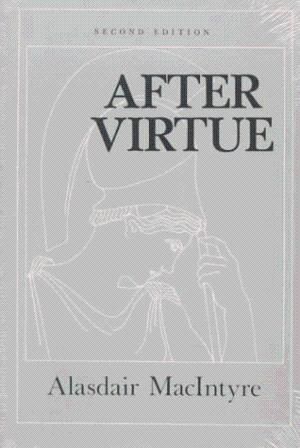
A disquieting suggestion — The nature of moral disagreement today and the claims of emotivism — Emotivism: social content and social context — The predecessor culture and the enlightenment project of justifying morality — Why the enlightenment project of justifying morality had to fail — Some consequences of the failure of the enlightenment project — “Fact”, explanation and expertise — The character of generalizations in social science and their lack of predictive power — Nietzsche or Aristotle? — The virtues in heroic societies — The virtues at Athens — Aristotle’s account of the virtues — Medieval aspects and occasions — The nature of the virtues — The virtues, the unity of a human life and the concept of a tradition — From the virtues to virtue and after virtue — Justice as a virtue: changing conceptions — After virtue: Nietzsche or Aristotle, Trotsky and St. Benedict — Postscript to the second edition.
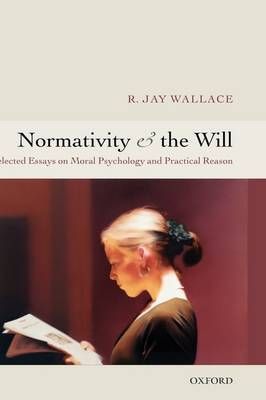
Normativity and the Will collects fourteen important papers on moral psychology and practical reason by R. Jay Wallace, one of the leading philosophers currently working in these areas. The papers explore the interpenetration of normative and psychological issues in a series of debates that lie at the heart of moral philosophy. Themes that are addressed include reason, desire, and the will; responsibility, identification, and emotion; and the relation between morality and other normative domains. Wallace’s treatments of these topics are at once sophisticated and engaging. Taken together, they constitute an advertisement for a distinctive way of pursuing issues in moral psychology and the theory of practical reason, and they articulate and defend a unified framework for thinking about those issues. The volume also features a helpful new introduction.
FIRST PRINCIPLES of ETHICS. This book has been designed as a basis for instruction in Ethical Science in Schools and Colleges. Originally published in 1861. Many of the earliest books, particularly those dating back to the 1900s and before, are now extremely scarce and increasingly expensive. We are republishing these classic works in affordable, high quality, modern editions, using the original text and artwork. This text-book is concise and brief, presenting all the essential principles, to the neglect of details, which can be supplied by the teacher or by general reading. The book presents a more orderly outline of the principles of the science, and supply a more rational foundation for them, than has usually been done in treatises on Ethics. While the aim of the book is to be orderly and consecutive development of these principles, opinions of others have been introduced into the text. It is hoped that these historical abstracts will be found interesting and profitable.
ما از اخلاق چه انتظاری داریم؟ این سوال شاید تاحدودی برای عموم مردم و یا متخصصان این رشته قابل پاسخ باشد؛ اینکه خوب بودن را به ما بیاموزد و در تنظیم روابط فردی م...

جشن کتاب تهران به ایستگاه سی و یکم رسیده است. حال و احوال نشر کتاب خوب نیست و باید فرهنگدوستان را به خرید و هدیه دادن کتاب ترغیب نمود. خانه اخلاقپژوهان جوان ب...

بنیاد کتابهای اخلاق اسلامی عمدتا پالایش جان از آلودگیها و آراستن آن به زیباییها است. اندیشه محوری این قبیل کتابها آن است که انسان فعلی آنی نیست که باید باشد...

-
0 Comments