Notice: تابع WP_Block_Type_Registry::register به طورنادرست فراخوانی شد. نامهای نوع بلوک نباید حروف بزرگ داشته باشند. لطفاً برای اطلاعات بیشتر، اشکال زدایی در وردپرس را مشاهده کنید. (این پیام در نگارش 5.0.0 افزوده شده است.) in /home/ethicsho/public_html/wp-includes/functions.php on line 5313
Warning: Use of undefined constant TDC_PATH_LEGACY - assumed 'TDC_PATH_LEGACY' (this will throw an Error in a future version of PHP) in /home/ethicsho/public_html/wp-content/plugins/td-composer/td-composer.php on line 109
Warning: Use of undefined constant TDSP_THEME_PATH - assumed 'TDSP_THEME_PATH' (this will throw an Error in a future version of PHP) in /home/ethicsho/public_html/wp-content/plugins/td-composer/td-composer.php on line 113 بایگانیهای 3049 - خانه اخلاق پژوهان جوان Notice: Trying to access array offset on value of type bool in /home/ethicsho/public_html/wp-content/plugins/wp-ulike/inc/general-functions.php on line 807
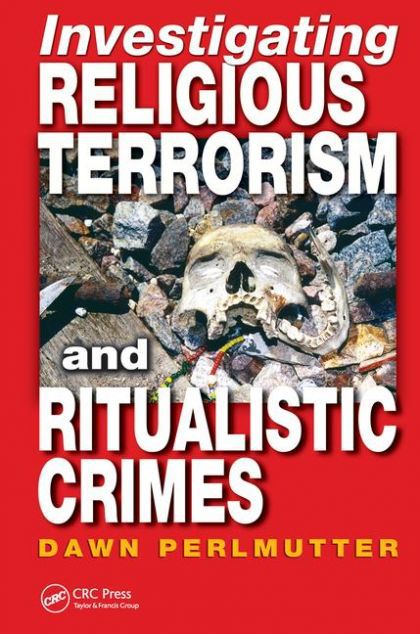
The legalities of particular religious practices depend on many factors, such as the type of occult or religious activity, the current laws, and the intention of the individual practitioner. Written by the director of the Institute for the Research of Organized and Ritual Violence, Investigating Religious Terrorism and Ritualistic Crimes is the first complete resource to assist in crime scene identification, criminal investigation, and prosecution of religious terrorism and occult crime. It analyzes occult and religious terrorist practices from each group’s theological perspective to help you understand traditional and contemporary occult groups and domestic and international terrorist religions, demarcate legal religious practice from criminal activity, and acquire techniques specific to occult and terrorist religion crime scene investigation.
Harry G. Frankfurt begins his inquiry by asking, “What is it about human beings that makes it possible for us to take ourselves seriously?” Based on The Tanner Lectures in Moral Philosophy, Taking Ourselves Seriously and Getting It Right delves into this provocative and original question. The author maintains that taking ourselves seriously presupposes an inward-directed, reflexive oversight that enables us to focus our attention directly upon ourselves, and “[it] means that we are not prepared to accept ourselves just as we come. We want our thoughts, our feelings, our choices, and our behavior to make sense. We are not satisfied to think that our ideas are formed haphazardly, or that our actions are driven by transient and opaque impulses or by mindless decisions. We need to direct ourselves—or at any rate to believe that we are directing ourselves—in thoughtful conformity to stable and appropriate norms. We want to get things right.” The essays delineate two features that have a critical role to play in this: our rationality, and our ability to love. Frankfurt incisively explores the roles of reason and of love in our active lives, and considers the relation between these two motivating forces of our actions. The argument is that the authority of practical reason is less fundamental than the authority of love. Love, as the author defines it, is a volitional matter, that is, it consists in what we are actually committed to caring about. Frankfurt adds that “The object of love can be almost anything—a life, a quality of experience, a person, a group, a moral ideal, a nonmoral ideal, a tradition, whatever.” However, these objects and ideals are difficult to comprehend and often in conflict with each other. Moral principles play an important supporting role in this process as they help us develop and elucidate a vision that inspires our love.The first section of the book consists of the two lectures, which are entitled “Taking Ourselves Seriously” and “Getting It Right.” The second section consists of comments in response by Christine M. Korsgaard, Michael E. Bratman, and Meir Dan-Cohen. The book includes a preface by Debra Satz.
Which political principles should govern global politics? In his new book, Simon Caney engages with the work of philosophers, political theorists, and international relations scholars in order to examine some of the most pressing global issues of our time. Are there universal civil, political, and economic human rights? Should there be a system of supra-state institutions? Can humanitarian intervention be justified?
Here is a thorough, vividly written introduction to contemporary philosophy and some of the most crucial questions of human existence: the nature of mind and knowledge, the status of moral claims, the existence of God, the role of science, and the mysteries of language, among them. In Thinking It Through, esteemed philosopher Kwame Anthony Appiah shows us what it means to “do” philosophy in our time and why it should matter to anyone who wishes to live a more thoughtful life. Opposing the common misconceptions that being a philosopher means espousing a set of philosophical beliefs, or being a follower of a particular thinker, Appiah argues that “the result of philosophical exploration is not the end of inquiry in a settled opinion, but a mind resting more comfortably among many possibilities, or else the reframing of the question, and a new inquiry.” Thinking It Through is organized around eight central topics — mind, knowledge, language, science, morality, politics, law, and metaphysics. It traces how philosophers in the past have considered each subject (how Hobbes, Wittgenstein, and Frege, for example, approached the problem of language) and then explores some of the major questions that still engage philosophers today. More important, Appiah shows us not only what philosophers have thought but how they think, giving us examples we might use in our own attempts to navigate the complex issues that confront any reflective person in the 21st century. Filled with concrete examples of how philosophers work and written in the liveliest prose, Thinking It Through guides readers through the process of philosophical reflection and enlarges our understanding of the central questions of human life.
ما از اخلاق چه انتظاری داریم؟ این سوال شاید تاحدودی برای عموم مردم و یا متخصصان این رشته قابل پاسخ باشد؛ اینکه خوب بودن را به ما بیاموزد و در تنظیم روابط فردی م...

جشن کتاب تهران به ایستگاه سی و یکم رسیده است. حال و احوال نشر کتاب خوب نیست و باید فرهنگدوستان را به خرید و هدیه دادن کتاب ترغیب نمود. خانه اخلاقپژوهان جوان ب...

بنیاد کتابهای اخلاق اسلامی عمدتا پالایش جان از آلودگیها و آراستن آن به زیباییها است. اندیشه محوری این قبیل کتابها آن است که انسان فعلی آنی نیست که باید باشد...

-
0 Comments