Notice: تابع WP_Block_Type_Registry::register به طورنادرست فراخوانی شد. نامهای نوع بلوک نباید حروف بزرگ داشته باشند. لطفاً برای اطلاعات بیشتر، اشکال زدایی در وردپرس را مشاهده کنید. (این پیام در نگارش 5.0.0 افزوده شده است.) in /home/ethicsho/public_html/wp-includes/functions.php on line 5313
Warning: Use of undefined constant TDC_PATH_LEGACY - assumed 'TDC_PATH_LEGACY' (this will throw an Error in a future version of PHP) in /home/ethicsho/public_html/wp-content/plugins/td-composer/td-composer.php on line 109
Warning: Use of undefined constant TDSP_THEME_PATH - assumed 'TDSP_THEME_PATH' (this will throw an Error in a future version of PHP) in /home/ethicsho/public_html/wp-content/plugins/td-composer/td-composer.php on line 113 بایگانیهای 3034 - خانه اخلاق پژوهان جوان Notice: Trying to access array offset on value of type bool in /home/ethicsho/public_html/wp-content/plugins/wp-ulike/inc/general-functions.php on line 807
Philosophy of Right remains among the most influential works in Western political theory. It introduces a notion of civil society that has proven of inestimable importance to diverse philosophical and social agendas. In this transcription of the lectures that formed the initial version of Hegel’s text, the philosopher presents his thought with a clarity and directness seldom matched in his later writings. Nowhere does Hegel make clearer the difference between his concept of objective spirit and traditional concepts of natural law. Nowhere does he offer a more prominent treatment of the key notion of recognition. The long-awaited appearance of this first English-language translation of these lectures is a major event for Hegel scholars, philosophers, and political theorists. Philosophy of Right remains among the most influential works in Western political theory. It introduces a notion of civil society that has proven of inestimable importance to diverse philosophical and social agendas. In this transcription of the lectures that formed the initial version of Hegel’s text, the philosopher presents his thought with a clarity and directness seldom matched in his later writings. Nowhere does Hegel make clearer the difference between his concept of objective spirit and traditional concepts of natural law. Nowhere does he offer a more prominent treatment of the key notion of recognition. The long-awaited appearance of this first English-language translation of these lectures is a major event for Hegel scholars, philosophers, and political theorists.
Contemporary debate about religion seems to be going nowhere. Atheists persist with their arguments, many plausible and some unanswerable, but these make no impact on religious believers. Defenders of religion find atheists equally unwilling to cede ground. The Meaning of Belief offers a way out of this stalemate. An atheist himself, Tim Crane writes that there is a fundamental flaw with most atheists’ basic approach: religion is not what they think it is. Atheists tend to treat religion as a kind of primitive cosmology, as the sort of explanation of the universe that science offers. They conclude that religious believers are irrational, superstitious, and bigoted. But this view of religion is almost entirely inaccurate. Crane offers an alternative account based on two ideas. The first is the idea of a religious impulse: the sense people have of something transcending the world of ordinary experience, even if it cannot be explicitly articulated. The second is the idea of identification: the fact that religion involves belonging to a specific social group and participating in practices that reinforce the bonds of belonging. Once these ideas are properly understood, the inadequacy of atheists’ conventional conception of religion emerges. The Meaning of Belief does not assess the truth or falsehood of religion. Rather, it looks at the meaning of religious belief and offers a way of understanding it that both makes sense of current debate and also suggests what more intellectually responsible and practically effective attitudes atheists might take to the phenomenon of religion.–
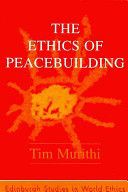
In the aftermath of the Cold War the hope for a more stable and just international order rapidly dissolved underneath the pressure of internecine conflicts raging on all continents.The Rwanda and Srebrenica genocides especially proved that promoting peace is a particularly fraught challenge in the face of intra-state conflict and sub-national groups that boldy confront nation-states.Tim Murithi investigates the role that ethics plays in promoting and consolidating peacebuilding, synthesizing the fields of moral philosophy and international relations through an analysis of the ethics of negotiation, mediation, forgiveness, and reconciliation. In its exploration of the extent to which ethical concerns influence and inform peacebuilding, this book contributes to a growing body of literature on ethics and international relations that enable students, scholars, and practitioners to contextualize their understanding of a principled peacebuilding.
A timely and provocative collection which surveys the legal and ethical issues surrounding the medical and legal management of death and dying. Aimed to be accessible to those from both the worlds of law and medicine, this volume focuses uniquely upon questions increasingly significant for both sets of practitioners, as new medical technologies are used more often to intervene to save and extend lives, sometimes without regard for the quality of life of those who are being kept alive.
ما از اخلاق چه انتظاری داریم؟ این سوال شاید تاحدودی برای عموم مردم و یا متخصصان این رشته قابل پاسخ باشد؛ اینکه خوب بودن را به ما بیاموزد و در تنظیم روابط فردی م...

جشن کتاب تهران به ایستگاه سی و یکم رسیده است. حال و احوال نشر کتاب خوب نیست و باید فرهنگدوستان را به خرید و هدیه دادن کتاب ترغیب نمود. خانه اخلاقپژوهان جوان ب...

بنیاد کتابهای اخلاق اسلامی عمدتا پالایش جان از آلودگیها و آراستن آن به زیباییها است. اندیشه محوری این قبیل کتابها آن است که انسان فعلی آنی نیست که باید باشد...

-
0 Comments