Notice: تابع WP_Block_Type_Registry::register به طورنادرست فراخوانی شد. نامهای نوع بلوک نباید حروف بزرگ داشته باشند. لطفاً برای اطلاعات بیشتر، اشکال زدایی در وردپرس را مشاهده کنید. (این پیام در نگارش 5.0.0 افزوده شده است.) in /home/ethicsho/public_html/wp-includes/functions.php on line 5313
Warning: Use of undefined constant TDC_PATH_LEGACY - assumed 'TDC_PATH_LEGACY' (this will throw an Error in a future version of PHP) in /home/ethicsho/public_html/wp-content/plugins/td-composer/td-composer.php on line 109
Warning: Use of undefined constant TDSP_THEME_PATH - assumed 'TDSP_THEME_PATH' (this will throw an Error in a future version of PHP) in /home/ethicsho/public_html/wp-content/plugins/td-composer/td-composer.php on line 113 بایگانیهای 3031 - خانه اخلاق پژوهان جوان Notice: Trying to access array offset on value of type bool in /home/ethicsho/public_html/wp-content/plugins/wp-ulike/inc/general-functions.php on line 807
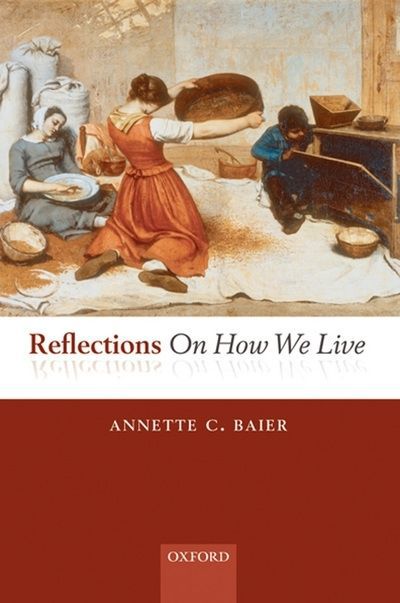
The pioneering moral philosopher Annette Baier presents a series of new and recent essays in ethics, broadly conceived to include both engagements with other philosophers and personal meditations on life. Baier’s unique voice and insight illuminate a wide range of topics. In the public sphere, she enquires into patriotism, what we owe future people, and what toleration we should have for killing. In the private sphere, she discusses honesty, self-knowledge, hope, sympathy, and self-trust, and offers personal reflections on faces, friendship, and alienating affection.
Art and Moralityis a collection of groundbreaking new papers on the theme of aesthetics and ethics, and the link between the two subjects. A group of world-class contributors tackle the important question that arise when one thinks about the moral dimensions of art and the aesthetic dimension of moral life. The volume is a significant contribution to the philosophical literature, opening up unexplored questions and shedding new light on more traditional debates in aesthetics. The topics explored include the relation of aesthetic to ethical judgment; the relation of artistic experience to moral consciousness; the moral status of fiction; the concepts of sentimentality and decadence; the moral dimension of critical practice, pictorial art and music; the moral significance of tragedy; and the connections between artistic and moral issues elaborated in the writings of central figures in modern philosophy such as Kant, Schopenhauer and Nietzsche.
Once regarded as a conservative critic of culture, then enlisted by the court theoreticians of Nazism, Nietzsche has come to be revered by postmodern thinkers as one of their founding fathers, a prophet of human liberation who revealed the perspectival character of all knowledge and broke radically with traditional forms of morality and philosophy. In Nietzsche: The Ethics of an Immoralist, Peter Berkowitz challenges this new orthodoxy, asserting that it produces a one-dimensional picture of Nietzsche’s philosophical explorations and passes by much of what is provocative and problematic in his thought. Berkowitz argues that Nietzsche’s thought is rooted in extreme and conflicting opinions about metaphysics and human nature. Discovering a deep unity in Nietzsche’s work by exploring the structure and argumentative movement of a wide range of his books, Berkowitz shows that Nietzsche is a moral and political philosopher in the Socratic sense whose governing question is, “What is the best life?” Nietzsche, Berkowitz argues, puts forward a severe and aristocratic ethics, an ethics of creativity, that demands that the few human beings who are capable acquire a fundamental understanding of and attain total mastery over the world. Following the path of Nietzsche’s thought, Berkowitz shows that this mastery, which represents a suprapolitical form of rule and entails a radical denigration of political life, is, from Nietzsche’s own perspective, neither desirable nor attainable. Out of the colorful and richly textured fabric of Nietzsche’s books, Peter Berkowitz weaves an interpretation of Nietzsche’s achievement that is at once respectful and skeptical, an interpretation that brings out the love of truth, the courage, and the yearning for the good that mark Nietzsche’s magisterial effort to live an examined life by giving an account of the best life.
ما از اخلاق چه انتظاری داریم؟ این سوال شاید تاحدودی برای عموم مردم و یا متخصصان این رشته قابل پاسخ باشد؛ اینکه خوب بودن را به ما بیاموزد و در تنظیم روابط فردی م...

جشن کتاب تهران به ایستگاه سی و یکم رسیده است. حال و احوال نشر کتاب خوب نیست و باید فرهنگدوستان را به خرید و هدیه دادن کتاب ترغیب نمود. خانه اخلاقپژوهان جوان ب...

بنیاد کتابهای اخلاق اسلامی عمدتا پالایش جان از آلودگیها و آراستن آن به زیباییها است. اندیشه محوری این قبیل کتابها آن است که انسان فعلی آنی نیست که باید باشد...

-
0 Comments