Notice: تابع WP_Block_Type_Registry::register به طورنادرست فراخوانی شد. نامهای نوع بلوک نباید حروف بزرگ داشته باشند. لطفاً برای اطلاعات بیشتر، اشکال زدایی در وردپرس را مشاهده کنید. (این پیام در نگارش 5.0.0 افزوده شده است.) in /home/ethicsho/public_html/wp-includes/functions.php on line 5313
Warning: Use of undefined constant TDC_PATH_LEGACY - assumed 'TDC_PATH_LEGACY' (this will throw an Error in a future version of PHP) in /home/ethicsho/public_html/wp-content/plugins/td-composer/td-composer.php on line 109
Warning: Use of undefined constant TDSP_THEME_PATH - assumed 'TDSP_THEME_PATH' (this will throw an Error in a future version of PHP) in /home/ethicsho/public_html/wp-content/plugins/td-composer/td-composer.php on line 113 بایگانیهای 3025 - خانه اخلاق پژوهان جوان Notice: Trying to access array offset on value of type bool in /home/ethicsho/public_html/wp-content/plugins/wp-ulike/inc/general-functions.php on line 807
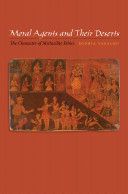
Must good deeds be rewarded and wrongdoers punished? Would God be unjust if He failed to punish and reward? And what is it about good or evil actions and moral identity that might generate such necessities? These were some of the vital religious and philosophical questions that eighth- and ninth-century Mu’tazilite theologians and their sophisticated successors attempted to answer, giving rise to a distinctive ethical position and one of the most prominent and controversial intellectual trends in medieval Islam. The Mu’tazilites developed a view of ethics whose distinguishing features were its austere moral objectivism and the crucial role it assigned to reason in the knowledge of moral truths. Central to this ethical vision was the notion of moral desert, and of the good and evil consequences–reward or punishment–deserved through a person’s acts. Moral Agents and Their Desertsis the first book-length study of this central theme in Mu’tazilite ethics, and an attempt to grapple with the philosophical questions it raises. At the same time, it is a bid to question the ways in which modern readers, coming to medieval Islamic thought with a philosophical interest, seek to read and converse with Mu’tazilite theology.Moral Agents and Their Desertstracks the challenges and rewards involved in the pursuit of the right conversation at the seams between modern and medieval concerns.
Few thinkers are more controversial in the history of philosophy than Hegel. He has been dismissed as a charlatan and obscurantist, but also praised as one of the greatest thinkers in modern philosophy. No one interested in philosophy can afford to ignore him. This volume considers all the major aspects of Hegel’s work: epistemology, logic, ethics, political philosophy, aesthetics, philosophy of history, philosophy of religion. Special attention is devoted to problems in the interpretation of Hegel: the unity of the Phenomenology of Spirit; the value of the dialectical method; the status of his logic; the nature of his politics. A final group of chapters treats Hegel’s complex historical legacy: the development of Hegelianism and its growth into a left and right wing school; the relation of Hegel and Marx; and the subtle connections between Hegel and contemporary analytic philosophy.
Modernity has challenged the ancient ideal of a universal quest for wisdom, and today’s world of conflicting cultures and values has raised further doubts regarding the possibility of objective ethical standards. Robert Kane refocuses the debate on the philosophical quest for wisdom, and argues that ethical principles about right action and the good life can be seen to emerge from that very quest itself. His book contends that the search for wisdom involves a persistent striving to overcome narrowness of vision that comes from the inevitable limitations of finite points of view. When applied to questions of value and the good life, this striving has ethical implications about the way we should treat ourselves and others. This study argues for the merits of this central thesis against alternative theories in contemporary normative ethics, and discusses its practical applications for social ethics, political philosophy, law and moral education.
ما از اخلاق چه انتظاری داریم؟ این سوال شاید تاحدودی برای عموم مردم و یا متخصصان این رشته قابل پاسخ باشد؛ اینکه خوب بودن را به ما بیاموزد و در تنظیم روابط فردی م...

جشن کتاب تهران به ایستگاه سی و یکم رسیده است. حال و احوال نشر کتاب خوب نیست و باید فرهنگدوستان را به خرید و هدیه دادن کتاب ترغیب نمود. خانه اخلاقپژوهان جوان ب...

بنیاد کتابهای اخلاق اسلامی عمدتا پالایش جان از آلودگیها و آراستن آن به زیباییها است. اندیشه محوری این قبیل کتابها آن است که انسان فعلی آنی نیست که باید باشد...

-
0 Comments