Notice: تابع WP_Block_Type_Registry::register به طورنادرست فراخوانی شد. نامهای نوع بلوک نباید حروف بزرگ داشته باشند. لطفاً برای اطلاعات بیشتر، اشکال زدایی در وردپرس را مشاهده کنید. (این پیام در نگارش 5.0.0 افزوده شده است.) in /home/ethicsho/public_html/wp-includes/functions.php on line 5313
Warning: Use of undefined constant TDC_PATH_LEGACY - assumed 'TDC_PATH_LEGACY' (this will throw an Error in a future version of PHP) in /home/ethicsho/public_html/wp-content/plugins/td-composer/td-composer.php on line 109
Warning: Use of undefined constant TDSP_THEME_PATH - assumed 'TDSP_THEME_PATH' (this will throw an Error in a future version of PHP) in /home/ethicsho/public_html/wp-content/plugins/td-composer/td-composer.php on line 113 بایگانیهای 2955 - خانه اخلاق پژوهان جوان Notice: Trying to access array offset on value of type bool in /home/ethicsho/public_html/wp-content/plugins/wp-ulike/inc/general-functions.php on line 807
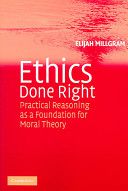
Ethics Done Right examines how practical reasoning can be put into the service of ethical and moral theory. Elijah Millgram demonstrates that the key to thinking about ethics is to understand generally how to make decisions. The papers in this volume support a methodological approach and trace the connections between two kinds of theory in utilitarianism, Kantian ethics, virtue ethics, Hume’s moral philosophy, and moral particularism. Unlike other studies of ethics, the book does not advocate a particular moral theory. Rather, it offers a tool that enables one to decide for oneself.
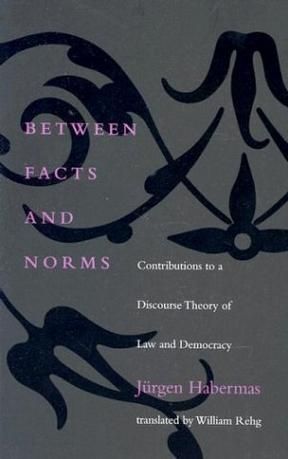
In Between Facts and Norms Jurgen Habermas works out the legal and political implications of his Theory of Communicative Action (1981), bringing to fruition the project announced with his publication of The Structural Transformation of the Public Sphere in 1962. This new work is a major contribution to recent debates on the rule of law and the possibilities of democracy in postindustrial societies, but it is much more.The introduction by William Rehg succinctly captures the special nature of the work, noting that it offers a sweeping, sociologically informed conceptualization of law and basic rights, a normative account of the rule of law and the constitutional state, an attempt to bridge normative and empirical approaches to democracy, and an account of the social context required for democracy. Finally, the work frames and caps these arguments with a bold proposal for a new paradigm of law that goes beyond the dichotomies that have afflicted modern political theory from its inception and that still underlie current controversies between so- called liberals and civic republicans.The book includes a postscript written in 1994, which restates the argument in light of its initial reception, and two appendixes, which cover key developments that preceded the book.Habermas himself was actively involved in the translation, adapting the text as necessary to make it more accessible to English-speaking readers.
In THE CRITIQUE OF JUDGMENT (1790), Immanuel Kant (1724-1804) seeks to establish the a priori principles underlying the faculty of judgement, just as he did in his previous critiques of pure and practical reason. The first part deals with the subject of our aesthetic sensibility; we respond to certain natural phenomena as beautiful, says Kant, when we recognise in nature a harmonious order that satisfies the mind’s own need for order. The second half of the critique concentrates on the apparent teleology in nature’s design of organisms. Kant argues that our minds are inclined to see purpose and order in nature and this is the main principle underlying all of our judgements. Although this might imply a super sensible Designer, Kant insists that we cannot prove a supernatural dimension or the existence of God. Such considerations are beyond reason and are solely the province of faith.
Are there key respects in which character and character defects are voluntary? Can agents with serious vices be rational agents? Jonathan Jacobs answers in the affirmative. Moral character is shaped through voluntary habits, including the ways we habituate ourselves, Jacobs believes. Just as individuals can voluntarily lead unhappy lives without making unhappiness an end, so can they degrade their ethical characters through voluntary action that does not have establishment of vice as its end. Choosing Character presents an account of ethical disability, expanding the domain of responsibility and explicating the role of character in ethical cognition.Jacobs contends that agents become ethically disabled voluntarily when their habits impair their ability to properly appreciate ethical considerations. Such agents are rational, responsible individuals who are yet incapable of virtuous action. The view develops and modifies Aristotelian claims concerning the fixity of character. Jacobs’ interpretation is developed in contrast to the overlooked work of Maimonides, who also used Aristotelian resources but argued for the possibility of character change. The notion of ethical disability has profound ramifications for ethics and for current debates about blame and punishment.
ما از اخلاق چه انتظاری داریم؟ این سوال شاید تاحدودی برای عموم مردم و یا متخصصان این رشته قابل پاسخ باشد؛ اینکه خوب بودن را به ما بیاموزد و در تنظیم روابط فردی م...

جشن کتاب تهران به ایستگاه سی و یکم رسیده است. حال و احوال نشر کتاب خوب نیست و باید فرهنگدوستان را به خرید و هدیه دادن کتاب ترغیب نمود. خانه اخلاقپژوهان جوان ب...

بنیاد کتابهای اخلاق اسلامی عمدتا پالایش جان از آلودگیها و آراستن آن به زیباییها است. اندیشه محوری این قبیل کتابها آن است که انسان فعلی آنی نیست که باید باشد...

-
0 Comments