Notice: تابع WP_Block_Type_Registry::register به طورنادرست فراخوانی شد. نامهای نوع بلوک نباید حروف بزرگ داشته باشند. لطفاً برای اطلاعات بیشتر، اشکال زدایی در وردپرس را مشاهده کنید. (این پیام در نگارش 5.0.0 افزوده شده است.) in /home/ethicsho/public_html/wp-includes/functions.php on line 5313
Warning: Use of undefined constant TDC_PATH_LEGACY - assumed 'TDC_PATH_LEGACY' (this will throw an Error in a future version of PHP) in /home/ethicsho/public_html/wp-content/plugins/td-composer/td-composer.php on line 109
Warning: Use of undefined constant TDSP_THEME_PATH - assumed 'TDSP_THEME_PATH' (this will throw an Error in a future version of PHP) in /home/ethicsho/public_html/wp-content/plugins/td-composer/td-composer.php on line 113 بایگانیهای 2929 - خانه اخلاق پژوهان جوان Notice: Trying to access array offset on value of type bool in /home/ethicsho/public_html/wp-content/plugins/wp-ulike/inc/general-functions.php on line 807
The past decade has seen an explosion of writing about media ethics and accountability. Most of the work has been focused on the normative side of the subject: ethical philosophies, ethics codes, suggestions for how journalists (and other media workers) can make justifiable decisions when faced with tough ethical questions.Empirical research into media ethics and accountability, by contrast, is hard to find. Relatively little of the past decade’s work–and virtually none of the book-length treatments of the subject–focus on how media accountability works in practice. The gap in practical knowledge is somewhat puzzling, given that most faculty who teach media ethics and accountability work in academic departments that have professional training as part of their academic mission.The underlying assumption of Holding the Media Accountable is that systems of norms such as media law and journalism ethics have meaning only in the context of the actual workings of mechanisms of accountability. No other volume has adopted such an approach.
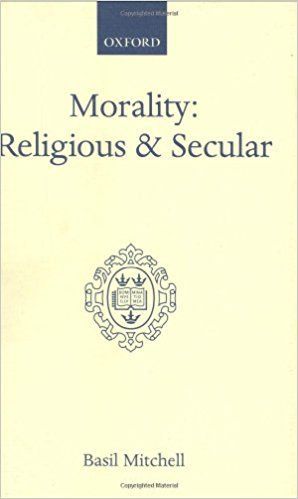
This book analyzes the moral confusion of contemporary society, relating rival conceptions of morality with a wide variety of views about the nature and predicament of man. Mitchell argues that many secular thinkers possess a traditional “Christian” conscience which they find hard to defend in terms of an entirely secular world-view, but which is more in line with a Christian understanding of man.
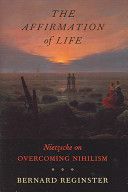
Among all the great thinkers of the past two hundred years, Nietzsche continues to occupy a special place–not only for a broad range of academics but also for members of a wider public, who find some of their most pressing existential concerns addressed in his works. Central among these concerns is the question of the meaning of a life characterized by inescapable suffering, at a time when the traditional responses inspired by Christianity are increasingly losing their credibility. While most recent studies of Nietzsche’s works have lost sight of this fundamental issue, Bernard Reginster’s book The Affirmation of Life brings it sharply into focus. Reginster identifies overcoming nihilism as a central objective of Nietzsche’s philosophical project, and shows how this concern systematically animates all of his main ideas. In particular, Reginster’s work develops an original and elegant interpretation of the will to power, which convincingly explains how Nietzsche uses this doctrine to mount a critique of the dominant Christian values, to overcome the nihilistic despair they produce, and to determine the conditions of a new affirmation of life. Thus, Reginster attributes to Nietzsche a compelling substantive ethical outlook based on the notions of challenge and creativity–an outlook that involves a radical reevaluation of the role and significance of suffering in human existence. Replete with deeply original insights on many familiar–and frequently misunderstood–Nietzschean concepts, Reginster’s book will be essential to anyone approaching this towering figure of Western intellectual history.
ما از اخلاق چه انتظاری داریم؟ این سوال شاید تاحدودی برای عموم مردم و یا متخصصان این رشته قابل پاسخ باشد؛ اینکه خوب بودن را به ما بیاموزد و در تنظیم روابط فردی م...

جشن کتاب تهران به ایستگاه سی و یکم رسیده است. حال و احوال نشر کتاب خوب نیست و باید فرهنگدوستان را به خرید و هدیه دادن کتاب ترغیب نمود. خانه اخلاقپژوهان جوان ب...

بنیاد کتابهای اخلاق اسلامی عمدتا پالایش جان از آلودگیها و آراستن آن به زیباییها است. اندیشه محوری این قبیل کتابها آن است که انسان فعلی آنی نیست که باید باشد...

-
0 Comments