Notice: تابع WP_Block_Type_Registry::register به طورنادرست فراخوانی شد. نامهای نوع بلوک نباید حروف بزرگ داشته باشند. لطفاً برای اطلاعات بیشتر، اشکال زدایی در وردپرس را مشاهده کنید. (این پیام در نگارش 5.0.0 افزوده شده است.) in /home/ethicsho/public_html/wp-includes/functions.php on line 5313
Warning: Use of undefined constant TDC_PATH_LEGACY - assumed 'TDC_PATH_LEGACY' (this will throw an Error in a future version of PHP) in /home/ethicsho/public_html/wp-content/plugins/td-composer/td-composer.php on line 109
Warning: Use of undefined constant TDSP_THEME_PATH - assumed 'TDSP_THEME_PATH' (this will throw an Error in a future version of PHP) in /home/ethicsho/public_html/wp-content/plugins/td-composer/td-composer.php on line 113 بایگانیهای 2928 - خانه اخلاق پژوهان جوان Notice: Trying to access array offset on value of type bool in /home/ethicsho/public_html/wp-content/plugins/wp-ulike/inc/general-functions.php on line 807
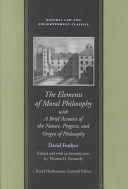
Though little known today, David Fordyce was one of the leading figures of the outburst of intellectual activity that culminated in the Scottish Enlightenment. His Elements of Moral Philosophy was one of the most widely circulated texts in moral philosophy in the second half of the eighteenth century. Apart from a very expensive facsimile edition, there has never been a modern edition of The Elements of Moral Philosophy. Moreover, the lectures in A Brief Account have never before been published. The significance of The Elements is evidenced by the fact that it was the principal work in the curriculum in moral philosophy throughout the second half of the eighteenth century. It was also included practically verbatim in the first edition of the Encyclopaedia Britannica.
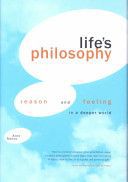
“Now available in English for the first time, Norwegian philosopher Arne Naess’s meditation on the art of living is an exhortation to preserve the environment and biodiversity. Like a “universal great-grandfather,” he offers a bright and bold perspective on the power of feelings to move us away from ecological and cultural degradation toward sound, future-focused policy and action.”.
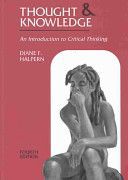
This best-selling textbook, written by award-winning educator and APA President Diane Halpern, applies theory and research from the learning sciences to teach students the thinking skills they need to succeed in today’s world. This new edition retains features from earlier editions that have helped its readers become better thinkers. A rigorous academic grounding based in cognitive psychology is presented in a clear writing style with a humorous tone and supported by numerous practical examples and anecdotes.Thought & Knowledge, Fourth Edition has been revised to help students meet the challenges of a global neighborhood and make meaningful conclusions form the overwhelming quantity of information now available at the click of a mouse. The skills learned with this text will help students learn more efficiently, research more productively, and present logical, informed arguments.New Features include:*Template for Making Arguments. This is a crucial preparation tool for students in any subject area. For those planning on continuing to Graduate School, this feature is an essential reference. The Graduate Record Examination (GRE) now requires that all test takers write an argument on a contemporary topic.*Concept Maps provide students with strategies to clarify complex information and retain long-term knowledge. *Contemporary Examples, throughout the text, relate current events to the book discussions.*Explanations on How to Evaluate Information found on Web sites.*Revised Student Workbook. Thinking Critically About Critical Thinking, Fourth Edition is filled with new exercises to reinforce learning and practice newly acquired skills. This workbook can be purchased in a student package with the text or as a separate item.Thought & Knowledge, Fourth Edition is appropriate for use as a textbook in critical thinking courses offered in departments of psychology, philosophy, English, humanities or as a supplement in any course where critical thinking is emphasized.
Why is ethics part of philosophy? Stephen Darwall’s Philosophical Ethicsintroduces students to ethics from a distinctively philosophical perspective, one that weaves together central ethical questions such as “What has value?” and “What are our moral obligations?” with fundamental philosophical issues such as “What is value?” and “What can a moral obligation consist in?”With one eye on contemporary discussions and another on classical texts, Philosophical Ethicsshows how Hobbes, Mill, Kant, Aristotle, and Nietzsche all did ethical philosophy–how, for example, they sought to gain insight into what has value through understanding what value itself is. After an introductory section, and one on main approaches to metaethics, chapters discuss “modern” philosophical moralists–Hobbes, Mill, and Kant–and pre- and postmodern philosophical approaches to ethics in Aristotle, Nietzsche, and the ethics of care.Throughout, the reader is invited to do–rather than just read about–philosophical ethics and, in doing so, to think through questions that face all thoughtful human beings. Themes include the nature of value and moral obligation, freedom and choice, human flourishing, excellence and merit, radical critiques of morality, and the importance of relationships for human life.
ما از اخلاق چه انتظاری داریم؟ این سوال شاید تاحدودی برای عموم مردم و یا متخصصان این رشته قابل پاسخ باشد؛ اینکه خوب بودن را به ما بیاموزد و در تنظیم روابط فردی م...

جشن کتاب تهران به ایستگاه سی و یکم رسیده است. حال و احوال نشر کتاب خوب نیست و باید فرهنگدوستان را به خرید و هدیه دادن کتاب ترغیب نمود. خانه اخلاقپژوهان جوان ب...

بنیاد کتابهای اخلاق اسلامی عمدتا پالایش جان از آلودگیها و آراستن آن به زیباییها است. اندیشه محوری این قبیل کتابها آن است که انسان فعلی آنی نیست که باید باشد...

-
0 Comments