Notice: تابع WP_Block_Type_Registry::register به طورنادرست فراخوانی شد. نامهای نوع بلوک نباید حروف بزرگ داشته باشند. لطفاً برای اطلاعات بیشتر، اشکال زدایی در وردپرس را مشاهده کنید. (این پیام در نگارش 5.0.0 افزوده شده است.) in /home/ethicsho/public_html/wp-includes/functions.php on line 5313
Warning: Use of undefined constant TDC_PATH_LEGACY - assumed 'TDC_PATH_LEGACY' (this will throw an Error in a future version of PHP) in /home/ethicsho/public_html/wp-content/plugins/td-composer/td-composer.php on line 109
Warning: Use of undefined constant TDSP_THEME_PATH - assumed 'TDSP_THEME_PATH' (this will throw an Error in a future version of PHP) in /home/ethicsho/public_html/wp-content/plugins/td-composer/td-composer.php on line 113 بایگانیهای 2851 - خانه اخلاق پژوهان جوان Notice: Trying to access array offset on value of type bool in /home/ethicsho/public_html/wp-content/plugins/wp-ulike/inc/general-functions.php on line 807
Is it possible to apply a theoretical approach to ethics? The French philosopher Catherine Chalier addresses this question with an unusual combination of traditional ethics and continental philosophy. In a powerful argument for the necessity of moral reflection, Chalier counters the notion that morality can be derived from theoretical knowledge.Chalier analyzes the positions of two great moral philosophers, Kant and Levinas. While both are critical of an ethics founded on knowledge, their criticisms spring from distinctly different points of view. Chalier reexamines their conclusions, pitting Levinas against (and with) Kant, to interrogate the very foundations of moral philosophy and moral imperatives. She provides a clear, systematic comparison of their positions on essential ideas such as free will, happiness, freedom, and evil. Although based on a close and elegant presentation of Kant and Levinas, Chalier’s book serves as a context for the development of the author’s own reflections on the question “What am I supposed to do?” and its continued importance for contemporary philosophy.
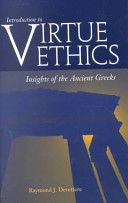
An engaging and informative introduction to the birth and development of ethics in western civilization. From Aristotle to Zeno, this volume examines the foundations on which later philosophers built their understandings of the place — and meaning-of human life.
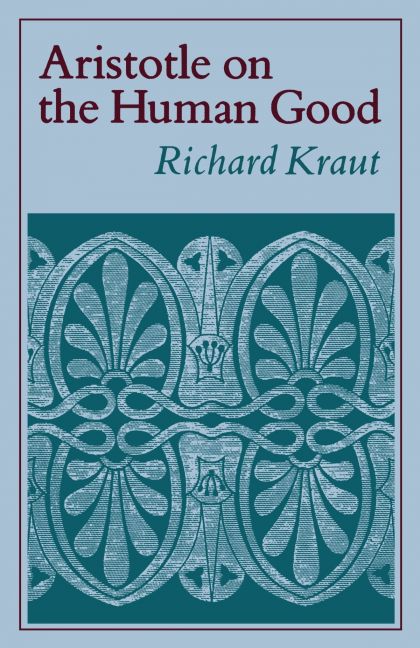
Aristotle’s Nicomachean Ethics, which equates the ultimate end of human life with happiness (eudaimonia), is thought by many readers to argue that this highest goal consists in the largest possible aggregate of intrinsic goods. Richard Kraut proposes instead that Aristotle identifies happiness with only one type of good: excellent activity of the rational soul. In defense of this reading, Kraut discusses Aristotle’s attempt to organize all human goods into a single structure, so that each subordinate end is desirable for the sake of some higher goal.This book also emphasizes the philosopher’s hierarchy of natural kinds, in which every type of creature achieves its good by imitating divine life. As Kraut argues, Aristotle’s belief that thinking is the sole activity of the gods leads him to an intellectualist conception of the ethical virtues. Aristotle values these traits because, by subordinating emotion to reason, they enhance our ability to lead a life devoted to philosophy or politics.
This book shows how torture spiritually assaults the person. The “war on terror” has sparked great debate about torture. What exactly is torture? Should we torture suspected terrorists if they have information about future violent acts? Defining torture carefully, the book defends the idea that all people are valuable, and rejects moral defenses of torture. It focuses particularly on practices like sensory deprivation, which perniciously attack the human psyche. It also calls for an absolute ban on all torture, and urges Americans to repent for the torture the U.S. committed in the “war on terror.”
ما از اخلاق چه انتظاری داریم؟ این سوال شاید تاحدودی برای عموم مردم و یا متخصصان این رشته قابل پاسخ باشد؛ اینکه خوب بودن را به ما بیاموزد و در تنظیم روابط فردی م...

جشن کتاب تهران به ایستگاه سی و یکم رسیده است. حال و احوال نشر کتاب خوب نیست و باید فرهنگدوستان را به خرید و هدیه دادن کتاب ترغیب نمود. خانه اخلاقپژوهان جوان ب...

بنیاد کتابهای اخلاق اسلامی عمدتا پالایش جان از آلودگیها و آراستن آن به زیباییها است. اندیشه محوری این قبیل کتابها آن است که انسان فعلی آنی نیست که باید باشد...

-
0 Comments