Notice: تابع WP_Block_Type_Registry::register به طورنادرست فراخوانی شد. نامهای نوع بلوک نباید حروف بزرگ داشته باشند. لطفاً برای اطلاعات بیشتر، اشکال زدایی در وردپرس را مشاهده کنید. (این پیام در نگارش 5.0.0 افزوده شده است.) in /home/ethicsho/public_html/wp-includes/functions.php on line 5313
Warning: Use of undefined constant TDC_PATH_LEGACY - assumed 'TDC_PATH_LEGACY' (this will throw an Error in a future version of PHP) in /home/ethicsho/public_html/wp-content/plugins/td-composer/td-composer.php on line 109
Warning: Use of undefined constant TDSP_THEME_PATH - assumed 'TDSP_THEME_PATH' (this will throw an Error in a future version of PHP) in /home/ethicsho/public_html/wp-content/plugins/td-composer/td-composer.php on line 113 بایگانیهای 2754 - خانه اخلاق پژوهان جوان Notice: Trying to access array offset on value of type bool in /home/ethicsho/public_html/wp-content/plugins/wp-ulike/inc/general-functions.php on line 807
Bernard Rollin historically and conceptually examines the ideology that denies the relevance of ethics to science. Providing an introduction to basic ethical concepts, he discusses a variety of ethical issues relevant to science and how they are ignored, to the detriment of both science and society. These issues include research on human subjects, animal research, genetic engineering, biotechnology, cloning, xenotransplantation, and stem cell research. Rollin also explores the ideological agnosticism that scientists have displayed regarding subjective experience in humans and animals, and its pernicious effect on pain management.
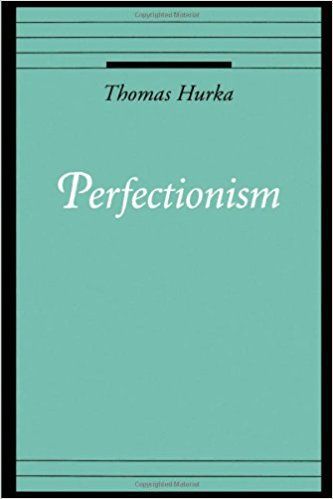
Perfectionism is one of the great moralities of the Western tradition. It holds that certain states of humans, such as knowledge, achievement, and friendship, are good apart from any pleasure they may bring, and that the morally right act is always the one that most promotes these states. Defined more narrowly, perfectionism identifies the human good by reference to human nature: if knowledge and achievement are good, it is because they realize aspects of human nature. This book gives an account of perfectionism, first in the narrower sense, analyzing its central concepts and defending a theory of human nature in which rationality plays a central role. It then uses this theory to construct an elaborate account of the intrinsic value of beliefs and actions that embody rationality, and applies this account to political questions about liberty and equality. The book attempts to formulate the most defensible version of perfectionism, using contemporary analytic techniques. It aims both to regain for perfectionism a central place in contemporary moral debate and to shed light on the writings of classical perfectionists such as Aristotle, Aquinas, Hegel, Marx, Nietzsche, and T.H. Green.
Scholarship on Plato’s dialogues persistently divides its focus between the dramatic or literary and the philosophical or argumentative dimensions of the texts. But this hermeneutic division of labor is naive, for Plato’s arguments are embedded in dramatic dialogues and developed through complex, largely informal exchanges between literary characters. Consequently, it is questionable how readers can even attribute arguments and theses to the author himself. The answer to this question lies in transcending the scholarly divide and integrating the literary and philosophical dimensions of the texts. This is the task of Trials of Reason. The study focuses on a set of fourteen so-called early dialogues, beginning with a methodological framework that explains how to integrate the argumentation and the drama in these texts. Unlike most canonical philosophical works, the early dialogues do not merely express the results of the practice of philosophy. Rather, they dramatize philosophy as a kind of motivation, the desire for knowledge of goodness. They dramatize philosophy as a discursive practice, motivated by this desire and ideally governed by reason. And they dramatize the trials to which desire and reason are subject, that is, the difficulties of realizing philosophy as a form of motivation, a practice, and an epistemic achievement. In short, Trials of Reason argues that Plato’s early dialogues are as much works of meta-philosophy as philosophy itself.
Presenting the background, development, and current state of affairs in EPISTEMOLOGY, this title-a volume in the Wadsworth Philosophy Topics Series–provides a concise introduction to this pertinent topic of contemporary philosophical interest. The Wadsworth Philosophy Topics Series presents readers with concise, timely, and insightful introductions to a variety of traditional and contemporary philosophical subjects. With this series, students of philosophy will be able to discover the richness of philosophical inquiry across a wide array of concepts, including hallmark philosophical themes and other themes typically underrepresented in mainstream philosophy publishing. Written by a distinguished list of scholars who have garnered particular recognition for their excellence in teaching, this series presents the vast sweep of today’s philosophical exploration in highly accessible and affordable volumes. These books will prove valuable to philosophy teachers and their students as well as to other readers who share a general interest in philosophy.
ما از اخلاق چه انتظاری داریم؟ این سوال شاید تاحدودی برای عموم مردم و یا متخصصان این رشته قابل پاسخ باشد؛ اینکه خوب بودن را به ما بیاموزد و در تنظیم روابط فردی م...

جشن کتاب تهران به ایستگاه سی و یکم رسیده است. حال و احوال نشر کتاب خوب نیست و باید فرهنگدوستان را به خرید و هدیه دادن کتاب ترغیب نمود. خانه اخلاقپژوهان جوان ب...

بنیاد کتابهای اخلاق اسلامی عمدتا پالایش جان از آلودگیها و آراستن آن به زیباییها است. اندیشه محوری این قبیل کتابها آن است که انسان فعلی آنی نیست که باید باشد...

-
0 Comments