Notice: تابع WP_Block_Type_Registry::register به طورنادرست فراخوانی شد. نامهای نوع بلوک نباید حروف بزرگ داشته باشند. لطفاً برای اطلاعات بیشتر، اشکال زدایی در وردپرس را مشاهده کنید. (این پیام در نگارش 5.0.0 افزوده شده است.) in /home/ethicsho/public_html/wp-includes/functions.php on line 5313
Warning: Use of undefined constant TDC_PATH_LEGACY - assumed 'TDC_PATH_LEGACY' (this will throw an Error in a future version of PHP) in /home/ethicsho/public_html/wp-content/plugins/td-composer/td-composer.php on line 109
Warning: Use of undefined constant TDSP_THEME_PATH - assumed 'TDSP_THEME_PATH' (this will throw an Error in a future version of PHP) in /home/ethicsho/public_html/wp-content/plugins/td-composer/td-composer.php on line 113 بایگانیهای 273 - خانه اخلاق پژوهان جوان Notice: Trying to access array offset on value of type bool in /home/ethicsho/public_html/wp-content/plugins/wp-ulike/inc/general-functions.php on line 807
In the Fall of 1930 Will Durant found himself outside his home in Lake Hill, New York, raking leaves. He was approached by a well-dressed man who told him in a quiet tone that he was going to kill himself unless the philosopher could give him a valid reason not to. Not having the time to wax philosophic on the matter, Durant did his best to furnish the man with reasons to continue his existence. Haunted by the encounter with the despondent stranger, Durant contacted 100 luminaries in the arts, politics, religion and sciences, challenging them to respond not only to the fundamental question of life’s meaning (in the abstract) but also to relate how they each (in the particular) found meaning, purpose and fulfillment in their own lives. Durant turned their answers and his own into a book entitled “On The Meaning Of Life,” which was released to the general public in 1932. Unpromoted, the litte treasure found its way into few hands, and almost no copies of the book exist today. Now available for a new generation through Promethean Press, “On The Meaning Of Life” is a powerful book on a very powerful topic. In this book Will Durant has fashioned an unprecedented “dream team” of luminaries that is both profound and diverse: poets, philosophers, saints, inmates, athletes, Nobel Prize winners, college professors, psychologists, entertainers, musicians, authors and leaders. Within their varied insights, despite their uniqueness as individuals and the very different lives they led, the reader will note a consistent thread running through their viewpoints, revealing a commonality among human beings who not only seek meaning in life, but who actually achieve it.
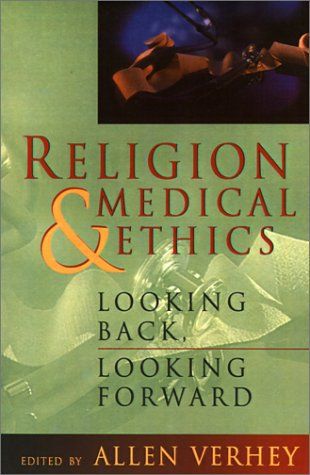
This collection of essays looks back at the contributions of theology to medical ethics in the past and sets an agenda for theological reflection on medical ethics in the future.
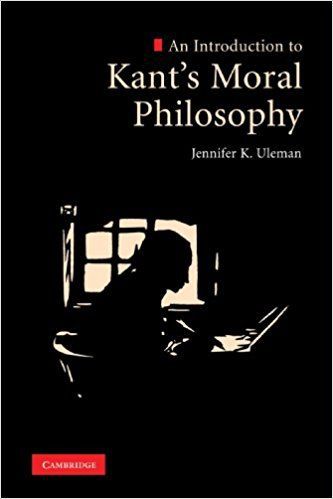
Immanuel Kant’s moral philosophy is one of the most distinctive achievements of the European Enlightenment. At its heart lies what Kant called the ‘strange thing’: the free, rational, human will. This introduction explores the basis of Kant’s anti-naturalist, secular, humanist vision of the human good. Moving from a sketch of the Kantian will, with all its component parts and attributes, to Kant’s canonical arguments for his categorical imperative, this introduction shows why Kant thought his moral law the best summary expression of both his own philosophical work on morality and his readers’ deepest shared convictions about the good. Kant’s central tenets, key arguments, and core values are presented in an accessible and engaging way, making this book ideal for anyone eager to explore the fundamentals of Kant’s moral philosophy.
Before his death in 2003, Bernard Williams planned to publish a collection of historical essays, focusing primarily on the ancient world. This posthumous volume brings together a much wider selection, written over some forty years. His legacy lives on in this masterful work, the first collection ever published of Williams’s essays on the history of philosophy. The subjects range from the sixth century B.C. to the twentieth A.D., from Homer to Wittgenstein by way of Socrates, Plato, Aristotle, Descartes, Hume, Sidgwick, Collingwood, and Nietzsche. Often one would be hard put to say which part is history, which philosophy. Both are involved throughout, because this is the history of philosophy written philosophically. Historical exposition goes hand in hand with philosophical scrutiny. Insights into the past counteract blind acceptance of present assumptions. In his touching and illuminating introduction, Myles Burnyeat writes of these essays: “They show a depth of commitment to the history of philosophy seldom to be found nowadays in a thinker so prominent on the contemporary philosophical scene.” The result celebrates the interest and importance to philosophy today of its near and distant past.The Sense of the Past is one of three collections of essays by Bernard Williams published by Princeton University Press since his death. In the Beginning Was the Deed: Realism and Moralism in Political Argument, selected, edited, and with an introduction by Geoffrey Hawthorn, and Philosophy as a Humanistic Discipline, selected, edited, and with an introduction by A. W. Moore, make up the trio.
In The Principle of Excellence, Nimi Wariboko deconstructs the traditional, depoliticized meaning of virtue, providing a thorough reading of the debates, conceptual struggles, and ambiguities used by virtue ethicists to produce today’s conception of excellence. He presents a new meaning of excellence, explaining the ways communities can use excellence as the organizing principle for their political and economic development, and exploring how large-scale modern societies can be better administered in environments characterized by contingency and possibilities.
ما از اخلاق چه انتظاری داریم؟ این سوال شاید تاحدودی برای عموم مردم و یا متخصصان این رشته قابل پاسخ باشد؛ اینکه خوب بودن را به ما بیاموزد و در تنظیم روابط فردی م...

جشن کتاب تهران به ایستگاه سی و یکم رسیده است. حال و احوال نشر کتاب خوب نیست و باید فرهنگدوستان را به خرید و هدیه دادن کتاب ترغیب نمود. خانه اخلاقپژوهان جوان ب...

بنیاد کتابهای اخلاق اسلامی عمدتا پالایش جان از آلودگیها و آراستن آن به زیباییها است. اندیشه محوری این قبیل کتابها آن است که انسان فعلی آنی نیست که باید باشد...

-
0 Comments