Notice: تابع WP_Block_Type_Registry::register به طورنادرست فراخوانی شد. نامهای نوع بلوک نباید حروف بزرگ داشته باشند. لطفاً برای اطلاعات بیشتر، اشکال زدایی در وردپرس را مشاهده کنید. (این پیام در نگارش 5.0.0 افزوده شده است.) in /home/ethicsho/public_html/wp-includes/functions.php on line 5313
Warning: Use of undefined constant TDC_PATH_LEGACY - assumed 'TDC_PATH_LEGACY' (this will throw an Error in a future version of PHP) in /home/ethicsho/public_html/wp-content/plugins/td-composer/td-composer.php on line 109
Warning: Use of undefined constant TDSP_THEME_PATH - assumed 'TDSP_THEME_PATH' (this will throw an Error in a future version of PHP) in /home/ethicsho/public_html/wp-content/plugins/td-composer/td-composer.php on line 113 بایگانیهای 2707 - خانه اخلاق پژوهان جوان Notice: Trying to access array offset on value of type bool in /home/ethicsho/public_html/wp-content/plugins/wp-ulike/inc/general-functions.php on line 807
It is well over a decade since John Fischer and Mark Ravizza – and before them, Jay Wallace and Daniel Dennett – defended responsibility from the threat of determinism. But defending responsibility from determinism is a potentially endless and largely negative enterprise; it can go on for as long as dissenting voices remain, and although such work strengthens the theoretical foundations of these theories, it won’t necessarily build anything on top of those foundations, nor will it move these theories into new territory or explain how to apply them to practical contexts.To this end, the papers in this volume address these more positive challenges by exploring how compatibilist responsibility theory can be extended and/or applied in a range of practical contexts. For instance, how is the narrow philosophical concept of responsibility that was defended from the threat of determinism related to the plural notions of responsibility present in everyday discourse, and how might this more fine-grained understanding of responsibility open up new vistas and challenges for compatibilist theory? What light might compatibilism shed, and what light might be shed upon it, by political debates about access to public welfare in the context of responsibility for one’s own health, and by legal debates about the impact of self-intoxication on responsibility. Does compatibilist theory, which was originally designed to cater for analysis of individual actions, scale to scenarios that involve group action and collective responsibility – e.g. for harms due to human-induced climate change? This book’s chapters deal with a range of theoretical problems discussed in classic compatibilist literature – e.g. the relationship between responsibility and capacity, the role of historical tracing in discounting the exculpatory value of incapacities, and the justifiability of retributive punishment. But instead of motivating their discussions by focusing on the alleged threat that determinism poses to responsibility, these chapters’ authors have animated their discussions by tackling important practical problems which crop up in contemporary debates about responsibility.
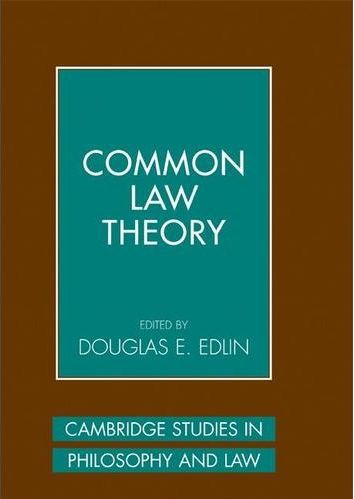
Legal scholars, philosophers, historians, and political scientists from Australia, Canada, New Zealand, the United Kingdom, and the United States analyze the common law through three of its classic themes: rules, reasoning, and constitutionalism. Their essays, specially commissioned for this volume, provide an opportunity for thinkers from different jurisdictions and disciplines to talk to each other and to their wider audience within and beyond the common law world. This book allows scholars and students to consider how these themes and concepts relate to one another. It will initiate and sustain a more inclusive and well-informed theoretical discussion of the common law’s method, process, and structure. It will be valuable to lawyers, philosophers, political scientists, and historians interested in constitutional law, comparative law, judicial process, legal theory, law and society, legal history, democratic theory, political philosophy, and the relationship of the common law tradition to other legal systems of the world.
ما از اخلاق چه انتظاری داریم؟ این سوال شاید تاحدودی برای عموم مردم و یا متخصصان این رشته قابل پاسخ باشد؛ اینکه خوب بودن را به ما بیاموزد و در تنظیم روابط فردی م...

جشن کتاب تهران به ایستگاه سی و یکم رسیده است. حال و احوال نشر کتاب خوب نیست و باید فرهنگدوستان را به خرید و هدیه دادن کتاب ترغیب نمود. خانه اخلاقپژوهان جوان ب...

بنیاد کتابهای اخلاق اسلامی عمدتا پالایش جان از آلودگیها و آراستن آن به زیباییها است. اندیشه محوری این قبیل کتابها آن است که انسان فعلی آنی نیست که باید باشد...

-
0 Comments