Notice: تابع WP_Block_Type_Registry::register به طورنادرست فراخوانی شد. نامهای نوع بلوک نباید حروف بزرگ داشته باشند. لطفاً برای اطلاعات بیشتر، اشکال زدایی در وردپرس را مشاهده کنید. (این پیام در نگارش 5.0.0 افزوده شده است.) in /home/ethicsho/public_html/wp-includes/functions.php on line 5313
Warning: Use of undefined constant TDC_PATH_LEGACY - assumed 'TDC_PATH_LEGACY' (this will throw an Error in a future version of PHP) in /home/ethicsho/public_html/wp-content/plugins/td-composer/td-composer.php on line 109
Warning: Use of undefined constant TDSP_THEME_PATH - assumed 'TDSP_THEME_PATH' (this will throw an Error in a future version of PHP) in /home/ethicsho/public_html/wp-content/plugins/td-composer/td-composer.php on line 113 بایگانیهای 2673 - خانه اخلاق پژوهان جوان Notice: Trying to access array offset on value of type bool in /home/ethicsho/public_html/wp-content/plugins/wp-ulike/inc/general-functions.php on line 807
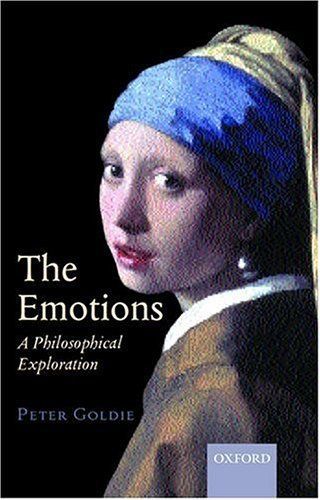
Peter Goldie opens the path to a deeper understanding of our emotional lives through a lucid philosophical exploration of this surprisingly neglected topic. He illuminates the phenomena of emotion by drawing not only on philosophy but also on literature and science. He considers the roles of culture and evolution in the development of our emotional capabilities. He examines the links between emotion, mood, and character, and places the emotions in the context of such related phenomena as consciousness, thought, feeling, and imagination. He explains how it is that we are able to make sense of our own and other people’s emotions, and how we can explain the very human things which emotions lead us to do. A key theme of The Emotions is the idea of a personal perspective or point of view, contrasted with the impersonal stance of the empirical sciences. Goldie argues that it is only from the personal point of view that thoughts, reasons, feelings, and actions come into view. He suggests that there is a tendency for philosophers to over-intellectualize the emotions, and investigates how far it is possible to explain emotions in terms of rationality. Over-intellectualizing can also involve neglecting the centrality of feelings, and Goldie shows how to put them where they belong, as part of the intentionality of emotional experience, directed towards the world from a point of view. Goldie argues that the various elements of emotional experience—including thought, feeling, bodily change, and expression—are tied together in a narrative structure. To make sense of one’s emotional life one has to see it as part of a larger unfolding narrative. The narrative is not simply an interpretative framework of a life: it is what that life is. Goldie concludes by applying these ideas in a close study of one particular emotion: jealousy. This fascinating book gives an accessible but penetrating exploration of a subject that is important but mysterious to all of us. Any reader interested in emotion, and its role in our understanding of our lives, will find much to think about here.
Moseley considers war from all angles: Christian, Marxist, Platonic, behavioralist, economic, psychological, and biological; he concludes that market-based societies tend to foster cooperation more than combat.?
Covering an important theme in Humean studies, this book focuses on Humes hugely influential account of the relation between reason and morality, found in book three of his Treatise of Human Nature. Arguing that this account includes a fundamental contradiction that has gone unnoticed in modern debate, this fascinating volume contains a refreshing combination of historical-scholarly work and contemporary analysis that seeks to expose this contradiction and therefore provide a significant contribution to current scholarship in the area. Beginning by pointing out a contradiction in the intermediary premise concerning whether reason can influence action, or is wholly powerless, the book then moves on to draw out the consequences for recent meta-ethics of the failure to acknowledge this contradiction. Finally, Botros highlights the root of the arguments power in an article of naturalistic dogma. A significant and thought-provoking addition to this popular field of study, Hume,Reason and Morality is undoubtedly an important resource for moral philosophers interested in meta-ethics and practical reason, as well as Humean scholars.
A Modern Legal Ethicsproposes a wholesale renovation of legal ethics, one that contributes to ethical thought generally.Daniel Markovits reinterprets the positive law governing lawyers to identify fidelity as its organizing ideal. Unlike ordinary loyalty, fidelity requires lawyers to repress their personal judgments concerning the truth and justice of their clients’ claims. Next, the book asks what it is like–not psychologically but ethically–to practice law subject to the self-effacement that fidelity demands. Fidelity requires lawyers to lie and to cheat on behalf of their clients. However, an ethically profound interest in integrity gives lawyers reason to resist this characterization of their conduct. Any legal ethics adequate to the complexity of lawyers’ lived experience must address the moral dilemmas immanent in this tension. The dominant approaches to legal ethics cannot. Finally,A Modern Legal Ethicsreintegrates legal ethics into political philosophy in a fashion commensurate to lawyers’ central place in political practice. Lawyerly fidelity supports the authority of adjudication and thus the broader project of political legitimacy.Throughout, the book rejects the casuistry that dominates contemporary applied ethics in favor of an interpretive method that may be mimicked in other areas. Moreover, because lawyers practice at the hinge of modern morals and politics, the book’s interpretive insights identify–in an unusually pure and intense form–the moral and political conditions of all modernity.
At last, a comprehensive collection of essays that examines and advances ethical evaluations of the controversial and increasingly popular practice of embryo adoption. In the United States alone, 400,000 frozen embryos created for in vitro fertilization exist but are no longer desired for that purpose. What are we morally obliged or permitted to do about these “spare” embryos? More of their genetic parents are considering donating these embryos to others to gestate and raise. This practice is politically volatile (figuring in debates about embryonic stem cells) and medically and morally complex. At the present time within the Roman Catholic Church there is no official teaching on embryo adoption. Catholic ethical analyses grapple with the way embryo adoption comports with respect for embryonic human life yet challenges Catholic moral critiques of assisted reproductive technologies. This volume is the first to bring together leading philosophers and theologians to engage Catholic debates about embryo adoption in an interactive format. The editors, a philosopher bioethicist and a moral theologian, provide a helpful overview of the practice and the arguments surrounding embryo adoption. They engage neglected Catholic ethical resources and issues to advance the current debate and chart new directions in Catholic moral thinking about this intriguing practice. The volume also includes a description of embryo adoption from a physician practitioner along with reflections from a couple who successfully adopted an embryo.
ما از اخلاق چه انتظاری داریم؟ این سوال شاید تاحدودی برای عموم مردم و یا متخصصان این رشته قابل پاسخ باشد؛ اینکه خوب بودن را به ما بیاموزد و در تنظیم روابط فردی م...

جشن کتاب تهران به ایستگاه سی و یکم رسیده است. حال و احوال نشر کتاب خوب نیست و باید فرهنگدوستان را به خرید و هدیه دادن کتاب ترغیب نمود. خانه اخلاقپژوهان جوان ب...

بنیاد کتابهای اخلاق اسلامی عمدتا پالایش جان از آلودگیها و آراستن آن به زیباییها است. اندیشه محوری این قبیل کتابها آن است که انسان فعلی آنی نیست که باید باشد...

-
0 Comments