Notice: تابع WP_Block_Type_Registry::register به طورنادرست فراخوانی شد. نامهای نوع بلوک نباید حروف بزرگ داشته باشند. لطفاً برای اطلاعات بیشتر، اشکال زدایی در وردپرس را مشاهده کنید. (این پیام در نگارش 5.0.0 افزوده شده است.) in /home/ethicsho/public_html/wp-includes/functions.php on line 5313
Warning: Use of undefined constant TDC_PATH_LEGACY - assumed 'TDC_PATH_LEGACY' (this will throw an Error in a future version of PHP) in /home/ethicsho/public_html/wp-content/plugins/td-composer/td-composer.php on line 109
Warning: Use of undefined constant TDSP_THEME_PATH - assumed 'TDSP_THEME_PATH' (this will throw an Error in a future version of PHP) in /home/ethicsho/public_html/wp-content/plugins/td-composer/td-composer.php on line 113 بایگانیهای 2631 - خانه اخلاق پژوهان جوان Notice: Trying to access array offset on value of type bool in /home/ethicsho/public_html/wp-content/plugins/wp-ulike/inc/general-functions.php on line 807
In this wide-ranging study, Quinn argues that human moral autonomy is compatible with unqualified obedience to divine commands. He formulates several versions of the crucial assumptions of divine command ethics, defending them against a battery of objections often expressed in the philosophical literature.
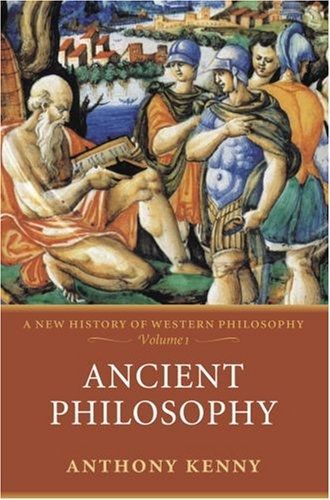
Sir Anthony Kenny here tells the fascinating story of the birth of philosophy and its remarkable flourishing in the ancient Mediterranean world. This is the initial volume of a four-book set in which Kenny will unfold a magisterial new history of Western philosophy, the first major single-author history of philosophy to appear in decades. Ancient Philosophy spans over a thousand years and brings to life the great minds of the past, from Thales, Pythagoras, and Parmenides, to Socrates, Epictetus, Marcus Aurelius, and Augustine. The book’s great virtue is that it is written by one of the world’s leading authorities on the subject. Instead of an uncritical, straightforward recitation of known facts–Plato and his cave of shadows, Aristotle’s ethics, Augustine’s City of God–we see the major philosophers through the eyes of a man who has spent a lifetime contemplating their work. Thus we do not simply get an overview of Aristotle, for example, but a penetrating and insightful critique of his thought. Kenny offers an illuminating account of the various schools of thought, from the Pre-Socratics to the Epicureans. He examines the development of logic and reason, ancient ideas about physics (“how things happen”), metaphysics and ethics, and the earliest thinking about the soul and god. Vividly written, but serious and deep enough to offer a genuine understanding of the great philosophers, Kenny’s lucid and stimulating history will become the definitive work for anyone interested in the people and ideas that shaped the course of Western thought.
This handbook describes the broad aspects of risk management involving scientific policy judgment, uncertainty analysis, perception considerations, statistical insights, and strategic thinking. This book presents all the important concepts to enable the reader to “see the big picture.” This ability is extremely important – it allows the decision maker or strategic environmental planner to understand and cope with a wide variety of complex and interlinked pieces of information and data. The text presents environmental problems and, whenever applicable, the methodology required to reach a successful solution. Decisions and policies are examined. The book covers numerous objective and subjective components of environmental risk decision making. It details quantitative and comparative risk, and investigates the cost and feasibility of different decisions. Social pressures, safety, and political, religious, ethical, and psychological issues are addressed. How to evaluate the potential impact on the quality of life also is discussed. Any company doing risk assessment, risk management, or risk communication, as well as those doing environmental decision making will find this reference to be invaluable. It is also suitable as a text for courses in environmental management, environmental science, and risk assessment in the areas of risk management and strategic environmental planning.
This volume is the first collection focusing on the claim that we cannot but account for emotions if we are to understand the processes and evaluations related to empirical knowledge. All essays are specifically written for this collection by leading researchers in this relatively new and developing field, bringing together work from backgrounds such as pragmatism and skepticism, cognitive theories of emotions and cognitive science, Cartesian epistemology and virtue epistemology.
ما از اخلاق چه انتظاری داریم؟ این سوال شاید تاحدودی برای عموم مردم و یا متخصصان این رشته قابل پاسخ باشد؛ اینکه خوب بودن را به ما بیاموزد و در تنظیم روابط فردی م...

جشن کتاب تهران به ایستگاه سی و یکم رسیده است. حال و احوال نشر کتاب خوب نیست و باید فرهنگدوستان را به خرید و هدیه دادن کتاب ترغیب نمود. خانه اخلاقپژوهان جوان ب...

بنیاد کتابهای اخلاق اسلامی عمدتا پالایش جان از آلودگیها و آراستن آن به زیباییها است. اندیشه محوری این قبیل کتابها آن است که انسان فعلی آنی نیست که باید باشد...

-
0 Comments