Notice: تابع WP_Block_Type_Registry::register به طورنادرست فراخوانی شد. نامهای نوع بلوک نباید حروف بزرگ داشته باشند. لطفاً برای اطلاعات بیشتر، اشکال زدایی در وردپرس را مشاهده کنید. (این پیام در نگارش 5.0.0 افزوده شده است.) in /home/ethicsho/public_html/wp-includes/functions.php on line 5313
Warning: Use of undefined constant TDC_PATH_LEGACY - assumed 'TDC_PATH_LEGACY' (this will throw an Error in a future version of PHP) in /home/ethicsho/public_html/wp-content/plugins/td-composer/td-composer.php on line 109
Warning: Use of undefined constant TDSP_THEME_PATH - assumed 'TDSP_THEME_PATH' (this will throw an Error in a future version of PHP) in /home/ethicsho/public_html/wp-content/plugins/td-composer/td-composer.php on line 113 بایگانیهای 2609 - خانه اخلاق پژوهان جوان Notice: Trying to access array offset on value of type bool in /home/ethicsho/public_html/wp-content/plugins/wp-ulike/inc/general-functions.php on line 807
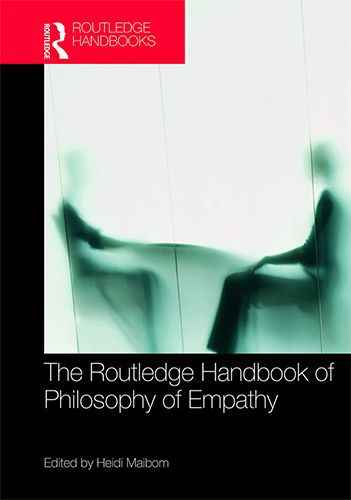
Empathy plays a central role in the history and contemporary study of ethics, interpersonal understanding, and the emotions, yet until now has been relatively underexplored. The Routledge Handbook of Philosophy of Empathy is an outstanding reference source to the key topics, problems and debates in this exciting field and is the first collection of its kind. Comprising over thirty chapters by a team of international contributors, the Handbook is divided into six parts: * Core issues *History of empathy *Empathy and understanding *Empathy and morals *Empathy in art and aesthetics *Empathy and individual differences. Within these sections central topics and problems are examined, including: empathy and imagination; neuroscience; David Hume and Adam Smith; understanding; evolution; altruism; moral responsibility; art, aesthetics, and literature; gender; empathy and related disciplines such as anthropology. Essential reading for students and researchers in philosophy, particularly ethics and philosophy of mind and psychology, the Handbook will also be of interest to those in related fields, such as anthropology and social psychology.
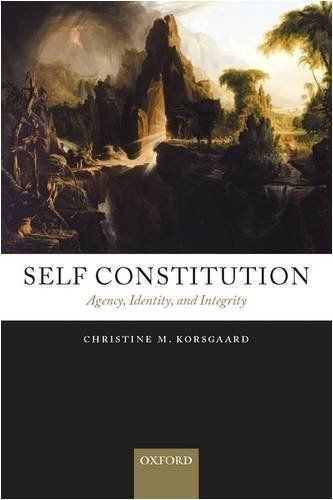
Christine M. Korsgaard presents an account of the foundation of practical reason and moral obligation. Moral philosophy aspires to understand the fact that human actions, unlike the actions of the other animals, can be morally good or bad, right or wrong. Few moral philosophers, however, have exploited the idea that actions might be morally good or bad in virtue of being good or bad of their kind – good or bad as actions. Just as we need to know that it is the function of the heart to pump blood to know that a good heart is one that pumps blood successfully, so we need to know what the function of an action is in order to know what counts as a good or bad action. Drawing on the work of Plato, Aristotle, and Kant, Korsgaard proposes that the function of an action is to constitute the agency and therefore the identity of the person who does it. As rational beings, we are aware of, and therefore in control of, the principles that govern our actions. A good action is one that constitutes its agent as the autonomous and efficacious cause of her own movements. These properties correspond, respectively, to Kant’s two imperatives of practical reason. Conformity to the categorical imperative renders us autonomous, and conformity to the hypothetical imperative renders us efficacious. And in determining what effects we will have in the world, we are at the same time determining our own identities. Korsgaard develops a theory of action and of interaction, and of the form interaction must take if we are to have the integrity that, she argues, is essential for agency. On the basis of that theory, she argues that only morally good action can serve the function of action, which is self-constitution.
ما از اخلاق چه انتظاری داریم؟ این سوال شاید تاحدودی برای عموم مردم و یا متخصصان این رشته قابل پاسخ باشد؛ اینکه خوب بودن را به ما بیاموزد و در تنظیم روابط فردی م...

جشن کتاب تهران به ایستگاه سی و یکم رسیده است. حال و احوال نشر کتاب خوب نیست و باید فرهنگدوستان را به خرید و هدیه دادن کتاب ترغیب نمود. خانه اخلاقپژوهان جوان ب...

بنیاد کتابهای اخلاق اسلامی عمدتا پالایش جان از آلودگیها و آراستن آن به زیباییها است. اندیشه محوری این قبیل کتابها آن است که انسان فعلی آنی نیست که باید باشد...

-
0 Comments