Notice: تابع WP_Block_Type_Registry::register به طورنادرست فراخوانی شد. نامهای نوع بلوک نباید حروف بزرگ داشته باشند. لطفاً برای اطلاعات بیشتر، اشکال زدایی در وردپرس را مشاهده کنید. (این پیام در نگارش 5.0.0 افزوده شده است.) in /home/ethicsho/public_html/wp-includes/functions.php on line 5313
Warning: Use of undefined constant TDC_PATH_LEGACY - assumed 'TDC_PATH_LEGACY' (this will throw an Error in a future version of PHP) in /home/ethicsho/public_html/wp-content/plugins/td-composer/td-composer.php on line 109
Warning: Use of undefined constant TDSP_THEME_PATH - assumed 'TDSP_THEME_PATH' (this will throw an Error in a future version of PHP) in /home/ethicsho/public_html/wp-content/plugins/td-composer/td-composer.php on line 113 بایگانیهای 2607 - خانه اخلاق پژوهان جوان Notice: Trying to access array offset on value of type bool in /home/ethicsho/public_html/wp-content/plugins/wp-ulike/inc/general-functions.php on line 807
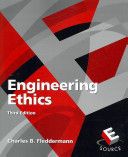
Purpose of this book is to provide a text and a resource for the study of engineering ethics and to help future engineers be prepared for confronting and resolving ethical dilemmas that they might encounter during their professional careers. It is part of Prentice Hall’s ESource program, a comprehensive, customizable introductory engineering and computing library.Engineering professionalism; Ethical theories; Ethical problem solving techniques; Applications; and Codes of ethics of major engineering societies.For professionals in General Engineering or Computer Science fields.
“Political institutions are or ought to be the main subject of political theory. The essays in this collection are works of political theory devoted specifically to the institutions and institutional principles of modern democracy. They illustrate the author’s contention in the opening chapter that the theory of politics needs to reorient itself so that it is not just the study of social justice. Institutions need to be taken seriously, by normative political theorists as much as by empirical political scientists. The collection includes studies of constitutionalism, the separation of powers, bicameralism, loyal opposition, representation, legislative due process, democratic accountability, and judicial review. It also includes critical essays on the political philosophies of Hannah Arendt and Isaiah Berlin”–Publisher’s information.
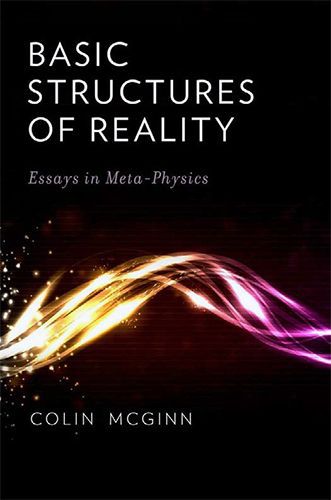
In Basic Structures of Reality, Colin McGinn deals with questions of metaphysics, epistemology, and philosophy of mind from the vantage point of physics. Combining general philosophy with physics, he covers such topics as the definition of matter, the nature of space, motion, gravity, electromagnetic fields, the character of physical knowledge, and consciousness and meaning. Throughout, McGinn maintains an historical perspective and seeks to determine how much we really know of the world described by physics. He defends a version of “structuralism”: the thesis that our knowledge is partial and merely abstract, leaving a large epistemological gap at the center of physics.
McGinn then connects this element of mystery to parallel mysteries in relation to the mind. Consciousness emerges as just one more mystery of physics. A theory of matter and space is developed, according to which the impenetrability of matter is explained as the deletion of volumes of space. McGinn proposes a philosophy of science that distinguishes physics from both psychology and biology, explores the ontology of energy, and considers the relevance of physics to seemingly remote fields such as the theory of meaning. In the form of a series of aphorisms, the author presents a metaphysical system that takes laws of nature as fundamental. With its broad scope and deep study of the fundamental questions at the heart of philosophy of physics, this book is not intended primarily for specialists, but for the general philosophical reader interested in how physics and philosophy intersect.
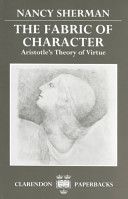
Most traditional accounts of Aristotle’s theory of ethical education neglect its cognitive aspects. This book asserts that, in Aristotle’s view, excellence of character comprises both the sentiments and practical reason. Sherman focuses particularly on four aspects of practical reason as they relate to character: moral perception, choicemaking, collaboration, and the development of those capacities in moral education. Throughout the book, she is sensitive to contemporary moral debates, and indicates the extent to which Aristotle’s account of practical reason provides an alternative to theories of impartial reason.
ما از اخلاق چه انتظاری داریم؟ این سوال شاید تاحدودی برای عموم مردم و یا متخصصان این رشته قابل پاسخ باشد؛ اینکه خوب بودن را به ما بیاموزد و در تنظیم روابط فردی م...

جشن کتاب تهران به ایستگاه سی و یکم رسیده است. حال و احوال نشر کتاب خوب نیست و باید فرهنگدوستان را به خرید و هدیه دادن کتاب ترغیب نمود. خانه اخلاقپژوهان جوان ب...

بنیاد کتابهای اخلاق اسلامی عمدتا پالایش جان از آلودگیها و آراستن آن به زیباییها است. اندیشه محوری این قبیل کتابها آن است که انسان فعلی آنی نیست که باید باشد...

-
0 Comments