Notice: تابع WP_Block_Type_Registry::register به طورنادرست فراخوانی شد. نامهای نوع بلوک نباید حروف بزرگ داشته باشند. لطفاً برای اطلاعات بیشتر، اشکال زدایی در وردپرس را مشاهده کنید. (این پیام در نگارش 5.0.0 افزوده شده است.) in /home/ethicsho/public_html/wp-includes/functions.php on line 5313
Warning: Use of undefined constant TDC_PATH_LEGACY - assumed 'TDC_PATH_LEGACY' (this will throw an Error in a future version of PHP) in /home/ethicsho/public_html/wp-content/plugins/td-composer/td-composer.php on line 109
Warning: Use of undefined constant TDSP_THEME_PATH - assumed 'TDSP_THEME_PATH' (this will throw an Error in a future version of PHP) in /home/ethicsho/public_html/wp-content/plugins/td-composer/td-composer.php on line 113 بایگانیهای 2581 - خانه اخلاق پژوهان جوان Notice: Trying to access array offset on value of type bool in /home/ethicsho/public_html/wp-content/plugins/wp-ulike/inc/general-functions.php on line 807
Science of Love: The Wisdom of Well-Being examines the varied dimensions of love, and illuminates the new field of scholarship, the love-science symbiosis, for both scholars and general readers. It looks at religious, ethical, and philosophical issues, such as virtue, creation ex nihilo, progress, divine action, agape, values, religious practices, pacifism, sexuality, friendship, freedom, and marriage. It examines how these issues affect the ways in which people understand God, each other, and the world in which we live. Exploring these connections inspires creative hypotheses for how we might better comprehend both the sacred and the scientific.
Book Summary of Guilt And Its Vicissitudes: Psychoanalytic Reflections On MoralityHow do psychoanalysts explain human morality? Guilt and Its Vicissitudes: Psychoanalytic Reflections on Morality focuses on the way Melanie Klein and successive generations of her followers pursued and deepened Freud’s project of explaining man’s moral sense as a wholly natural phenomenon. With the introduction of the superego, Freud laid claim to the study of moral development as part of the psychoanalytic enterprise. At the same time he reconceptualized guilt: he thought of it not only as conscious, but as unconscious as well, and it was the unconscious sense of guilt that became a particular concern of the discipline he was founding. As Klein saw it, his work merely pointed the way. Judith M. Hughes argues that Klein and contemporary Kleinians went on to provide a more consistent and comprehensive psychological account of moral development. Hughes shows how Klein and her followers came to appreciate that moral and cognitive questions are complexly interwoven and makes clear how this complexity prompted them to extend the range of their theory. Hughes demonstrates both a detailed knowledge of the major figures in post-war British psychoanalysis, and a keen sensitivity to the way clinical experience informed theory-building. She writes with vigor and grace, not only about Freud and Klein, but also about such key thinkers as Riviere, Isaacs, Heimann, Segal, Bion and Joseph. Guilt and Its Vicissitudes speaks to those concerned with the clinical application of psychoanalytic theory and to those interested in the contribution psychoanalysis makes to understanding questions of human morality..
Greenhouse Economics: Values and Ethics examines the serious nature of global warming. In particular it explores the responsibilities the current generation might have to its successors, and how this should influence our economic approach. It challenges current literature on greenhouse economics, which has tended to shy away from these issues. The book will be of interest to advanced undergraduates and post graduates in environmental economics and ecological economics.
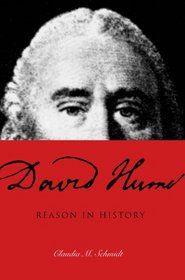
In his seminal Philosophy of David Hume (1941), Norman Kemp Smith called for a study of Hume “in all his manifold activities: as philosopher, as political theorist, as economist, as historian, and as man of letters, ” indicating that “Hume’s philosophy, as the attitude of mind which found for itself these various forms of expression, will then have been presented, adequately and in due perspective, for the first time.” Claudia Schmidt seeks to address this long-standing need in Hume scholarship. Against the charges that Hume holds no consistent philosophical position, offers no constructive account of rationality, and sees no positive relation between philosophy and other areas of inquiry, Schmidt argues for the overall coherence of Hume’s thought as a study of “reason in history.” She develops this interpretation by tracing Hume’s constructive account of human cognition and its historical dimension as a unifying theme across the full range of his writings. Hume, she shows, provides a positive account of the ways in which our concepts, beliefs, emotions, and standards of judgment in different areas of inquiry are shaped by experience, both in the personal history of the individual and in the life of a community. This book is valuable at many levels: for students, as an introduction to Hume’s writings and issues in their interpretation; for Hume specialists, as a unified and intriguing interpretation of his thought; for philosophers generally, as a synthesis of recent developments in Hume scholarship; and for scholars in other disciplines, as a guide to Hume’s contributions to their own fields.
ما از اخلاق چه انتظاری داریم؟ این سوال شاید تاحدودی برای عموم مردم و یا متخصصان این رشته قابل پاسخ باشد؛ اینکه خوب بودن را به ما بیاموزد و در تنظیم روابط فردی م...

جشن کتاب تهران به ایستگاه سی و یکم رسیده است. حال و احوال نشر کتاب خوب نیست و باید فرهنگدوستان را به خرید و هدیه دادن کتاب ترغیب نمود. خانه اخلاقپژوهان جوان ب...

بنیاد کتابهای اخلاق اسلامی عمدتا پالایش جان از آلودگیها و آراستن آن به زیباییها است. اندیشه محوری این قبیل کتابها آن است که انسان فعلی آنی نیست که باید باشد...

-
0 Comments