Notice: تابع WP_Block_Type_Registry::register به طورنادرست فراخوانی شد. نامهای نوع بلوک نباید حروف بزرگ داشته باشند. لطفاً برای اطلاعات بیشتر، اشکال زدایی در وردپرس را مشاهده کنید. (این پیام در نگارش 5.0.0 افزوده شده است.) in /home/ethicsho/public_html/wp-includes/functions.php on line 5313
Warning: Use of undefined constant TDC_PATH_LEGACY - assumed 'TDC_PATH_LEGACY' (this will throw an Error in a future version of PHP) in /home/ethicsho/public_html/wp-content/plugins/td-composer/td-composer.php on line 109
Warning: Use of undefined constant TDSP_THEME_PATH - assumed 'TDSP_THEME_PATH' (this will throw an Error in a future version of PHP) in /home/ethicsho/public_html/wp-content/plugins/td-composer/td-composer.php on line 113 بایگانیهای 2554 - خانه اخلاق پژوهان جوان Notice: Trying to access array offset on value of type bool in /home/ethicsho/public_html/wp-content/plugins/wp-ulike/inc/general-functions.php on line 807
Legal Ethics employs a variety of techniques to breathe life into a topic that can be sometimes tedious to study. Readers will be attracted to current and classic case law, hypothetical situations, many real-life examples of lawyer and nonlawyer instances of misconduct and discussions of famous and infamous people as their situations relate to the topic. Examples of this material include a discussion of the disbarment proceedings against President Bill Clinton and F. Lee Bailey and news events involving Hillary Clinton, Bill Gates, Newt Gingrich, Patty Hearst and Timothy McVeigh. Supporting material features more than 70 legal ethics Web sites, a complete glossary and significant ethics codes designed for paralegal and legal assistants. The book also boasts an exceptional instructor’s manual featuring chapter outlines, teaching suggestions, full case briefs for all case law in the text, chapter review questions and complete test banks for each chapter. Benefits: • dozens of real-life examples and cases bring the topic of legal ethics to life • thorough explanations teach the reader the how’s and why’s of the material • fully supported citations enable readers to conduct their own research from the text • the many devices used to impart the material enhance the reader’s interest and retention
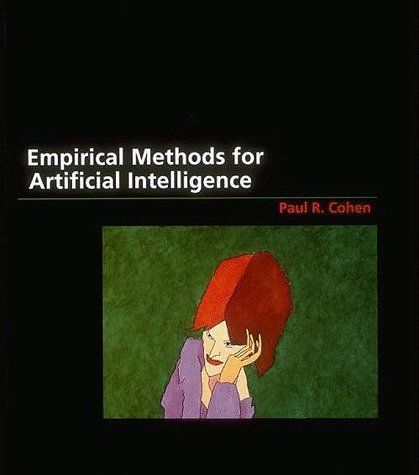
Computer science and artificial intelligence in particular have no curriculum in research methods, as other sciences do. This book presents empirical methods for studying complex computer programs: exploratory tools to help find patterns in data, experiment designs and hypothesis-testing tools to help data speak convincingly, and modeling tools to help explain data. Although many of these techniques are statistical, the book discusses statistics in the context of the broader empirical enterprise. The first three chapters introduce empirical questions, exploratory data analysis, and experiment design. The blunt interrogation of statistical hypothesis testing is postponed until chapters 4 and 5, which present classical parametric methods and computer-intensive (Monte Carlo) resampling methods, respectively. This is one of few books to present these new, flexible resampling techniques in an accurate, accessible manner.Much of the book is devoted to research strategies and tactics, introducing new methods in the context of case studies. Chapter 6 covers performance assessment, chapter 7 shows how to identify interactions and dependencies among several factors that explain performance, and chapter 8 discusses predictive models of programs, including causal models. The final chapter asks what counts as a theory in AI, and how empirical methods—which deal with specific systems—can foster general theories.Mathematical details are confined to appendixes and no prior knowledge of statistics or probability theory is assumed. All of the examples can be analyzed by hand or with commercially available statistics packages.The Common Lisp Analytical Statistics Package (CLASP), developed in the author’s laboratory for Unix and Macintosh computers, is available from The MIT Press.A Bradford Book
Based on a non-consequentialist ethical theory, this book critically examines the prevalent view that if a fetus has the moral standing of a person, it has a right to life and abortion is impermissible. Most discussion of abortion has assumed that this view is correct, and so has focused on the question of the personhood of the fetus. Kamm begins by considering in detail the permissibility of killing in non-abortion cases which are similar to abortion cases. She goes on to consider the case for the permissibility of abortion in many types of pregnancies, including ones resulting from rape, voluntary pregnancy, and pregnancy resulting from a voluntary sex act, even if the fetus is considered a person. This argument emerges as part of a broader theory of creating new people responsibly. Kamm explores the implications of this argument for informed consent to abortion; responsibilities in pregnancy that is not aborted, and the significance of extra-uterine gestation devices for the permissibility of abortion.
The Blackwell Guide to Aristotle’s Nicomachean Ethics illuminates Aristotle’s ethics for both academics and students new to the work, with sixteen newly commissioned essays by distinguished international scholars. The structure of the book mirrors the organization of the Nichomachean Ethics itself.Discusses the human good, the general nature of virtue, the distinctive characteristics of particular virtues, voluntariness, self-control, and pleasure.
ما از اخلاق چه انتظاری داریم؟ این سوال شاید تاحدودی برای عموم مردم و یا متخصصان این رشته قابل پاسخ باشد؛ اینکه خوب بودن را به ما بیاموزد و در تنظیم روابط فردی م...

جشن کتاب تهران به ایستگاه سی و یکم رسیده است. حال و احوال نشر کتاب خوب نیست و باید فرهنگدوستان را به خرید و هدیه دادن کتاب ترغیب نمود. خانه اخلاقپژوهان جوان ب...

بنیاد کتابهای اخلاق اسلامی عمدتا پالایش جان از آلودگیها و آراستن آن به زیباییها است. اندیشه محوری این قبیل کتابها آن است که انسان فعلی آنی نیست که باید باشد...

-
0 Comments