Notice: تابع WP_Block_Type_Registry::register به طورنادرست فراخوانی شد. نامهای نوع بلوک نباید حروف بزرگ داشته باشند. لطفاً برای اطلاعات بیشتر، اشکال زدایی در وردپرس را مشاهده کنید. (این پیام در نگارش 5.0.0 افزوده شده است.) in /home/ethicsho/public_html/wp-includes/functions.php on line 5313
Warning: Use of undefined constant TDC_PATH_LEGACY - assumed 'TDC_PATH_LEGACY' (this will throw an Error in a future version of PHP) in /home/ethicsho/public_html/wp-content/plugins/td-composer/td-composer.php on line 109
Warning: Use of undefined constant TDSP_THEME_PATH - assumed 'TDSP_THEME_PATH' (this will throw an Error in a future version of PHP) in /home/ethicsho/public_html/wp-content/plugins/td-composer/td-composer.php on line 113 بایگانیهای 2545 - خانه اخلاق پژوهان جوان Notice: Trying to access array offset on value of type bool in /home/ethicsho/public_html/wp-content/plugins/wp-ulike/inc/general-functions.php on line 807
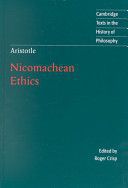
Aristotles Nicomachean Ethics, based on lectures that he gave in Athens in the fourth century BCE, is one of the most significant works in moral philosophy, and has profoundly influenced the whole course of subsequent philosophical endeavour. It is soundly located within a philosophical tradition, but its argument differs markedly from those of Plato and Socrates in its emphasis on the exercise – as opposed to the mere possession – of virtue as the key to human happiness, offering seminal discussions of ethical issues that are practical in their intent. Topics covered include the role of luck in human wellbeing, moral education, responsibility, courage, justice, moral weakness, friendship and pleasure. This accessible new translation by Roger Crisp follows the Greek text closely and also provides a non-Greek-reader with the flavour of the original. The volume also includes a historical and philosophical introduction and notes on further reading.
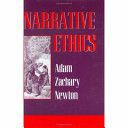
The ethics of literature, formalists have insisted, resides in the moral quality of a character, a story, perhaps the relation between author and reader. But in the wake of deconstruction and various forms of criticism focusing on difference, the ethical question has been freshly negotiated by literary studies, and to this approach Adam Newton brings a startling new thrust. His book makes a compelling case for understanding narrative as ethics. Assuming an intrinsic and necessary connection between the two, Newton explores the ethical consequences of telling stories and fictionalizing character, and the reciprocal claims binding teller, listener, witness, and reader in the process. He treats these relations as defining properties of prose fiction, of particular import in nineteenth- and twentieth-century texts.Newton’s fresh and nuanced readings cover a wide range of authors and periods, from Charles Dickens to Kazuo Ishiguro and Julian Barnes, from Herman Melville to Richard Wright, from Joseph Conrad and Henry James to Sherwood Anderson and Stephen Crane. An original work of theory as well as a deft critical performance, Narrative Ethics also stakes a claim for itself as moral inquiry. To that end, Newton braids together the ethical-philosophical projects of Emmanuel Levinas, Stanley Cavell, and Mikhail Bakhtin as a kind of chorus for his textual analyses–an elegant bridge between philosophy’s ear and literary criticism’s voice. His work will generate enormous interest among scholars and students of English and American literature, as well as specialists in narrative and literary theory, hermeneutics, and contemporary philosophy.
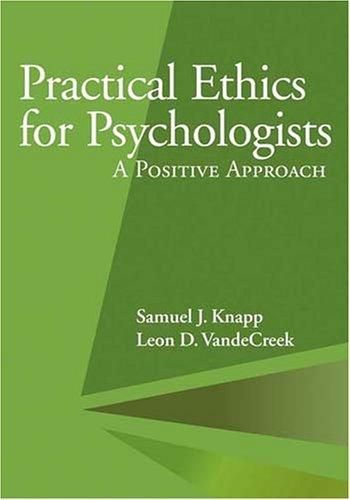
Helps psychologists clarify what they value, consider how they should behave, and determine what constitutes proper professional conduct. This book is unique in stressing the importance of positive ethics?that is, ways in which psychologists can reach their highest ethical ideals, rather than just avoiding breaking rules. Using the 2002 APA Code of Ethics as a guide, the authors lay out a five-step model for resolving ethical dilemmas, illustrating the discussion with thumbnail sketches of both ethical and questionable behaviors. Throughout, they stress the importance of self-care, which involves self-regulation, emotional competence, and an understanding of the unique occupational challenges of being a psychologist. Provides guidance on dealing with ethically complex issues like competence, multiple relationships, informed consent, confidentiality (including confidentiality with life endangering patients), fees and financial issues, public statements, and risk management. Individual chapters are devoted to special issues for psychologists working in forensics, teaching, business, assessment, therapy, and supervision and training. This book is ideal for classroom use or self-study.
Rationality and freedom are among the most profound and contentious concepts in philosophy and the social sciences. In two volumes on rationality, freedom, and justice, the distinguished economist and philosopher Amartya Sen brings clarity and insight to these difficult issues. This volume–the first of the two–is principally concerned with rationality and freedom.Sen scrutinizes and departs from the standard criteria of rationality, and shows how it can be seen in terms of subjecting one’s values as well as choices to the demands of reason and critical scrutiny. This capacious approach is utilized to illuminate the demands of rationality in individual choice (including decisions under uncertainty) as well as social choice (including cost benefit analysis and environmental assessment).Identifying a reciprocity in the relationship between rationality and freedom, Sen argues that freedom cannot be assessed independently of a person’s reasoned preferences and valuations, just as rationality, in turn, requires freedom of thought. Sen uses the discipline of social choice theory (a subject he has helped to develop) to illuminate the demands of reason and the assessment of freedom. The latter is the subject matter of Sen’s previously unpublished Arrow Lectures included here.The essays in these volumes contribute to Sen’s ongoing transformation of economic theory and social philosophy, and to our understanding of the connections among rationality, freedom, and social justice.
ما از اخلاق چه انتظاری داریم؟ این سوال شاید تاحدودی برای عموم مردم و یا متخصصان این رشته قابل پاسخ باشد؛ اینکه خوب بودن را به ما بیاموزد و در تنظیم روابط فردی م...

جشن کتاب تهران به ایستگاه سی و یکم رسیده است. حال و احوال نشر کتاب خوب نیست و باید فرهنگدوستان را به خرید و هدیه دادن کتاب ترغیب نمود. خانه اخلاقپژوهان جوان ب...

بنیاد کتابهای اخلاق اسلامی عمدتا پالایش جان از آلودگیها و آراستن آن به زیباییها است. اندیشه محوری این قبیل کتابها آن است که انسان فعلی آنی نیست که باید باشد...

-
0 Comments