Notice: تابع WP_Block_Type_Registry::register به طورنادرست فراخوانی شد. نامهای نوع بلوک نباید حروف بزرگ داشته باشند. لطفاً برای اطلاعات بیشتر، اشکال زدایی در وردپرس را مشاهده کنید. (این پیام در نگارش 5.0.0 افزوده شده است.) in /home/ethicsho/public_html/wp-includes/functions.php on line 5313
Warning: Use of undefined constant TDC_PATH_LEGACY - assumed 'TDC_PATH_LEGACY' (this will throw an Error in a future version of PHP) in /home/ethicsho/public_html/wp-content/plugins/td-composer/td-composer.php on line 109
Warning: Use of undefined constant TDSP_THEME_PATH - assumed 'TDSP_THEME_PATH' (this will throw an Error in a future version of PHP) in /home/ethicsho/public_html/wp-content/plugins/td-composer/td-composer.php on line 113 بایگانیهای 2511 - خانه اخلاق پژوهان جوان Notice: Trying to access array offset on value of type bool in /home/ethicsho/public_html/wp-content/plugins/wp-ulike/inc/general-functions.php on line 807
This collection surveys the tradition of medieval commentaries on Aristotle’s Nicomachean Ethics from its thirteenth-century origins to the fifteenth century, concentrating on the conception of the moral and intellectual virtues in a continuous interplay of ancient and Christian moral thought.
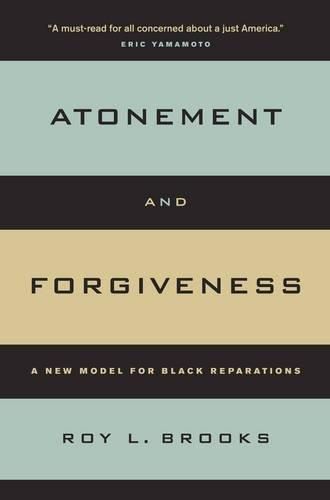
Roy L. Brooks reframes one of the most important, controversial, and misunderstood issues of our time in this far-reaching reassessment of the growing debate on black reparation. Atonement and Forgiveness shifts the focus of the issue from the backward-looking question of compensation for victims to a more forward-looking racial reconciliation. Offering a comprehensive discussion of the history of the black redress movement, this book puts forward a powerful new plan for repairing the damaged relationship between the federal government and black Americans in the aftermath of 240 years of slavery and another 100 years of government-sanctioned racial segregation. Key to Brooks’s vision is the government’s clear signal that it understands the magnitude of the atrocity it committed against an innocent people, that it takes full responsibility, and that it publicly requests forgiveness–in other words, that it apologizes. The government must make that apology believable, Brooks explains, by a tangible act that turns the rhetoric of apology into a meaningful, material reality, that is, by reparation. Apology and reparation together constitute atonement. Atonement, in turn, imposes a reciprocal civic obligation on black Americans to forgive, which allows black Americans to start relinquishing racial resentment and to begin trusting the government’s commitment to racial equality. Brooks’s bold proposal situates the argument for reparations within a larger, international framework–namely, a post-Holocaust vision of government responsibility for genocide, slavery, apartheid, and similar acts of injustice. Atonement and Forgiveness makes a passionate, convincing case that only with this spirit of heightened morality, identity, egalitarianism, and restorative justice can genuine racial reconciliation take place in America. Roy L. Brooks reframes one of the most important, controversial, and misunderstood issues of our time in this far-reaching reassessment of the growing debate on black reparation. Atonement and Forgiveness shifts the focus of the issue from the backward-looking question of compensation for victims to a more forward-looking racial reconciliation. Offering a comprehensive discussion of the history of the black redress movement, this book puts forward a powerful new plan for repairing the damaged relationship between the federal government and black Americans in the aftermath of 240 years of slavery and another 100 years of government-sanctioned racial segregation. Key to Brooks’s vision is the government’s clear signal that it understands the magnitude of the atrocity it committed against an innocent people, that it takes full responsibility, and that it publicly requests forgiveness–in other words, that it apologizes. The government must make that apology believable, Brooks explains, by a tangible act that turns the rhetoric of apology into a meaningful, material reality, that is, by reparation. Apology and reparation together constitute atonement. Atonement, in turn, imposes a reciprocal civic obligation on black Americans to forgive, which allows black Americans to start relinquishing racial resentment and to begin trusting the government’s commitment to racial equality. Brooks’s bold proposal situates the argument for reparations within a larger, international framework–namely, a post-Holocaust vision of government responsibility for genocide, slavery, apartheid, and similar acts of injustice. Atonement and Forgiveness makes a passionate, convincing case that only with this spirit of heightened morality, identity, egalitarianism, and restorative justice can genuine racial reconciliation take place in America.
The position of rational egoism centres upon the thought that the rational thing to do must be to pursue one’s own self-interest. Focusing on the work of Hobbes and Sidgwick, this book is an extensive history and evaluation of rational egoism. They are, after the ancients, the foremost exponents of rational egoism. He also considers other figures – Grotius, Samuel Clarke, John Clarke, Butler, Hume, Reid, Kant, Paley and Bentham – and a related position: the instrumental theory of rationality. Robert Shaver’s conclusion is that none of the arguments for rational egoism or the instrumental theory are cogent. This is an important book not just for historians of philosophy but for all readers in philosophy or the social sciences interested in theories of morality and rationality.
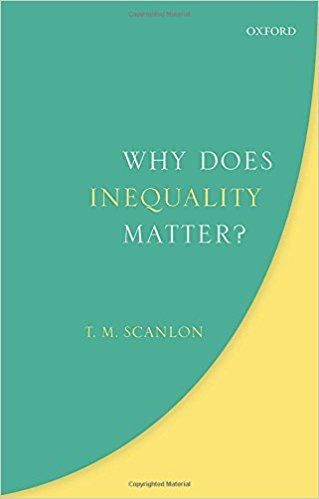
Inequality is widely regarded as morally objectionable: T. M. Scanlon investigates why it matters to us. Demands for greater equality can seem puzzling, because it can be unclear what reason people have for objecting to the difference between what they have and what others have, as opposed simply to wanting to be better off. This book examines six such reasons. Inequality can be objectionable because it arises from a failure of some agent to give equal concern to the interests of different parties to whom it is obligated to provide some good. It can be objectionable because it involves or gives rise to objectionable inequalities in status. It can be objectionable because it gives the rich unacceptable forms of control over the lives of those who have less. It can be objectionable because it interferes with the procedural fairness of economic institutions, or because it deprives some people of substantive opportunity to take part in those institutions. Inequality can be objectionable because it interferes with the fairness of political institutions. Finally, inequality in wealth and income can be objectionable because it is unfair: the institutional mechanisms that produce it cannot be justified in the relevant way. Scanlon’s aims is to provide a moral anatomy of these six reasons, and the ideas of equality that they involve. He also examines objections to the pursuit of equality on the ground that it involves objectionable interference with individual liberty, and argues that ideas of desert do not provide a basis either for justifying significant economic inequality or for objecting to it.
ما از اخلاق چه انتظاری داریم؟ این سوال شاید تاحدودی برای عموم مردم و یا متخصصان این رشته قابل پاسخ باشد؛ اینکه خوب بودن را به ما بیاموزد و در تنظیم روابط فردی م...

جشن کتاب تهران به ایستگاه سی و یکم رسیده است. حال و احوال نشر کتاب خوب نیست و باید فرهنگدوستان را به خرید و هدیه دادن کتاب ترغیب نمود. خانه اخلاقپژوهان جوان ب...

بنیاد کتابهای اخلاق اسلامی عمدتا پالایش جان از آلودگیها و آراستن آن به زیباییها است. اندیشه محوری این قبیل کتابها آن است که انسان فعلی آنی نیست که باید باشد...

-
0 Comments