Notice: تابع WP_Block_Type_Registry::register به طورنادرست فراخوانی شد. نامهای نوع بلوک نباید حروف بزرگ داشته باشند. لطفاً برای اطلاعات بیشتر، اشکال زدایی در وردپرس را مشاهده کنید. (این پیام در نگارش 5.0.0 افزوده شده است.) in /home/ethicsho/public_html/wp-includes/functions.php on line 5313
Warning: Use of undefined constant TDC_PATH_LEGACY - assumed 'TDC_PATH_LEGACY' (this will throw an Error in a future version of PHP) in /home/ethicsho/public_html/wp-content/plugins/td-composer/td-composer.php on line 109
Warning: Use of undefined constant TDSP_THEME_PATH - assumed 'TDSP_THEME_PATH' (this will throw an Error in a future version of PHP) in /home/ethicsho/public_html/wp-content/plugins/td-composer/td-composer.php on line 113 بایگانیهای 2499 - خانه اخلاق پژوهان جوان Notice: Trying to access array offset on value of type bool in /home/ethicsho/public_html/wp-content/plugins/wp-ulike/inc/general-functions.php on line 807
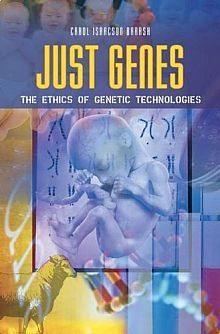
Advances in genetics research, largely, though not entirely, spawned by the Human Genome Project, have led to a broad array of new technologies that promise to revolutionize life as we have known it. Medicine and agriculture are already starting to utilize new technologies to greatly improve disease prevention and treatment and food production. Yet, these “improvements” often raise ethical questions that are not easy to untangle. Some have gone as far to as to argue that certain applications, such as embryonic stem cell research, threaten the very fiber of our moral compass. While the application of scientific advances to better mankind has always raised thorny ethical issues, the ethical impact of genetic advances arguably reaches a new height because the applicability of advances is exceptionally broad, deep, and potentially irreversible. To utilize such technologies could mean saving thousands of lives, but where and how do we draw the line? Here, Barash sheds light on the actual ethical concerns surrounding various types of genetic technologies, introducing readers to the competing issues at stake in the arguments about the scientific application of the new technologies available and those on the horizon. She begins by illustrating the history of genetic advances, their societal applications, and the ethical issues that have arisen from those applications. Using case studies and examples throughout, she walks readers through the various considerations involved in a variety of areas related to the application of genetic technologies currently available and possible in the future. Covering topics ranging from stem cell research to genetically modified food, genetic mapping to cloning, this book offers a thoughtful approach to the complex issues at play in the various fields of genetic technologies.
When Did I Begin? investigates the theoretical, moral and biological issues surrounding the debate over the beginning of human life. With the continuing controversy over the use of in vitro fertilization techniques and experimentation with human embryos, these issues have been forced into the arena of public debate. The answer to the question, āWhen did I begin?ā draws on both scientific evidence, and on the philosophical concepts of the presence of the human individaul. As a leading theologian and moral philosopher, thoroughly conversant with modern embryology, Norman Ford, a Salesian priest, is well qualified to bridge the gap between the biological and philosophical point of view. Dr Ford argues that a human individual could not begin before definitive individuation occurs with the appearance of the primative streak about two weeks after fertilisation. While he does not specifically address any moral issues regarding the treatment of human embryos, the author views reading of this book as an essential prerequisite for such moral considerations. The implications of Dr Fordās answer to the question posed in the title will be crucially important for fully evaluating such problems as embryo experimentation and contraception, for a range of readers from embryologists and physicians to moral philosophers and theologians. The book has already stimulated considerable interest and debate, and is now available in paperback for the first time.
Presenting the basic tools for the identification, analysis, and evaluation of common arguments for beginners, this book informs by using examples of arguments in dialogues, both in the text itself and in the exercises. (Examples of controversial legal, political, and ethical arguments are analyzed.) Illustrating the most common kinds of arguments, the book also explains how to evaluate each kind by critical questioning. Douglas Walton demonstrates the reasonable nature of arguments under the right dialogue conditions by using critical questions to evaluate them.
ما از اخلاق چه انتظاری داریم؟ این سوال شاید تاحدودی برای عموم مردم و یا متخصصان این رشته قابل پاسخ باشد؛ اینکه خوب بودن را به ما بیاموزد و در تنظیم روابط فردی م...

جشن کتاب تهران به ایستگاه سی و یکم رسیده است. حال و احوال نشر کتاب خوب نیست و باید فرهنگدوستان را به خرید و هدیه دادن کتاب ترغیب نمود. خانه اخلاقپژوهان جوان ب...

بنیاد کتابهای اخلاق اسلامی عمدتا پالایش جان از آلودگیها و آراستن آن به زیباییها است. اندیشه محوری این قبیل کتابها آن است که انسان فعلی آنی نیست که باید باشد...

-
0 Comments