Notice: تابع WP_Block_Type_Registry::register به طورنادرست فراخوانی شد. نامهای نوع بلوک نباید حروف بزرگ داشته باشند. لطفاً برای اطلاعات بیشتر، اشکال زدایی در وردپرس را مشاهده کنید. (این پیام در نگارش 5.0.0 افزوده شده است.) in /home/ethicsho/public_html/wp-includes/functions.php on line 5313
Warning: Use of undefined constant TDC_PATH_LEGACY - assumed 'TDC_PATH_LEGACY' (this will throw an Error in a future version of PHP) in /home/ethicsho/public_html/wp-content/plugins/td-composer/td-composer.php on line 109
Warning: Use of undefined constant TDSP_THEME_PATH - assumed 'TDSP_THEME_PATH' (this will throw an Error in a future version of PHP) in /home/ethicsho/public_html/wp-content/plugins/td-composer/td-composer.php on line 113 بایگانیهای 2468 - خانه اخلاق پژوهان جوان Notice: Trying to access array offset on value of type bool in /home/ethicsho/public_html/wp-content/plugins/wp-ulike/inc/general-functions.php on line 807
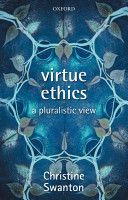
Christine Swanton offers a new, comprehensive theory of virtue ethics which addresses the major concerns of modern ethical theory from a character-based perspective. Discussion of many problems in moral theory, such as moral constraints, rightness of action, the good life, the demandingness ofethics, the role of the subjective, and the practicality of ethics, has been dominated by Kantian and Consequentialist theories, with their own distinctive conceptual apparatus. Virtue Ethics shows how a different framework can shed new light on these intractable issues. Swanton’s approach is distinctive in departing in siginificant ways from classical versions of virtue ethics derived primarily from Aristotle. Employing insights from Nietzsche and other sources, she argues against both eudaimonistic virtue ethics and traditional virtue ethical conceptions ofrightness. In developing a pluralistic view, she shows how different ‘modes of moral acknowledgement’ such as love, respect, appreciation, and creativity, are embedded in the very fabric of virtue, the moral life, and the good life.
This book contains new essays in honor of Melvin J. Lerner, a pioneer in the psychological study of justice. The contributors to this volume are internationally renowned scholars from psychology, business, and law. They examine the role of justice motivation in a wide variety of contexts, including workplace violence, affirmative action programs, helping or harming innocent victims and how people react to their own fate. Contributors explore fundamental issues such as whether people’s interest in justice is motivated by self-interest or a genuine concern for the welfare of others, when and why people feel a need to punish transgressors, how a concern for justice emerges during the development of societies and individuals, and the relation of justice motivation to moral motivation. How an understanding of justice motivation can contribute to the amelioration of major social problems is also examined.
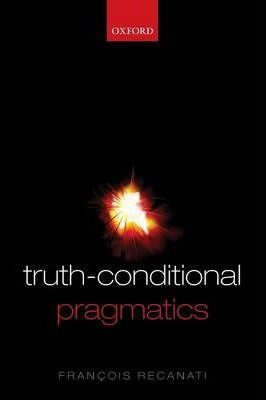
Francois Recanati argues against the traditional understanding of the semantics/pragmatics divide and puts forward a radical alternative. Through half a dozen case studies, he shows that what an utterance says cannot be neatly separated from what the speaker means. In particular, the speaker’s meaning endows words with senses that are tailored to the situation of utterance and depart from the conventional meanings carried by the words in isolation. This phenomenon of ‘pragmatic modulation’ must be taken into account in theorizing about semantic content, for it interacts with the grammar-driven process of semantic composition. Because of that interaction, Recanati argues, the content of a sentence always depends upon the context in which it is used. This claim defines Contextualism, a view which has attracted considerable attention in recent years, and of which Recanati is one of the main proponents.
Robert B. Brandom is one of the most original philosophers of our day, whose book Making It Explicit covered and extended a vast range of topics in metaphysics, epistemology, and philosophy of language–the very core of analytic philosophy. This new work provides an approachable introduction to the complex system that Making It Explicit mapped out. A tour of the earlier book’s large ideas and relevant details, Articulating Reasons offers an easy entry into two of the main themes of Brandom’s work: the idea that the semantic content of a sentence is determined by the norms governing inferences to and from it, and the idea that the distinctive function of logical vocabulary is to let us make our tacit inferential commitments explicit.Brandom’s work, making the move from representationalism to inferentialism, constitutes a near-Copernican shift in the philosophy of language–and the most important single development in the field in recent decades. Articulating Reasons puts this accomplishment within reach of nonphilosophers who want to understand the state of the foundations of semantics.
ما از اخلاق چه انتظاری داریم؟ این سوال شاید تاحدودی برای عموم مردم و یا متخصصان این رشته قابل پاسخ باشد؛ اینکه خوب بودن را به ما بیاموزد و در تنظیم روابط فردی م...

جشن کتاب تهران به ایستگاه سی و یکم رسیده است. حال و احوال نشر کتاب خوب نیست و باید فرهنگدوستان را به خرید و هدیه دادن کتاب ترغیب نمود. خانه اخلاقپژوهان جوان ب...

بنیاد کتابهای اخلاق اسلامی عمدتا پالایش جان از آلودگیها و آراستن آن به زیباییها است. اندیشه محوری این قبیل کتابها آن است که انسان فعلی آنی نیست که باید باشد...

-
0 Comments