Notice: تابع WP_Block_Type_Registry::register به طورنادرست فراخوانی شد. نامهای نوع بلوک نباید حروف بزرگ داشته باشند. لطفاً برای اطلاعات بیشتر، اشکال زدایی در وردپرس را مشاهده کنید. (این پیام در نگارش 5.0.0 افزوده شده است.) in /home/ethicsho/public_html/wp-includes/functions.php on line 5313
Warning: Use of undefined constant TDC_PATH_LEGACY - assumed 'TDC_PATH_LEGACY' (this will throw an Error in a future version of PHP) in /home/ethicsho/public_html/wp-content/plugins/td-composer/td-composer.php on line 109
Warning: Use of undefined constant TDSP_THEME_PATH - assumed 'TDSP_THEME_PATH' (this will throw an Error in a future version of PHP) in /home/ethicsho/public_html/wp-content/plugins/td-composer/td-composer.php on line 113 بایگانیهای 2446 - خانه اخلاق پژوهان جوان Notice: Trying to access array offset on value of type bool in /home/ethicsho/public_html/wp-content/plugins/wp-ulike/inc/general-functions.php on line 807
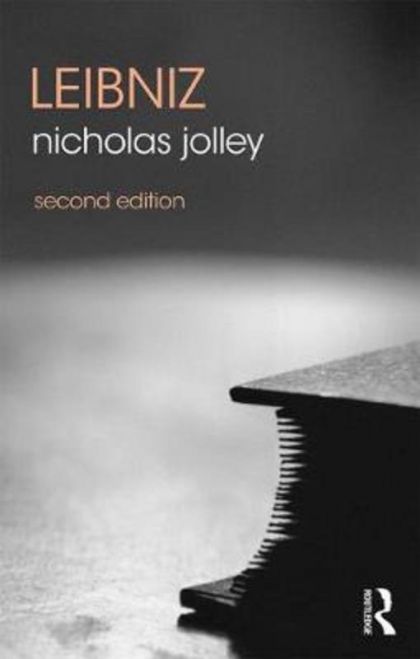
Gottfried Wilhelm Leibniz (1646-1716) was hailed by Bertrand Russell as ‘one of the supreme intellects of all time’. A towering figure in seventeenth-century philosophy, his complex thought has been championed and satirized in equal measure, most famously in Voltaire’s Candide. In this outstanding introduction to his philosophy, Nicholas Jolley introduces and assesses the whole of Leibniz’s philosophy. Beginning with an introduction to Leibniz’s life and work, he carefully introduces the core elements of Leibniz’s metaphysics: his theories of substance, identity and individuation; monads and space and time; and his important debate over the nature of space and time with Newton’s champion, Samuel Clarke. He then introduces Leibniz’s theories of mind, knowledge, and innate ideas, showing how Leibniz anticipated the distinction between conscious and unconscious states, before examining his theory of free will and the problem of evil. An important feature of the book is its introduction to Leibniz’s moral and political philosophy, an overlooked aspect of his work. The final chapter assesses legacy and the impact of his philosophy on philosophy as a whole, particularly on the work of Immanuel Kant. Throughout, Nicholas Jolley places Leibniz in relation to some of the other great philosophers, such as Descartes, Spinoza and Locke, and discusses Leibniz’s key works, such as the Monadology and Discourse on Metaphysics.
Regenerative medicine is rich with promethean promises. The use of human embryonic stem cells in research is justified by its advocates in terms of promises to cure a wide range of diseases and disabilities, from Alzheimer’s and Parkinsonism to the results of heart attacks and spinal cord injuries. More broadly, there is the promethean allure of being able to redesign human biological nature in terms of the goals and concerns of humans. Needless to say, these allures and promises have provoked a wide range of not just moral but metaphysical reflections that reveal and reflect deep fault-lines in our cultures. The essays in this volume, directly and indirectly, present the points of controversy as they tease out the character of the moral issues that confront any attempt to develop the human regenerative technologies that might move us from a human to a post-human nature. Although one can appreciate the disputes as independently philosophical, they are surely also a function of the conflict between a Christian and a post-Christian culture, in that Christianity has from its beginning recognized a fundamental prohibition against the taking of early human life. Even the philosophical disputes that frame secular bioethics are often motivated and shaped by these background cultural conflicts. These essays display this circumstance in rich ways.
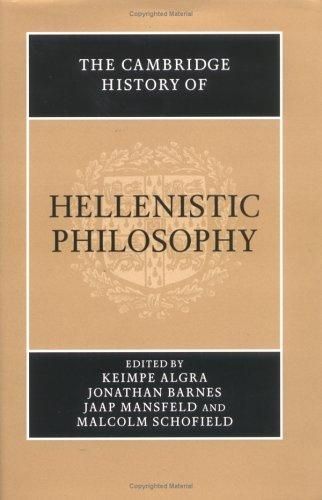
A full account of the philosophy of the Greek and Roman worlds from the last days of Aristotle (c. 320 BC) until 100 BC. Hellenistic philosophy, for long relatively neglected and unappreciated, has over the last decade been the object of a considerable amount of scholarly attention. The time has come for a general reference work which pulls the subject together and presents an overview. The History is organised by subject, rather than chronologically or by philosophical school, with sections on logic, epistemology, physics and metaphysics, ethics and politics. It has been written by specialists but is intended to be a source of reference for any student of ancient philosophy, for students of classical antiquity and for students of the philosophy of later periods. Greek and Latin are used sparingly and always translated in the main text.
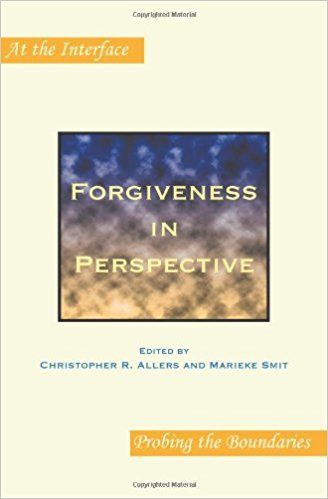
Amidst the cacophony of claims made about forgiveness, this book serves to aid in an effort to put żforgiveness in perspective.ż Marieke Smit and Christopher R. Allers have collected here ten essays written by twelve authors from around the world and across the disciplinary spectrum including philosophers, practitioners, psychologists, literary theorists, and prison chaplains. All the essays offer a perspective on forgiveness and put forgiveness in perspective whether by tracing what forgiveness żis,ż how this religious inheritance is worked out in our secularizing societies, how forgiveness works in our quotidian experience, or a particular manifestation in a particular context such as marriage, prison, or after an abortion, to name a few. The multi-disciplinary character of this book provides a multi-disciplinary appeal as well as a resource to enlarge oneżs own perspective on this perplexing, enigmatic, and wonderfully complex concept of forgiveness.Marieke Smit is a researcher at the Centre for Prison Pastoral Care at the University of Tilburg, The Netherlands. Her research concerns the role of forgiveness in detention. She is also working as a prison chaplain in Dutch prisons.Christopher R. Allers (M.A., Institute for Christian Studies, Toronto) is Adjunct Professor of Philosophy at Cornerstone University (Grand Rapids, MI) and Sessional Instructor in Philosophy at the Institute for Christian Studies, Toronto (ICS) where he is also a doctoral student in the conjoint degree program between ICS and the Vrije Universiteit, Amsterdam. He is currently working on a dissertation on forgiveness which is tentatively titled The Miracle of Forgiveness.
ما از اخلاق چه انتظاری داریم؟ این سوال شاید تاحدودی برای عموم مردم و یا متخصصان این رشته قابل پاسخ باشد؛ اینکه خوب بودن را به ما بیاموزد و در تنظیم روابط فردی م...

جشن کتاب تهران به ایستگاه سی و یکم رسیده است. حال و احوال نشر کتاب خوب نیست و باید فرهنگدوستان را به خرید و هدیه دادن کتاب ترغیب نمود. خانه اخلاقپژوهان جوان ب...

بنیاد کتابهای اخلاق اسلامی عمدتا پالایش جان از آلودگیها و آراستن آن به زیباییها است. اندیشه محوری این قبیل کتابها آن است که انسان فعلی آنی نیست که باید باشد...

-
0 Comments