Notice: تابع WP_Block_Type_Registry::register به طورنادرست فراخوانی شد. نامهای نوع بلوک نباید حروف بزرگ داشته باشند. لطفاً برای اطلاعات بیشتر، اشکال زدایی در وردپرس را مشاهده کنید. (این پیام در نگارش 5.0.0 افزوده شده است.) in /home/ethicsho/public_html/wp-includes/functions.php on line 5313
Warning: Use of undefined constant TDC_PATH_LEGACY - assumed 'TDC_PATH_LEGACY' (this will throw an Error in a future version of PHP) in /home/ethicsho/public_html/wp-content/plugins/td-composer/td-composer.php on line 109
Warning: Use of undefined constant TDSP_THEME_PATH - assumed 'TDSP_THEME_PATH' (this will throw an Error in a future version of PHP) in /home/ethicsho/public_html/wp-content/plugins/td-composer/td-composer.php on line 113 بایگانیهای 2436 - خانه اخلاق پژوهان جوان Notice: Trying to access array offset on value of type bool in /home/ethicsho/public_html/wp-content/plugins/wp-ulike/inc/general-functions.php on line 807
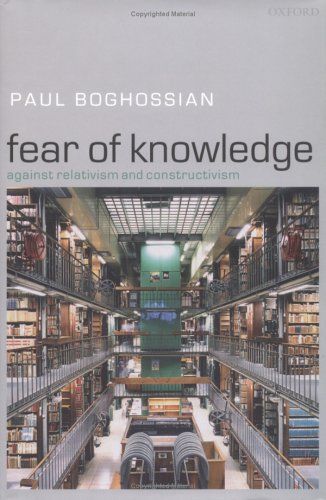
Relativist and constructivist conceptions of truth and knowledge have become orthodoxy in vast stretches of the academic world in recent times. In his long-awaited first book, Paul Boghossian critically examines such views and exposes their fundamental flaws. Boghossian focuses on three different ways of reading the claim that knowledge is socially constructed–one as a thesis about truth and two about justification. And he rejects all three. The intuitive, common-sense view is that there is a way the world is that is independent of human opinion; and that we are capable of arriving at beliefs about how it is that are objectively reasonable, binding on anyone capable of appreciating the relevant evidence regardless of their social or cultural perspective. Difficult as these notions may be, it is a mistake to think that philosophy has uncovered powerful reasons for rejecting them. This short, lucid, witty book shows that philosophy provides rock-solid support for common sense against the relativists. It will prove provocative reading throughout the discipline and beyond.
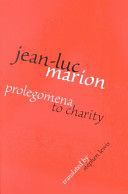
In seven essays that draw from metaphysics, phenomenology, literature, Christological theology, and Biblical exegesis,Marion sketches several prolegomena to a future fuller thinking and saying of love’s paradoxical reasons, exploring evil, freedom, bedazzlement, and the loving gaze; crisis, absence, and knowing.
“The concept of autonomy is one of Kant’s central legacies for contemporary moral thought. We often invoke autonomy as both a moral ideal and a human right, especially a right to determine oneself independently of foreign determinants; indeed, to violate a person’s autonomy is considered to be a serious moral offence. Yet while contemporary philosophy claims Kant as the originator of its notion of autonomy, Kant’s own conception of the term seems to differ in important respects from our present-day interpretation. Kant on Moral Autonomy brings together a distinguished group of scholars who explore the following questions: what is Kant’s conception of autonomy? What is its history and its influence on contemporary conceptions? And what is its moral significance? Their essays will be of interest both to scholars and students working on Kantian moral philosophy and to anyone interested in the subject of autonomy”–
ما از اخلاق چه انتظاری داریم؟ این سوال شاید تاحدودی برای عموم مردم و یا متخصصان این رشته قابل پاسخ باشد؛ اینکه خوب بودن را به ما بیاموزد و در تنظیم روابط فردی م...

جشن کتاب تهران به ایستگاه سی و یکم رسیده است. حال و احوال نشر کتاب خوب نیست و باید فرهنگدوستان را به خرید و هدیه دادن کتاب ترغیب نمود. خانه اخلاقپژوهان جوان ب...

بنیاد کتابهای اخلاق اسلامی عمدتا پالایش جان از آلودگیها و آراستن آن به زیباییها است. اندیشه محوری این قبیل کتابها آن است که انسان فعلی آنی نیست که باید باشد...

-
0 Comments