Notice: تابع WP_Block_Type_Registry::register به طورنادرست فراخوانی شد. نامهای نوع بلوک نباید حروف بزرگ داشته باشند. لطفاً برای اطلاعات بیشتر، اشکال زدایی در وردپرس را مشاهده کنید. (این پیام در نگارش 5.0.0 افزوده شده است.) in /home/ethicsho/public_html/wp-includes/functions.php on line 5313
Warning: Use of undefined constant TDC_PATH_LEGACY - assumed 'TDC_PATH_LEGACY' (this will throw an Error in a future version of PHP) in /home/ethicsho/public_html/wp-content/plugins/td-composer/td-composer.php on line 109
Warning: Use of undefined constant TDSP_THEME_PATH - assumed 'TDSP_THEME_PATH' (this will throw an Error in a future version of PHP) in /home/ethicsho/public_html/wp-content/plugins/td-composer/td-composer.php on line 113 بایگانیهای 2380 - خانه اخلاق پژوهان جوان Notice: Trying to access array offset on value of type bool in /home/ethicsho/public_html/wp-content/plugins/wp-ulike/inc/general-functions.php on line 807
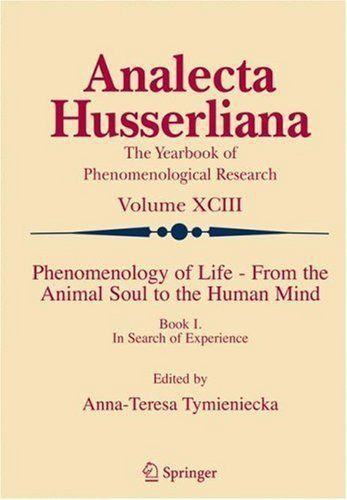
Transcendental phenomenology presumed to have overcome the classic mind-body dichotomy in terms of consciousness, yet, according to progress in scientific studies, the biological functions of the brain seem to appropriate significant functions attributed traditionally to consciousness. Should we indeed dissolve the specificity of human consciousness by explaining human experience in its multiple sense-giving modalities through the physiological functions of the brain? The present collection of studies addresses this crucial question challenging such “naturalizing” reductionism from multiple angles. In search for the roots of “The Specifically Human Experience” (Bombala), moving along the line of “Animality and Intellection”(Gosetti-Ferencei), “Naturalistic Attitude and Personalistic Attitude”(Villela-Petit), and numerous other perspectives, we arrive at a novel proposal to explain the scholar functional differentiation of conscious modalities. We reach their source in the ontopoietic thread conducting the Logos of Life in its stepwise “Evolutive Unfolding”(Carmen Cozma), and in “sentience” as its quintessential core of further irreducible continuity (Tymieniecka) dispelling dichotomies and reductionisms. Papers by: Grahame Lock, Anna-Teresa Tymieniecka, Daniela Verducci, Ted Toadvine, Mary Trachsel, Martin Holt, Mary Jeanne Larrabee, Leszek Pyra, Bronislaw Bombala, Konrad Rokstad, Ilja Maso, Nancy Mardas, Jennifer Anna Gosetti-Ferencei, Maria Villela-Petit, Mara Stafecka, Carmen Cozma, Francesco Totaro, Andreas Brenner, Sinan Kadir Celik, Osvaldo Rossi, Maria Manuela Brinto Martins, Elga Freiberga, Klymet Selvi, J.C. Couciero-Bueno, Patricia Trutty-Coohill, Walter Lammi, Ljudmila Molodkina, Martin Nkafu Nkemnkia.
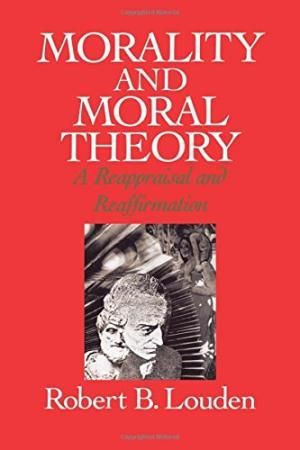
The essays collected in this volume all explore the problem of the relation between moral philosophy and modernity. The book argues against recent attempts to return to the virtue-centered perspective of ancient Greek ethics. As well as exploring the differences between ancient and modern ethics, the author treats such topics as the roles of reason and history in our moral understanding, the inadequacy of philosophical naturalism, and the foundations of modern liberalism. These essays will be of interest both to professional scholars and to general readers concerned with ethics and politics.
The adversary professions — law, business, and government among others — typically claim a moral permission to violate persons in ways that if not for the professional role, would be morally wrong. Lawyers advance bad ends and deceive, business managers exploit and despoil, public officials enforce unjust laws, and doctors keep confidences that, if disclosed, would prevent harm. Ethics for Adversaries is a philosophical inquiry into arguments that are offered to defend seemingly wrongful actions performed by those who occupy what Montaigne called “necessary offices”. Applbaum concludes that these arguments are weaker than supposed.
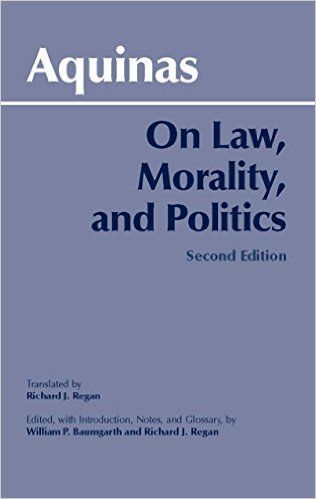
The second edition retains the selection of texts presented in the first edition but offers them in new translations by Richard J Regan — including that of his Aquinas, Treatise on Law (Hackett, 2000). A revised Introduction and glossary, an updated select bibliography, and the inclusion of summarising headnotes for each of the units — Conscience, Law, Justice, Property, War and Killing, Obedience and Rebellion, and Practical Wisdom and Statecraft — further enhance its usefulness.
ما از اخلاق چه انتظاری داریم؟ این سوال شاید تاحدودی برای عموم مردم و یا متخصصان این رشته قابل پاسخ باشد؛ اینکه خوب بودن را به ما بیاموزد و در تنظیم روابط فردی م...

جشن کتاب تهران به ایستگاه سی و یکم رسیده است. حال و احوال نشر کتاب خوب نیست و باید فرهنگدوستان را به خرید و هدیه دادن کتاب ترغیب نمود. خانه اخلاقپژوهان جوان ب...

بنیاد کتابهای اخلاق اسلامی عمدتا پالایش جان از آلودگیها و آراستن آن به زیباییها است. اندیشه محوری این قبیل کتابها آن است که انسان فعلی آنی نیست که باید باشد...

-
0 Comments