Notice: تابع WP_Block_Type_Registry::register به طورنادرست فراخوانی شد. نامهای نوع بلوک نباید حروف بزرگ داشته باشند. لطفاً برای اطلاعات بیشتر، اشکال زدایی در وردپرس را مشاهده کنید. (این پیام در نگارش 5.0.0 افزوده شده است.) in /home/ethicsho/public_html/wp-includes/functions.php on line 5313
Warning: Use of undefined constant TDC_PATH_LEGACY - assumed 'TDC_PATH_LEGACY' (this will throw an Error in a future version of PHP) in /home/ethicsho/public_html/wp-content/plugins/td-composer/td-composer.php on line 109
Warning: Use of undefined constant TDSP_THEME_PATH - assumed 'TDSP_THEME_PATH' (this will throw an Error in a future version of PHP) in /home/ethicsho/public_html/wp-content/plugins/td-composer/td-composer.php on line 113 بایگانیهای 2332 - خانه اخلاق پژوهان جوان Notice: Trying to access array offset on value of type bool in /home/ethicsho/public_html/wp-content/plugins/wp-ulike/inc/general-functions.php on line 807
The latter half of the twentieth century witnessed a growing interest in Buddhism, and it continues to capture the imagination of many in the West who see it as either an alternative or a supplement to their own religious beliefs. Numerous introductory books have appeared in recent years to cater for this growing interest, but almost none devotes attention to the specifically ethical dimension of the tradition. For complex cultural and historical reasons, ethics has not received as much attention in traditional Buddhist thought as it has in the West, and publications on the subject are few and far between. Here, Damien Keown, author of Buddhism: A Very Short Introduction , illustrates how Buddhism might approach a range of fascinating moral issues ranging from abortion and suicide to cloning.
The Rationality of Theism is a controversial collection of brand new papers by thirteen outstanding philosophers and scholars. Its aim is to offer comprehensive theistic replies to the traditional arguments against the existence of God, offering a positive case for theism as well as rebuttals of recent influential criticisms of theism.
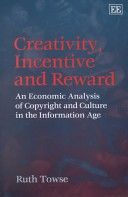
‘…well written, clear and informative. It contains many references that demonstrate the deep knowledge of the field that the author has acquired through her own research and her remarkable work at the head of the Journal of Cultural Economics. She especially provides a very clear review of the literature on the economics of copyright…. this review will become a reference that can’t be ignored by researchers interested in copyright…Towse opens avenues for further research and also stresses those questions that can help professionals better understand cultural regulations.’ – Françoise Benhamou, Journal of Cultural Economics ‘Ruth Towse’s book provides an easily accessible introduction to this field and contains much useful argument. It also stands as testament to the productive and continuing scholarly career of one of the best known figures in contemporary cultural economics.’ – David Throsby, Journal of Economic Literature ‘This is a most interesting treatise on a very topical subject of economic and legal policy …this book offers a wealth of intriguing research ideas and some interesting, if not highly rigorous, analyses of an important area of public policy.’ – Mary Kokoski, Monthly Labor Review ‘Ruth Towse’s excellent book, Creativity, Incentive and Reward is a beacon in this confused theoretical and policy mish-mash. The book, which brings together Towse’s work in copyright and cultural economics over the last decade, is thoroughly researched, analytically satisfying and beautifully written…copyright scholars owe a debt of gratitude to Towse.’ – Fiona Macmillan, Copyright World ‘This is an important work on compensation of the artist and the incentives for artistic activity. The explosive evolution of the technology of communications raises particularly pressing issues in this arena and poses new threats to remuneration of the artist. The discussion of copyright in this book provides vital information for analysis of this issue. The book is informative, intelligent and well written – precisely what is needed for understanding of its subject.’ – William J. Baumol, New York University and Princeton University, US Creativity is crucial to the Information Age economy. It is the basis of production in the cultural industries. In this excellent book, Ruth Towse provides an analysis of the interaction between creativity, the law, and markets for cultural goods and services. Copyright law establishes property rights that create economic incentives to cultural production and Ruth Towse uses her analysis to draw conclusions about policy on copyright. This unique study is of interest to a range of disciplines in economics, law, cultural studies and management.
This book combines ancient, modern, and postmodern resources to argue that moral life and thought are inherently and radically creative. Human beings are called by their own primordially created depths to exceed historical evil and tragedy through the ongoing creative transformation together of their world. This creative capability can be understood in its fullest dimensions only as a religious or mythological affirmation of humanity as an image of its Creator. This thesis challenges Greek and biblical separations of ethics and poetic image-making, as well as contemporary conceptions of moral life as grounded in fixed principles or preconstituted traditions. It instead recasts a range of mythic, prophetic, and tragic resources to uncover moral life’s poetics, tension, dynamism, catharsis, disruptiveness, excess, and impossible possibility for renewal. The book takes as its starting point a critical reading of the hermeneutical poetics of the will of Paul Ricoeur, and from there enters into a range of conversations with Aristotle and contemporary Aristotelianism, Immanuel Kant and modernism, and current Continental, narrative, liberationist, and feminist ethics such as in Emmanuel Levinas, Richard Kearney, Martha Nussbaum, Jürgen Habermas, Gustavo Gutiérrez, Luce Irigaray, and Sallie McFague. In the process, it develops a meta-ethical phenomenology of moral creativity along the lines of four increasingly complex dimensions: ontology (creativity of the self), teleology (positive creativity of narrative goods), deontology (negative creativity in response to otherness), and social practice (mixed creativity between plural others in society). Moral creativity is in the end an original and necessary religious capability for responding anew to the tensions within and between selves in the world by forming over time, in love and hope, an ever more radically inclusive humanity.
ما از اخلاق چه انتظاری داریم؟ این سوال شاید تاحدودی برای عموم مردم و یا متخصصان این رشته قابل پاسخ باشد؛ اینکه خوب بودن را به ما بیاموزد و در تنظیم روابط فردی م...

جشن کتاب تهران به ایستگاه سی و یکم رسیده است. حال و احوال نشر کتاب خوب نیست و باید فرهنگدوستان را به خرید و هدیه دادن کتاب ترغیب نمود. خانه اخلاقپژوهان جوان ب...

بنیاد کتابهای اخلاق اسلامی عمدتا پالایش جان از آلودگیها و آراستن آن به زیباییها است. اندیشه محوری این قبیل کتابها آن است که انسان فعلی آنی نیست که باید باشد...

-
0 Comments