Notice: تابع WP_Block_Type_Registry::register به طورنادرست فراخوانی شد. نامهای نوع بلوک نباید حروف بزرگ داشته باشند. لطفاً برای اطلاعات بیشتر، اشکال زدایی در وردپرس را مشاهده کنید. (این پیام در نگارش 5.0.0 افزوده شده است.) in /home/ethicsho/public_html/wp-includes/functions.php on line 5313
Warning: Use of undefined constant TDC_PATH_LEGACY - assumed 'TDC_PATH_LEGACY' (this will throw an Error in a future version of PHP) in /home/ethicsho/public_html/wp-content/plugins/td-composer/td-composer.php on line 109
Warning: Use of undefined constant TDSP_THEME_PATH - assumed 'TDSP_THEME_PATH' (this will throw an Error in a future version of PHP) in /home/ethicsho/public_html/wp-content/plugins/td-composer/td-composer.php on line 113 بایگانیهای 2296 - خانه اخلاق پژوهان جوان Notice: Trying to access array offset on value of type bool in /home/ethicsho/public_html/wp-content/plugins/wp-ulike/inc/general-functions.php on line 807
Outside Ethicsbrings together some of the most important and provocative works by one of the most creative philosophers writing today. Seeking to expand the scope of contemporary moral and political philosophy, Raymond Geuss here presents essays bound by a shared skepticism about a particular way of thinking about what is important in human life–a way of thinking that, in his view, is characteristic of contemporary Western societies and isolates three broad categories of things as important: subjective individual preferences, knowledge, and restrictions on actions that affect other people (restrictions often construed as ahistorical laws). He sets these categories in a wider context and explores various human phenomena–including poetry, art, religion, and certain kinds of history and social criticism–that do not fit easily into these categories. As its title suggests, this book seeks a place outside conventional ethics. Following a brief introduction, Geuss sets out his main concerns with a focus on ethics and politics. He then expands these themes by discussing freedom, virtue, the good life, and happiness. Next he examines Theodor Adorno’s views on the relation between suffering and knowledge, the nature of religion, and the role of history in giving us critical distances from existing identities. From here he moves to aesthetic concerns. The volume closes by looking at what it is for a human life to have “gaps”–to be incomplete, radically unsatisfactory, or a failure.
Economic Principles of Law applies economics to the doctrines, rules and remedies of the common law. In plain English and using non-technical analysis, it offers an introduction and exposition of the ‘economic approach’ to law – one of the most exciting and vibrant fields of legal scholarship and applied economics. Beginning with a brief history of the field, it sets out the basic economic concepts useful to lawyers, and applies these to assess the core areas of the common law – property, contract, tort and crime – with particular emphasis on their doctrinal structure and remedies. This is done using leading cases drawn from the birthplace of the common law (England & Wales) and other common law jurisdictions. The book serves as a primer to the wider use of economics which has become increasingly important for law students, lawyers, legislators, regulators and those concerned with our legal system generally.
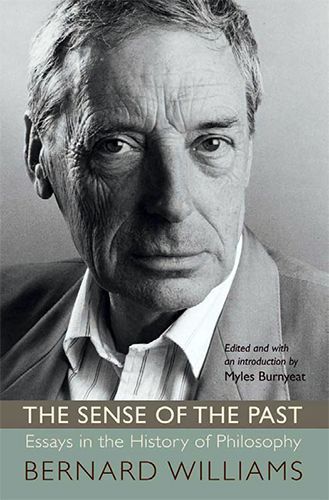
Before his death in 2003, Bernard Williams planned to publish a collection of historical essays, focusing primarily on the ancient world. This posthumous volume brings together a much wider selection, written over some forty years. His legacy lives on in this masterful work, the first collection ever published of Williams’s essays on the history of philosophy. The subjects range from the sixth century B.C. to the twentieth A.D., from Homer to Wittgenstein by way of Socrates, Plato, Aristotle, Descartes, Hume, Sidgwick, Collingwood, and Nietzsche. Often one would be hard put to say which part is history, which philosophy. Both are involved throughout, because this is the history of philosophy written philosophically. Historical exposition goes hand in hand with philosophical scrutiny. Insights into the past counteract blind acceptance of present assumptions. In his touching and illuminating introduction, Myles Burnyeat writes of these essays: “They show a depth of commitment to the history of philosophy seldom to be found nowadays in a thinker so prominent on the contemporary philosophical scene.” The result celebrates the interest and importance to philosophy today of its near and distant past.The Sense of the Past is one of three collections of essays by Bernard Williams published by Princeton University Press since his death. In the Beginning Was the Deed: Realism and Moralism in Political Argument, selected, edited, and with an introduction by Geoffrey Hawthorn, and Philosophy as a Humanistic Discipline, selected, edited, and with an introduction by A. W. Moore, make up the trio.
Sabina Lovibond invites her readers to see how the “practical reason view of ethics” can survive challenges from within philosophy and from the antirationalist postmodern critique of reason.She elaborates and defends a modern practical-reason view of ethics by focusing on virtue or ideal states of character that involve sensitivity to the objective reasons circumstances bring into play. At the heart of her argument is the Aristotelian idea of the formation of character through upbringing; these ancient ideas can be made contemporary if one understands them in a naturalized way. She then explores the implications that arise from the naturalization of the classical view, weaving into her theory ideas of Jacques Derrida and J. L. Austin. The book also discusses two modes of resistance to an existing ethical culture–one committed to the critical employment of shared norms of rationality, the other aspiring to a more radical attitude, grounded in hostility to the “universal.” Lovibond tries to determine what may be correct in this second, admittedly paradoxical, tendency. This is a timely and valuable effort to connect the most advanced forms of thinking in the analytic tradition and in the Continental tradition, and to extend our understanding of the intimacies and resistances between these two prominent strands of contemporary philosophy.
The recent revival of natural law theory in modern moral philosophy has been an exciting and important development. This book brings together an international group of moral philosophers who make original contributions to the project of developing natural law ethics as a comprehensive treatment of modern ethical theory and practice.
ما از اخلاق چه انتظاری داریم؟ این سوال شاید تاحدودی برای عموم مردم و یا متخصصان این رشته قابل پاسخ باشد؛ اینکه خوب بودن را به ما بیاموزد و در تنظیم روابط فردی م...

جشن کتاب تهران به ایستگاه سی و یکم رسیده است. حال و احوال نشر کتاب خوب نیست و باید فرهنگدوستان را به خرید و هدیه دادن کتاب ترغیب نمود. خانه اخلاقپژوهان جوان ب...

بنیاد کتابهای اخلاق اسلامی عمدتا پالایش جان از آلودگیها و آراستن آن به زیباییها است. اندیشه محوری این قبیل کتابها آن است که انسان فعلی آنی نیست که باید باشد...

-
0 Comments