Notice: تابع WP_Block_Type_Registry::register به طورنادرست فراخوانی شد. نامهای نوع بلوک نباید حروف بزرگ داشته باشند. لطفاً برای اطلاعات بیشتر، اشکال زدایی در وردپرس را مشاهده کنید. (این پیام در نگارش 5.0.0 افزوده شده است.) in /home/ethicsho/public_html/wp-includes/functions.php on line 5313
Warning: Use of undefined constant TDC_PATH_LEGACY - assumed 'TDC_PATH_LEGACY' (this will throw an Error in a future version of PHP) in /home/ethicsho/public_html/wp-content/plugins/td-composer/td-composer.php on line 109
Warning: Use of undefined constant TDSP_THEME_PATH - assumed 'TDSP_THEME_PATH' (this will throw an Error in a future version of PHP) in /home/ethicsho/public_html/wp-content/plugins/td-composer/td-composer.php on line 113 بایگانیهای 2271 - خانه اخلاق پژوهان جوان Notice: Trying to access array offset on value of type bool in /home/ethicsho/public_html/wp-content/plugins/wp-ulike/inc/general-functions.php on line 807
The fundamental question of the ethics of belief is “What ought one to believe?” According to the traditional view of evidentialism, the strength of one’s beliefs should be proportionate to the evidence. Conventional ways of defending and challenging evidentialism rely on the idea that what one ought to believe is a matter of what it is rational, prudent, ethical, or personally fulfilling to believe. Common to all these approaches is that they look outside of belief itself to determine what one ought to believe. In this book Jonathan Adler offers a strengthened version of evidentialism, arguing that the ethics of belief should be rooted in the concept of belief—that evidentialism is belief’s own ethics. A key observation is that it is not merely that one ought not, but that one cannot, believe, for example, that the number of stars is even. The “cannot” represents a conceptual barrier, not just an inability. Therefore belief in defiance of one’s evidence (or evidentialism) is impossible. Adler addresses such questions as irrational beliefs, reasonableness, control over beliefs, and whether justifying beliefs requires a foundation. Although he treats the ethics of belief as a central topic in epistemology, his ideas also bear on rationality, argument and pragmatics, philosophy of religion, ethics, and social cognitive psychology.
Cristina Bicchieri examines social norms, such as fairness, cooperation, and reciprocity, in an effort to understand their nature and dynamics, generated expectations and evolution and change. Drawing on intellectual traditions and methods, including those of social psychology, experimental economics and evolutionary game theory, Bicchieri provides an integrated account of how social norms emerge and why and when we follow them. Examining the existence and survival of inefficient norms, she demonstrates how norms evolve in ways that depend upon the psychological dispositions of the individual and how such dispositions may impair social efficiency.
Intellectual eminence apart, what did Kant, Clausewitz, Marx and Engels, and Tolstoy have in common? Professor Gallic argues that they made contributions to ‘international theory’ – to the understanding of the character and causes of war and of the possibility of peace between nations – which were of unrivalled originality in their own times and remain of undiminished importance in ours. But these contributions have been either ignored or much misunderstood ; chiefly because, as with all intellectual efforts in unexplored fields, they were often imperfectly expressed, and were also overshadowed by their author’s more striking achievements. Professor Gallic has sorted out, compared and contrasted, criticised and re-phrased the teachings of his chosen authors on peace and war.
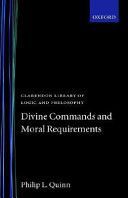
In this wide-ranging study, Quinn argues that human moral autonomy is compatible with unqualified obedience to divine commands. He formulates several versions of the crucial assumptions of divine command ethics, defending them against a battery of objections often expressed in the philosophical literature.
ما از اخلاق چه انتظاری داریم؟ این سوال شاید تاحدودی برای عموم مردم و یا متخصصان این رشته قابل پاسخ باشد؛ اینکه خوب بودن را به ما بیاموزد و در تنظیم روابط فردی م...

جشن کتاب تهران به ایستگاه سی و یکم رسیده است. حال و احوال نشر کتاب خوب نیست و باید فرهنگدوستان را به خرید و هدیه دادن کتاب ترغیب نمود. خانه اخلاقپژوهان جوان ب...

بنیاد کتابهای اخلاق اسلامی عمدتا پالایش جان از آلودگیها و آراستن آن به زیباییها است. اندیشه محوری این قبیل کتابها آن است که انسان فعلی آنی نیست که باید باشد...

-
0 Comments