Notice: تابع WP_Block_Type_Registry::register به طورنادرست فراخوانی شد. نامهای نوع بلوک نباید حروف بزرگ داشته باشند. لطفاً برای اطلاعات بیشتر، اشکال زدایی در وردپرس را مشاهده کنید. (این پیام در نگارش 5.0.0 افزوده شده است.) in /home/ethicsho/public_html/wp-includes/functions.php on line 5313
Warning: Use of undefined constant TDC_PATH_LEGACY - assumed 'TDC_PATH_LEGACY' (this will throw an Error in a future version of PHP) in /home/ethicsho/public_html/wp-content/plugins/td-composer/td-composer.php on line 109
Warning: Use of undefined constant TDSP_THEME_PATH - assumed 'TDSP_THEME_PATH' (this will throw an Error in a future version of PHP) in /home/ethicsho/public_html/wp-content/plugins/td-composer/td-composer.php on line 113 بایگانیهای 2165 - خانه اخلاق پژوهان جوان Notice: Trying to access array offset on value of type bool in /home/ethicsho/public_html/wp-content/plugins/wp-ulike/inc/general-functions.php on line 807
Nutrigenomics is the rapidly developing field of science that studies nutrient-gene interaction. This field has broad implications for understanding the interaction of human genomics and nutrition, but can also have very specific implications for individual dietary recommendations in light of personal genetics. Predicted applications for nutrigenomics include genomics-based dietary guidelines and personalized nutrition based on individual genetic tests. These developments have sweeping ethical, legal and regulatory implications for individuals, corporations and governments.This book brings together experts in ethics, law, regulatory analysis, and communication studies to identify and address relevant issues in the emerging field of nutritional genomics. Contributing authors are experts in the social aspects of biotechnology innovation, with expertise in nutrigenomics. From addressing the concern that nutrigenomics will transform food into medicine and undermine pleasures associated with eating to the latest in the science of nutrigenomics, this book provides a world-wide perspective on the potential impact of nutrigenomics on our association with food. *Explores the rapidly developing, yet not fully understood, impact of nutrigenomics on the relationship to food medicalization, genetic privacy, nutrition and health.*Provides ground for further exploration to identify issues and provide analysis to aid in policy and regulation development*Provides ethical and legal insights into this unfolding science, as well as serving as a model for thinking about issues arising in other fields of science and technology
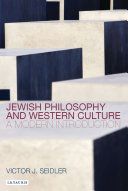
This is one of the first textbooks to try to set the entire discipline of Jewish philosophy in its proper cultural and historical contexts. In so doing, it introduces the vibrant Jewish philosophical tradition to students while also making a significant contribution to inter-religious dialogue. Victor J Seidler argues that the dominant Platonic tradition in the West has led to a form of cultural ethics which asserts false superiority in its relationships with others. He offers a critical reappraisal of the philosophical underpinnings of this western Christian culture which for so long has viewed Judaism with hostility. Examining the work of seminal Jewish thinkers such as Philo, Buber, Mendelsohn, Herman Cohen, Leo Baeck, Levinas, Rosenzweig and others, the author argues for a code of ethics which prioritises particular and personal moral responsibility rather than the impersonal and universal emphases of the Greek tradition. His provocative and original overview of Jewish philosophy uncovers a vital and neglected tradition of thought which works against the likelihood of a Holocaust recurring.
How do we judge whether an action is morally right or wrong? If an action is wrong, what reason does that give us not to do it? Why should we give such reasons priority over our other concerns and values? In this book, T. M. Scanlon offers new answers to these questions, as they apply to the central part of morality that concerns what we owe to each other. According to his contractualist view, thinking about right and wrong is thinking about what we do in terms that could be justified to others and that they could not reasonably reject. He shows how the special authority of conclusions about right and wrong arises from the value of being related to others in this way, and he shows how familiar moral ideas such as fairness and responsibility can be understood through their role in this process of mutual justification and criticism.Scanlon bases his contractualism on a broader account of reasons, value, and individual well-being that challenges standard views about these crucial notions. He argues that desires do not provide us with reasons, that states of affairs are not the primary bearers of value, and that well-being is not as important for rational decision-making as it is commonly held to be. Scanlon is a pluralist about both moral and non-moral values. He argues that, taking this plurality of values into account, contractualism allows for most of the variability in moral requirements that relativists have claimed, while still accounting for the full force of our judgments of right and wrong.
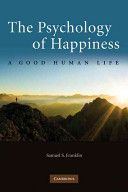
When Thomas Jefferson placed “the pursuit of happiness” along with life and liberty in The Declaration of Independence he was most likely referring to Aristotle’s concept of happiness, or eudaimonia. Eudaimonia is not about good feelings but rather the fulfillment of human potentials. Fulfillment is made possible by virtue; the moderation of desire and emotion by reason. The Psychology of Happiness is the first book to bring together psychological, philosophical, and physiological theory and research in support of Aristotle’s view. It examines the similarity between Aristotle’s concept of virtue and modern cognitive theories of emotion. It discusses the discovery of human potentials, the development of virtue and its neurological basis, the mistaken idea that fulfillment is selfish, and several other issues related to the pursuit of a good human life.
ما از اخلاق چه انتظاری داریم؟ این سوال شاید تاحدودی برای عموم مردم و یا متخصصان این رشته قابل پاسخ باشد؛ اینکه خوب بودن را به ما بیاموزد و در تنظیم روابط فردی م...

جشن کتاب تهران به ایستگاه سی و یکم رسیده است. حال و احوال نشر کتاب خوب نیست و باید فرهنگدوستان را به خرید و هدیه دادن کتاب ترغیب نمود. خانه اخلاقپژوهان جوان ب...

بنیاد کتابهای اخلاق اسلامی عمدتا پالایش جان از آلودگیها و آراستن آن به زیباییها است. اندیشه محوری این قبیل کتابها آن است که انسان فعلی آنی نیست که باید باشد...

-
0 Comments