Notice: تابع WP_Block_Type_Registry::register به طورنادرست فراخوانی شد. نامهای نوع بلوک نباید حروف بزرگ داشته باشند. لطفاً برای اطلاعات بیشتر، اشکال زدایی در وردپرس را مشاهده کنید. (این پیام در نگارش 5.0.0 افزوده شده است.) in /home/ethicsho/public_html/wp-includes/functions.php on line 5313
Warning: Use of undefined constant TDC_PATH_LEGACY - assumed 'TDC_PATH_LEGACY' (this will throw an Error in a future version of PHP) in /home/ethicsho/public_html/wp-content/plugins/td-composer/td-composer.php on line 109
Warning: Use of undefined constant TDSP_THEME_PATH - assumed 'TDSP_THEME_PATH' (this will throw an Error in a future version of PHP) in /home/ethicsho/public_html/wp-content/plugins/td-composer/td-composer.php on line 113 بایگانیهای 2163 - خانه اخلاق پژوهان جوان Notice: Trying to access array offset on value of type bool in /home/ethicsho/public_html/wp-content/plugins/wp-ulike/inc/general-functions.php on line 807
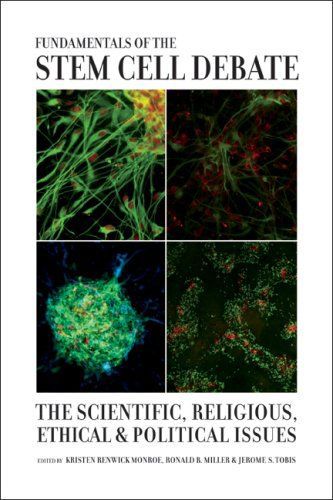
Few recent advances in science have generated as much excitement and controversy as human embryonic stem cells. The potential of these cells to replace diseased or damaged cells in virtually every tissue of the body heralds the advent of an extraordinary new field of medicine. Controversy arises, however, because current techniques required to harvest stem cells involve the destruction of the human blastocyst. This even-handed, lucidly written volume is an essential tool for understanding the complex issues–scientific, religious, ethical, and political–that currently fuel public debate about stem cell research. One of the few books to provide a comprehensive overview for a wide audience, the volume brings together leading scientists, ethicists, political scientists, and doctors to explain this new scientific development and explore its ramifications.
During the last two decades, applied ethics has not only developed into one of the most important philosophical disciplines but has also differentiated into so many subdisciplines that it is becoming increasingly difficult to survey it. A much-needed overview is provided by the eighteen contributions to this volume, in which internationally renowned experts deal with central questions of environmental ethics, bioethics and medical ethics, professional and business ethics, social, political, and legal ethics as well as with the aims and foundations of applied ethics in general. Thanks to a philosophical introduction and selected bibliographical references added to each chapter, the book is very well suited as a basis for courses in applied ethics. It is directed not only to philosophers and to ethicists from other disciplines but to scientists in general and to all people who are interested in the rational discussion of moral principles and their application to concrete problems in the sciences and in everyday life.
Bringing together a distinguished array of researchers and scholars, this volume reviews the breadth of current knowledge on the psychology of forgiveness. In addition to presenting cutting-edge theory and research, the book outlines crucial issues that must be addressed to advance the state of the science in years to come. The first section provides a historical and conceptual overview, examining definitional problems and giving special attention to religious and cultural influences on how forgiveness is understood and experienced. The biological, developmental, social, and personality foundations of forgiveness are then explored. The final section covers applications in clinical research and practice, including guidelines for studying and applying forgiveness-based strategies in psychotherapy, counseling, and interventions to promote health. This volume will be of interest to a broad interdisciplinary audience of researchers, educators, students, and practicing professionals.
Computer science and artificial intelligence in particular have no curriculum in research methods, as other sciences do. This book presents empirical methods for studying complex computer programs: exploratory tools to help find patterns in data, experiment designs and hypothesis-testing tools to help data speak convincingly, and modeling tools to help explain data. Although many of these techniques are statistical, the book discusses statistics in the context of the broader empirical enterprise. The first three chapters introduce empirical questions, exploratory data analysis, and experiment design. The blunt interrogation of statistical hypothesis testing is postponed until chapters 4 and 5, which present classical parametric methods and computer-intensive (Monte Carlo) resampling methods, respectively. This is one of few books to present these new, flexible resampling techniques in an accurate, accessible manner.Much of the book is devoted to research strategies and tactics, introducing new methods in the context of case studies. Chapter 6 covers performance assessment, chapter 7 shows how to identify interactions and dependencies among several factors that explain performance, and chapter 8 discusses predictive models of programs, including causal models. The final chapter asks what counts as a theory in AI, and how empirical methods—which deal with specific systems—can foster general theories.Mathematical details are confined to appendixes and no prior knowledge of statistics or probability theory is assumed. All of the examples can be analyzed by hand or with commercially available statistics packages.The Common Lisp Analytical Statistics Package (CLASP), developed in the author’s laboratory for Unix and Macintosh computers, is available from The MIT Press.A Bradford Book
ما از اخلاق چه انتظاری داریم؟ این سوال شاید تاحدودی برای عموم مردم و یا متخصصان این رشته قابل پاسخ باشد؛ اینکه خوب بودن را به ما بیاموزد و در تنظیم روابط فردی م...

جشن کتاب تهران به ایستگاه سی و یکم رسیده است. حال و احوال نشر کتاب خوب نیست و باید فرهنگدوستان را به خرید و هدیه دادن کتاب ترغیب نمود. خانه اخلاقپژوهان جوان ب...

بنیاد کتابهای اخلاق اسلامی عمدتا پالایش جان از آلودگیها و آراستن آن به زیباییها است. اندیشه محوری این قبیل کتابها آن است که انسان فعلی آنی نیست که باید باشد...

-
0 Comments