Notice: تابع WP_Block_Type_Registry::register به طورنادرست فراخوانی شد. نامهای نوع بلوک نباید حروف بزرگ داشته باشند. لطفاً برای اطلاعات بیشتر، اشکال زدایی در وردپرس را مشاهده کنید. (این پیام در نگارش 5.0.0 افزوده شده است.) in /home/ethicsho/public_html/wp-includes/functions.php on line 5313
Warning: Use of undefined constant TDC_PATH_LEGACY - assumed 'TDC_PATH_LEGACY' (this will throw an Error in a future version of PHP) in /home/ethicsho/public_html/wp-content/plugins/td-composer/td-composer.php on line 109
Warning: Use of undefined constant TDSP_THEME_PATH - assumed 'TDSP_THEME_PATH' (this will throw an Error in a future version of PHP) in /home/ethicsho/public_html/wp-content/plugins/td-composer/td-composer.php on line 113 بایگانیهای 2111 - خانه اخلاق پژوهان جوان Notice: Trying to access array offset on value of type bool in /home/ethicsho/public_html/wp-content/plugins/wp-ulike/inc/general-functions.php on line 807
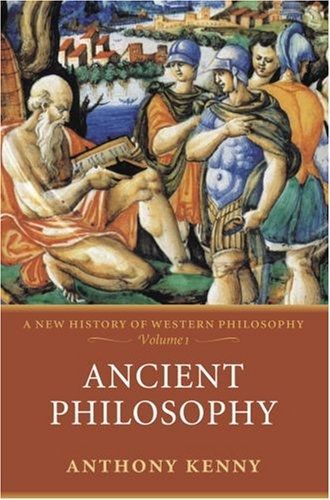
Sir Anthony Kenny here tells the fascinating story of the birth of philosophy and its remarkable flourishing in the ancient Mediterranean world. This is the initial volume of a four-book set in which Kenny will unfold a magisterial new history of Western philosophy, the first major single-author history of philosophy to appear in decades. Ancient Philosophy spans over a thousand years and brings to life the great minds of the past, from Thales, Pythagoras, and Parmenides, to Socrates, Epictetus, Marcus Aurelius, and Augustine. The book’s great virtue is that it is written by one of the world’s leading authorities on the subject. Instead of an uncritical, straightforward recitation of known facts–Plato and his cave of shadows, Aristotle’s ethics, Augustine’s City of God–we see the major philosophers through the eyes of a man who has spent a lifetime contemplating their work. Thus we do not simply get an overview of Aristotle, for example, but a penetrating and insightful critique of his thought. Kenny offers an illuminating account of the various schools of thought, from the Pre-Socratics to the Epicureans. He examines the development of logic and reason, ancient ideas about physics (“how things happen”), metaphysics and ethics, and the earliest thinking about the soul and god. Vividly written, but serious and deep enough to offer a genuine understanding of the great philosophers, Kenny’s lucid and stimulating history will become the definitive work for anyone interested in the people and ideas that shaped the course of Western thought.
In this forward-looking volume the invited authors argue that the world must critically assess the potential pitfalls of new technologies in advance. Many of the developments in modern technology are complex, risky, and, to begin with, cloaked in uncertainty. How should we deal with such developments – that may not only have positive effects (such as an increase of our well-being or an improved ability to control and cure diseases) but also negative effects for human beings and the environment (such as global warming or the medicalisation of human beings)? The fact that technological ‘progress’ often occurs under conditions of uncertainty makes the issue even more pressing. Frequently, we are completely devoid of information concerning the applications of new technologies and what their impact will be on human beings and the environment. History has shown that taking a retrospective perspective by passively awaiting the practical consequences of new technologies is both dangerous and inappropriate, as often damage will already have occurred. The genie is well and truly out of the bottle and those who once had control over the new processes no longer have that power, as the science will have a momentum of its own, unheeding of belated attempts to stop it or slow it down. What is more, technology is often ‘logically malleable’, with far wider applications than even we can anticipate. Thus, say editors Sollie and Duwell, an anticipatory attitude is required towards dealing with new technology. This book addresses methodological issues with regard to the ethical evaluation of new and emerging technology. It focuses specifically on the concept of uncertainty that, unlike the notion of risk, is greatly undervalued in the field of ethics. It is a must-read for anyone involved in (ethical) technology assessment: philosophers, those involved in science and technology studies, and policy-makers alike.
This revised edition of IEthics and StatecraftR has been reorganized to better situate chapters that play to one another thematically, on peacemaking, the ethics and statecraft of war, and the statecraft of major international reform, and two new chapters, on Theodore Roosevelt and the Vietnam War, respectively, have been added to this classic work. The contributions remain centrally concerned with moral reasoning about important decisions taken by key statesmen in times of war, peace, and transformation, arguing that national leaders-including realists-have always concerned themselves with normative constraints on power, both their own and that of others. This revised edition of IEthics and StatecraftR has been reorganized to better situate chapters that play to one another thematically, on peacemaking, the ethics and statecraft of war, and the statecraft of major international reform, and two new chapters, on Theodore Roosevelt and the Vietnam War, respectively, have been added to this classic work. The contributions remain centrally concerned with moral reasoning about important decisions taken by key statesmen in times of war, peace, and transformation, arguing that national leaders-including realists-have always concerned themselves with normative constraints on power, both their own and that of others. This book posits that the problems of ethics in international relations are always conditioned by uncertainty, actors’ inexact knowledge of real-world conditions, and morally ambiguous outcomes. Contrary to the course assumptions of much IR theory, individual leaders remain the major conduit by which ethical concerns are deployed or ignored in the foreign policy of states. To ignore moral norms, which already govern international relations, is to ignore a key dimension of the subject; such an oversight will necessarily lead to a shallow analysis and a basic misunderstanding of how and why states behave as they do.
“In the years shortly before and after the publication of his classic Truth and Method (1960), the eminent German philosopher Hans-Georg Gadamer returned often to questions surrounding religion and ethics. In this selection of writings from Gesammelte Werke that are here translated into English for the first time, Gadamer probes deeply into the hermeneutic significance of these subjects.”–BOOK JACKET.
ما از اخلاق چه انتظاری داریم؟ این سوال شاید تاحدودی برای عموم مردم و یا متخصصان این رشته قابل پاسخ باشد؛ اینکه خوب بودن را به ما بیاموزد و در تنظیم روابط فردی م...

جشن کتاب تهران به ایستگاه سی و یکم رسیده است. حال و احوال نشر کتاب خوب نیست و باید فرهنگدوستان را به خرید و هدیه دادن کتاب ترغیب نمود. خانه اخلاقپژوهان جوان ب...

بنیاد کتابهای اخلاق اسلامی عمدتا پالایش جان از آلودگیها و آراستن آن به زیباییها است. اندیشه محوری این قبیل کتابها آن است که انسان فعلی آنی نیست که باید باشد...

-
0 Comments