Notice: تابع WP_Block_Type_Registry::register به طورنادرست فراخوانی شد. نامهای نوع بلوک نباید حروف بزرگ داشته باشند. لطفاً برای اطلاعات بیشتر، اشکال زدایی در وردپرس را مشاهده کنید. (این پیام در نگارش 5.0.0 افزوده شده است.) in /home/ethicsho/public_html/wp-includes/functions.php on line 5313
Warning: Use of undefined constant TDC_PATH_LEGACY - assumed 'TDC_PATH_LEGACY' (this will throw an Error in a future version of PHP) in /home/ethicsho/public_html/wp-content/plugins/td-composer/td-composer.php on line 109
Warning: Use of undefined constant TDSP_THEME_PATH - assumed 'TDSP_THEME_PATH' (this will throw an Error in a future version of PHP) in /home/ethicsho/public_html/wp-content/plugins/td-composer/td-composer.php on line 113 بایگانیهای 2100 - خانه اخلاق پژوهان جوان Notice: Trying to access array offset on value of type bool in /home/ethicsho/public_html/wp-content/plugins/wp-ulike/inc/general-functions.php on line 807
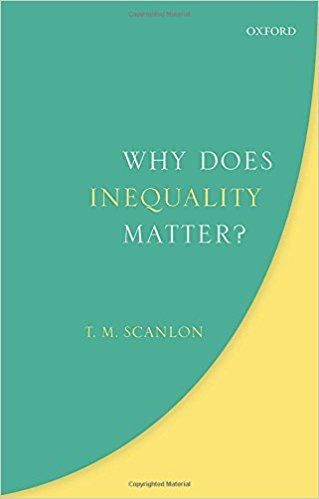
Inequality is widely regarded as morally objectionable: T. M. Scanlon investigates why it matters to us. Demands for greater equality can seem puzzling, because it can be unclear what reason people have for objecting to the difference between what they have and what others have, as opposed simply to wanting to be better off. This book examines six such reasons. Inequality can be objectionable because it arises from a failure of some agent to give equal concern to the interests of different parties to whom it is obligated to provide some good. It can be objectionable because it involves or gives rise to objectionable inequalities in status. It can be objectionable because it gives the rich unacceptable forms of control over the lives of those who have less. It can be objectionable because it interferes with the procedural fairness of economic institutions, or because it deprives some people of substantive opportunity to take part in those institutions. Inequality can be objectionable because it interferes with the fairness of political institutions. Finally, inequality in wealth and income can be objectionable because it is unfair: the institutional mechanisms that produce it cannot be justified in the relevant way. Scanlon’s aims is to provide a moral anatomy of these six reasons, and the ideas of equality that they involve. He also examines objections to the pursuit of equality on the ground that it involves objectionable interference with individual liberty, and argues that ideas of desert do not provide a basis either for justifying significant economic inequality or for objecting to it.
The truth commission is an increasingly common fixture of newly democratic states with repressive or strife-ridden pasts. From South Africa to Haiti, truth commissions are at work with varying degrees of support and success. To many, they are the best–or only–way to achieve a full accounting of crimes committed against fellow citizens and to prevent future conflict. Others question whether a restorative justice that sets the guilty free, that cleanses society by words alone, can deter future abuses and allow victims and their families to heal. Here, leading philosophers, lawyers, social scientists, and activists representing several perspectives look at the process of truth commissioning in general and in post-apartheid South Africa. They ask whether the truth commission, as a method of seeking justice after conflict, is fair, moral, and effective in bringing about reconciliation. The authors weigh the virtues and failings of truth commissions, especially the South African Truth and Reconciliation Commission, in their attempt to provide restorative rather than retributive justice. They examine, among other issues, the use of reparations as social policy and the granting of amnesty in exchange for testimony. Most of the contributors praise South Africa’s decision to trade due process for the kinds of truth that permit closure. But they are skeptical that such revelations produce reconciliation, particularly in societies that remain divided after a compromise peace with no single victor, as in El Salvador. Ultimately, though, they find the truth commission to be a worthy if imperfect instrument for societies seeking to say “never again” with confidence. At a time when truth commissions have been proposed for Bosnia, Kosovo, Cyprus, East Timor, Cambodia, Nigeria, Palestine, and elsewhere, the authors’ conclusion that restorative justice provides positive gains could not be more important. In addition to the editors, the contributors are Amy Gutmann, Rajeev Bhargava, Elizabeth Kiss, David A. Crocker, André du Toit, Alex Boraine, Dumisa Ntsebeza, Lisa Kois, Ronald C. Slye, Kent Greenawalt, Sanford Levinson, Martha Minow, Charles S. Maier, Charles Villa-Vicencio, and Wilhelm Verwoerd.
Written by internationally renowned scholars, this Companion maps the moral teachings of the world’s religions, and also charts new directions for work in the field of religious ethics. Now available in paperback, this is a rich resource for understanding the moral teachings and practices of the world’s religions Includes detailed discussions of issues in moral theory Offers extensive treatment of the world’s major religious traditions, including Judaism, Christianity, Islam, Buddhism, Hinduism, Chinese religions and African religions Compares the ways in which the religions provide resources for addressing current moral challenges in areas such as ecology, economics, global dynamics, religious war, human rights and other topics.
“One of the great historic controversies in philosophy,” according to Bertrand Russell, is that between empiricists–“best represented by the British philosophers, Locke, Berkeley, and Hume”–and rationalists. This book sets the empiricists in their contemporary and cultural context, examines their various approaches to philosophy, and highlights the significance of their ideas to 20th-century thinking. By focusing on what the “empiricists” actually have to say, rather than on their classification as such, Woolhouse incidentally shows how unreliable these conventional labels can be.
ما از اخلاق چه انتظاری داریم؟ این سوال شاید تاحدودی برای عموم مردم و یا متخصصان این رشته قابل پاسخ باشد؛ اینکه خوب بودن را به ما بیاموزد و در تنظیم روابط فردی م...

جشن کتاب تهران به ایستگاه سی و یکم رسیده است. حال و احوال نشر کتاب خوب نیست و باید فرهنگدوستان را به خرید و هدیه دادن کتاب ترغیب نمود. خانه اخلاقپژوهان جوان ب...

بنیاد کتابهای اخلاق اسلامی عمدتا پالایش جان از آلودگیها و آراستن آن به زیباییها است. اندیشه محوری این قبیل کتابها آن است که انسان فعلی آنی نیست که باید باشد...

-
0 Comments