Notice: تابع WP_Block_Type_Registry::register به طورنادرست فراخوانی شد. نامهای نوع بلوک نباید حروف بزرگ داشته باشند. لطفاً برای اطلاعات بیشتر، اشکال زدایی در وردپرس را مشاهده کنید. (این پیام در نگارش 5.0.0 افزوده شده است.) in /home/ethicsho/public_html/wp-includes/functions.php on line 5313
Warning: Use of undefined constant TDC_PATH_LEGACY - assumed 'TDC_PATH_LEGACY' (this will throw an Error in a future version of PHP) in /home/ethicsho/public_html/wp-content/plugins/td-composer/td-composer.php on line 109
Warning: Use of undefined constant TDSP_THEME_PATH - assumed 'TDSP_THEME_PATH' (this will throw an Error in a future version of PHP) in /home/ethicsho/public_html/wp-content/plugins/td-composer/td-composer.php on line 113 بایگانیهای 2071 - خانه اخلاق پژوهان جوان Notice: Trying to access array offset on value of type bool in /home/ethicsho/public_html/wp-content/plugins/wp-ulike/inc/general-functions.php on line 807
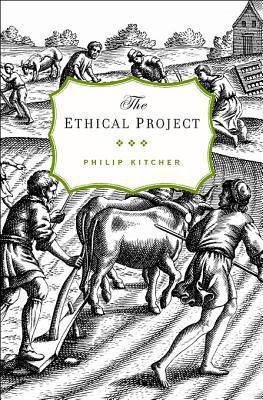
Principles of right and wrong guide the lives of almost all human beings, but we often see them as external to ourselves, outside our own control. In a revolutionary approach to the problems of moral philosophy, Philip Kitcher makes a provocative proposal: Instead of conceiving ethical commands as divine revelations or as the discoveries of brilliant thinkers, we should see our ethical practices as evolving over tens of thousands of years, as members of our species have worked out how to live together and prosper. Elaborating this radical new vision, Kitcher shows how the limited altruistic tendencies of our ancestors enabled a fragile social life, how our forebears learned to regulate their interactions with one another, and how human societies eventually grew into forms of previously unimaginable complexity. The most successful of the many millennia-old experiments in how to live, he contends, survive in our values today.Drawing on natural science, social science, and philosophy to develop an approach he calls “pragmatic naturalism,” Kitcher reveals the power of an evolving ethics built around a few core principles—including justice and cooperation—but leaving room for a diversity of communities and modes of self-expression. Ethics emerges as a beautifully human phenomenon—permanently unfinished, collectively refined and distorted generation by generation. Our human values, Kitcher shows, can be understood not as a final system but as a project—the ethical project—in which our species has engaged for most of its history, and which has been central to who we are.
If you’ve ever searched the web for information and wondered what’s going on behind that query box, I recommend you read Web Dragons. It puts Internet search engines in contextpart of a legacy of information access dating back thousands of years. It explains in plain language how search engines work, and points out potential pitfalls that thoughtful searchers should consider. Web Dragons is clear and engaging. Given the amount of time and trust we all invest in search engines, if you pay attention to the web I highly recommend redirecting some of that attention to this book. –Craig Nevill-Manning, Engineering Director, Google Search technology is changing the way people understand and interact with the world. Web Dragons takes a revealing look at the evolution of search and how it will shape the future of information technology. –Prabhakar Raghavan, Head of Yahoo! Research Witten, Gori and Numerico steadily bring the web into sharper and sharper focus. A daunting expanse is revealed to have structure. The structure enables the knowledgeable to navigate it to their benefit and allows the unscrupulous or careless to create pitfalls and traps. Search engines will be critical tools for most people living today. What could be more important than understanding how these technologies work and where they are going? –Jonathan Grudin, Microsoft Research In the eye-blink that has elapsed since the turn of the millennium, the lives of those of us who work with information have been utterly transformed. Pretty well all we need to know is on the web; if not today, then tomorrow. Its where we learn and play, shop and do business, keep up with old friends and meet new ones. What makes it possible for us to find the stuff we need to know? Search engines. Search enginesweb dragonsare the portals through which we access societys treasure trove of information. How do they stack up against librarians, the gatekeepers over centuries past? What role will libraries play in a world whose information is ruled by the web? How is the web organized? Who controls its contents, and how do they do it? How do search engines work? How can web visibility be exploited by those who want to sell us their wares? Whats coming tomorrow, and can we influence it? We are witnessing the dawn of a new era, starting right nowand this book shows you what it will look like and how it will change your world. Do you use search engines every day? Are you a developer or a librarian, helping others with their information needs? A researcher or journalist for whom the web has changed the very way you work? An online marketer or site designer, whose career exists because of the web? Whoever you are: if you care about information, this book will open your eyesand make you blink. About the authors: Ian H. Witten is professor of computer science at the University of Waikato, where he directs the New Zealand Digital Library research project. He has published widely on digital libraries, machine learning, text compression, hypertext, speech synthesis and signal processing, and computer typography. A fellow of the ACM, he has written several books, including How to Build a Digital Library (2002) and Data Mining (2005), both from Morgan Kaufmann. Marco Gori is professor of computer science at the University of Siena, where he leads the artificial intelligence research group. He is the Chairman of the Italian Chapter of the IEEE Computational Intelligence Society, a fellow of the IEEE and of the ECCAI, and former President of the Italian Association for Artificial Intelligence. Teresa Numerico teaches network theory and communication studies at the University of Rome 3, and is a researcher in Philosophy of Science at the University of Salerno. Previously she was employed as a business development and marketing manager for various media companies, including the Italian branch of Turner Broadcasting System (CNN and Cartoon
In the name of efficiency, the practice of education has come to be dominated by neoliberal ideology andprocedures of standardization and quantification. Such attempts to make all aspects of practice transparent and subject to systematic accounting lack sensitivity to the invisible and the silent, to something in the humancondition that cannot readily be expressed in an either-or form. Seeking alternatives to such trends, Saito readsDewey’s idea of progressive education through the lens of Emersonian moral perfectionism (to borrow a term coined by Stanley Cavell). She elucidates a spiritual and aesthetic dimension to Dewey’s notion of growth, one considerably richer than what Dewey alone presents in his typically scientific terminology.
This work is an investigation of the ongoing methodical reconstruction of Catholic moral theology. As such it is based on and honors the work of Norbert Rigali, S.J., one of the most important contributors to this reconstruction.The decisive break from the traditional manual approach to moral theology represented by Vatican II reoriented moral theology away from universal natural law morality based on the commandments to a morality based on specifically Christian sources. This reorientation, however, was not an either/or but a both/and proposition. Father Norbert Rigali, S.J. has been an inspiration and a challenge to moral theologians working toward reconstruction. This essays in this collection address four questions in the renewal movement: an investigation of normative methods, a clarification of sources, an investigation of the tension between natural law morality and Christian ethics and/or morality, and a combination of methodical insights of philosophy and traditional Christian sources in their investigation of biomedical ethical issues.
ما از اخلاق چه انتظاری داریم؟ این سوال شاید تاحدودی برای عموم مردم و یا متخصصان این رشته قابل پاسخ باشد؛ اینکه خوب بودن را به ما بیاموزد و در تنظیم روابط فردی م...

جشن کتاب تهران به ایستگاه سی و یکم رسیده است. حال و احوال نشر کتاب خوب نیست و باید فرهنگدوستان را به خرید و هدیه دادن کتاب ترغیب نمود. خانه اخلاقپژوهان جوان ب...

بنیاد کتابهای اخلاق اسلامی عمدتا پالایش جان از آلودگیها و آراستن آن به زیباییها است. اندیشه محوری این قبیل کتابها آن است که انسان فعلی آنی نیست که باید باشد...

-
0 Comments