Notice: تابع WP_Block_Type_Registry::register به طورنادرست فراخوانی شد. نامهای نوع بلوک نباید حروف بزرگ داشته باشند. لطفاً برای اطلاعات بیشتر، اشکال زدایی در وردپرس را مشاهده کنید. (این پیام در نگارش 5.0.0 افزوده شده است.) in /home/ethicsho/public_html/wp-includes/functions.php on line 5313
Warning: Use of undefined constant TDC_PATH_LEGACY - assumed 'TDC_PATH_LEGACY' (this will throw an Error in a future version of PHP) in /home/ethicsho/public_html/wp-content/plugins/td-composer/td-composer.php on line 109
Warning: Use of undefined constant TDSP_THEME_PATH - assumed 'TDSP_THEME_PATH' (this will throw an Error in a future version of PHP) in /home/ethicsho/public_html/wp-content/plugins/td-composer/td-composer.php on line 113 بایگانیهای 2065 - خانه اخلاق پژوهان جوان Notice: Trying to access array offset on value of type bool in /home/ethicsho/public_html/wp-content/plugins/wp-ulike/inc/general-functions.php on line 807
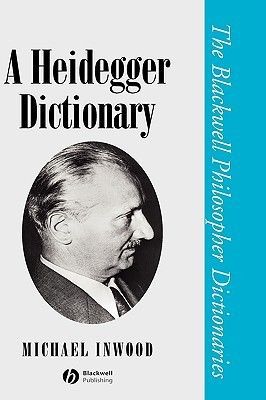
This concise and accessible dictionary explores the central concepts of one of the most significant figures in the history of thought. The author traces the history of 100 concepts from ‘aletheia’ to ‘world’ through Heidegger’s entire career, from the earlier lectures to his later essays and seminars – including many that are not yet translated. The book is extremely user-friendly, containing a full index of the words and concepts discussed, and an introduction explaining Heidegger’s use of language. “A Heidegger Dictionary” enables the student to read Heidegger’s immensely rich and varied works with understanding, and assigns him to his rightful place in both contemporary philosophy and in the history of the subject.
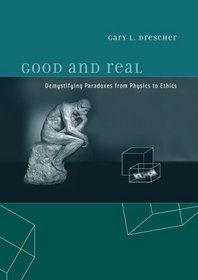
In Good and Real, Gary Drescher examines a series of provocative paradoxes about consciousness, choice, ethics, quantum mechanics, and other topics, in an effort to reconcile a purely mechanical view of the universe with key aspects of our subjective impressions of our own existence.Many scientists suspect that the universe can ultimately be described by a simple (perhaps even deterministic) formalism; all that is real unfolds mechanically according to that formalism. But how, then, is it possible for us to be conscious, or to make genuine choices? And how can there be an ethical dimension to such choices? Drescher sketches computational models of consciousness, choice, and subjunctive reasoning—what would happen if this or that were to occur?—to show how such phenomena are compatible with a mechanical, even deterministic universe. Analyses of Newcomb’s Problem (a paradox about choice) and the Prisoner’s Dilemma (a paradox about self-interest vs. altruism, arguably reducible to Newcomb’s Problem) help bring the problems and proposed solutions into focus. Regarding quantum mechanics, Drescher builds on Everett’s relative-state formulation—but presenting a simplified formalism, accessible to laypersons—to argue that, contrary to some popular impressions, quantum mechanics is compatible with an objective, deterministic physical reality, and that there is no special connection between quantum phenomena and consciousness.In each of several disparate but intertwined topics ranging from physics to ethics, Drescher argues that a missing technical linchpin can make the quest for objectivity seem impossible, until the elusive technical fix is at hand.
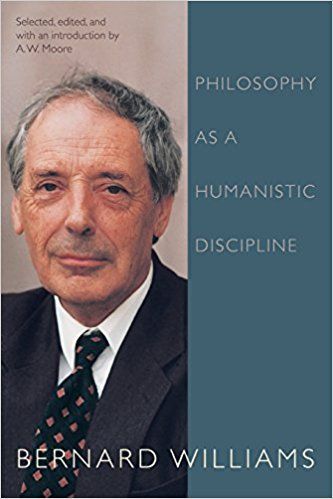
What can–and what can’t–philosophy do? What are its ethical risks–and its possible rewards? How does it differ from science? In Philosophy as a Humanistic Discipline, Bernard Williams addresses these questions and presents a striking vision of philosophy as fundamentally different from science in its aims and methods even though there is still in philosophy “something that counts as getting it right.” Written with his distinctive combination of rigor, imagination, depth, and humanism, the book amply demonstrates why Williams was one of the greatest philosophers of the twentieth century. Spanning his career from his first publication to one of his last lectures, the book’s previously unpublished or uncollected essays address metaphysics, epistemology, and ethics, as well as the scope and limits of philosophy itself. The essays are unified by Williams’s constant concern that philosophy maintain contact with the human problems that animate it in the first place. As the book’s editor, A. W. Moore, writes in his introduction, the title essay is “a kind of manifesto for Williams’s conception of his own life’s work.” It is where he most directly asks “what philosophy can and cannot contribute to the project of making sense of things”–answering that what philosophy can best help make sense of is “being human.”Philosophy as a Humanistic Discipline is one of three posthumous books by Williams to be published by Princeton University Press. In the Beginning Was the Deed: Realism and Moralism in Political Argument was published in the fall of 2005. The Sense of the Past: Essays in the History of Philosophy is being published shortly after the present volume.
Experience and Value: Essays on John Dewey and Pragmatic Naturalism brings together twelve philosophical essays spanning the career of noted Dewey scholar, S. Morris Eames. The volume includes both critiques and interpretations of important issues in John Dewey’s value theory as well as the application of Eames’s pragmatic naturalism in addressing contemporary problems in social theory, education, and religion. The collection begins with a discussion of the underlying principles of Dewey’s pragmatic naturalism, including the concepts of nature, experience, and philosophic method. Essays “Experience and Philosophical Method in John Dewey” and “Primary Experience in the Philosophy of John Dewey” develop what Eames believed to be a central theme in Dewey’s thought and provide a theoretical framework for subsequent discussion. The volume continues with specific applications of this framework in the areas of value theory, moral theory, social philosophy, and the philosophy of religion. Eames’s analysis of value exposes the connection between the immediately felt values of experience and the more sophisticated judgments of value that are the product of reflection. From this basis in moral theory, Eames considers the derivation of judgments of obligation from judgments of fact. This discussion provides a grounding for a consideration of contemporary social issues directed by naturalistic and scientific principles. In the third section, with regard to educational theory, Eames considers possible resolutions of the current dichotomy between the factual worldview of science and the humanistic worldview of the liberal arts. The comprehensive article, “Dewey’s Views of Truth, Beauty, and Goodness,” connects the essays of the first and second sections and explores the placement of Dewey’s value theory with respect to morals and aesthetics. With “Creativity and Democracy,” in the fourth section, Eames also considers the concept of democracy from the standpoint of current and historical issues faced by society. This article hints at a major project of Eames’s intellectual life—the theory of democracy. The volume concludes with a discussion of the difficulty of maintaining the values of religious experience in a scientifically and technologically sophisticated world, the very topic that first brought Eames to philosophy—the meaning of religion and the religious life. Suggested solutions are offered in “The Lost Individual and Religious Unity.” Experience and Value: Essays on John Dewey and Pragmatic Naturalism illuminates Eames’ life of inquiry, a life that included moral, social, aesthetic, and religious dimensions of value—all suffused with the influence of John Dewey.
ما از اخلاق چه انتظاری داریم؟ این سوال شاید تاحدودی برای عموم مردم و یا متخصصان این رشته قابل پاسخ باشد؛ اینکه خوب بودن را به ما بیاموزد و در تنظیم روابط فردی م...

جشن کتاب تهران به ایستگاه سی و یکم رسیده است. حال و احوال نشر کتاب خوب نیست و باید فرهنگدوستان را به خرید و هدیه دادن کتاب ترغیب نمود. خانه اخلاقپژوهان جوان ب...

بنیاد کتابهای اخلاق اسلامی عمدتا پالایش جان از آلودگیها و آراستن آن به زیباییها است. اندیشه محوری این قبیل کتابها آن است که انسان فعلی آنی نیست که باید باشد...

-
0 Comments