Notice: تابع WP_Block_Type_Registry::register به طورنادرست فراخوانی شد. نامهای نوع بلوک نباید حروف بزرگ داشته باشند. لطفاً برای اطلاعات بیشتر، اشکال زدایی در وردپرس را مشاهده کنید. (این پیام در نگارش 5.0.0 افزوده شده است.) in /home/ethicsho/public_html/wp-includes/functions.php on line 5313
Warning: Use of undefined constant TDC_PATH_LEGACY - assumed 'TDC_PATH_LEGACY' (this will throw an Error in a future version of PHP) in /home/ethicsho/public_html/wp-content/plugins/td-composer/td-composer.php on line 109
Warning: Use of undefined constant TDSP_THEME_PATH - assumed 'TDSP_THEME_PATH' (this will throw an Error in a future version of PHP) in /home/ethicsho/public_html/wp-content/plugins/td-composer/td-composer.php on line 113 بایگانیهای 2056 - خانه اخلاق پژوهان جوان Notice: Trying to access array offset on value of type bool in /home/ethicsho/public_html/wp-content/plugins/wp-ulike/inc/general-functions.php on line 807
The philosophy of perception investigates the nature of our sensory experiences and their relation to reality. Raising questions about the conscious character of perceptual experiences, how they enable us to acquire knowledge of the world in which we live, and what exactly it is we are aware of when we hallucinate or dream, the philosophy of perception is a growing area of interest in metaphysics, epistemology, and philosophy of mind.William Fish’s Philosophy of Perception introduces the subject thematically, setting out the major theories of perception together with their motivations and attendant problems. While providing historical background to debates in the field, this comprehensive overview focuses on recent presentations and defenses of the different theories, and looks beyond visual perception to take into account the role of other senses.Topics covered include:The Phenomenal PrinciplePerception and HallucinationPerception and ContentSense-Data, Adverbialism and IdealismDisjunctivism and RelationalismIntentionalism and Combined TheoriesThe Nature of ContentVeridicalityPerception and Empirical ScienceNon-Visual PerceptionWith summaries and suggested further reading at the end of each chapter, this is an ideal introduction to the philosophy of perception.
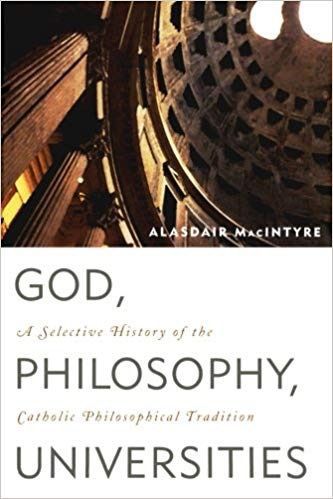
‘What does it mean to be a human being?’ Given this perennial question, Alasdair MacIntyre, one of America’s preeminent philosophers, presents a compelling argument on the necessity and importance of philosophy. Because of a need to better understand Catholic philosophical thought, especially in the context of its historical development and realizing that philosophers interact within particular social and cultural situations, MacIntyre offers this brief history of Catholic philosophy. Tracing the idea of God through different philosophers’ engagement of God and how this engagement has played out in universities, MacIntyre provides a valuable, lively, and insightful study of the disintegration of academic disciplines with knowledge. MacIntyre then demonstrates the dangerous implications of this happening and how universities can and ought to renew a shared understanding of knowledge in their mission. This engaging work will be a benefit and a delight to all readers.
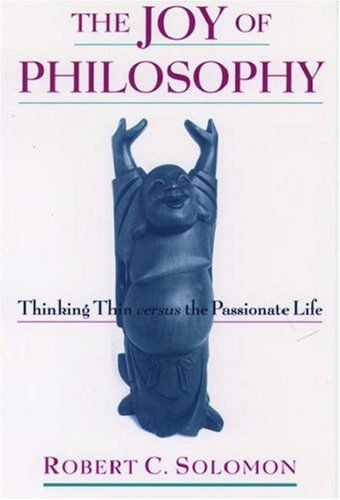
The Joy of Philosophy is a return to some of the perennial questions of philosophy–questions about the meaning of life; about death and tragedy; about the respective roles of rationality and passion in the good life; about love, compassion, and revenge; about honesty, deception, and betrayal; and about who we are and how we think about who we are. Recapturing the heart-felt confusion and excitement that originally brings us all to philosophy, internationally renowned teacher and lecturer Robert C. Solomon offers both a critique of contemporary philosophy and an invitation to engage in philosophy in a different way. He attempts to save philosophy from itself and its self-imposed diet of thin arguments and logical analysis to recover the richness and complexity of life in thought. Solomon defends the passionate life in contrast to the life of thoughtful contemplation idealized by so many philosophers, attempting to recapture the kind of philosophy that Nietzsche celebrated as a “joyful wisdom.”
Nutrigenomics is the rapidly developing field of science that studies nutrient-gene interaction. This field has broad implications for understanding the interaction of human genomics and nutrition, but can also have very specific implications for individual dietary recommendations in light of personal genetics. Predicted applications for nutrigenomics include genomics-based dietary guidelines and personalized nutrition based on individual genetic tests. These developments have sweeping ethical, legal and regulatory implications for individuals, corporations and governments.This book brings together experts in ethics, law, regulatory analysis, and communication studies to identify and address relevant issues in the emerging field of nutritional genomics. Contributing authors are experts in the social aspects of biotechnology innovation, with expertise in nutrigenomics. From addressing the concern that nutrigenomics will transform food into medicine and undermine pleasures associated with eating to the latest in the science of nutrigenomics, this book provides a world-wide perspective on the potential impact of nutrigenomics on our association with food. *Explores the rapidly developing, yet not fully understood, impact of nutrigenomics on the relationship to food medicalization, genetic privacy, nutrition and health.*Provides ground for further exploration to identify issues and provide analysis to aid in policy and regulation development*Provides ethical and legal insights into this unfolding science, as well as serving as a model for thinking about issues arising in other fields of science and technology
ما از اخلاق چه انتظاری داریم؟ این سوال شاید تاحدودی برای عموم مردم و یا متخصصان این رشته قابل پاسخ باشد؛ اینکه خوب بودن را به ما بیاموزد و در تنظیم روابط فردی م...

جشن کتاب تهران به ایستگاه سی و یکم رسیده است. حال و احوال نشر کتاب خوب نیست و باید فرهنگدوستان را به خرید و هدیه دادن کتاب ترغیب نمود. خانه اخلاقپژوهان جوان ب...

بنیاد کتابهای اخلاق اسلامی عمدتا پالایش جان از آلودگیها و آراستن آن به زیباییها است. اندیشه محوری این قبیل کتابها آن است که انسان فعلی آنی نیست که باید باشد...

-
0 Comments