Notice: تابع WP_Block_Type_Registry::register به طورنادرست فراخوانی شد. نامهای نوع بلوک نباید حروف بزرگ داشته باشند. لطفاً برای اطلاعات بیشتر، اشکال زدایی در وردپرس را مشاهده کنید. (این پیام در نگارش 5.0.0 افزوده شده است.) in /home/ethicsho/public_html/wp-includes/functions.php on line 5313
Warning: Use of undefined constant TDC_PATH_LEGACY - assumed 'TDC_PATH_LEGACY' (this will throw an Error in a future version of PHP) in /home/ethicsho/public_html/wp-content/plugins/td-composer/td-composer.php on line 109
Warning: Use of undefined constant TDSP_THEME_PATH - assumed 'TDSP_THEME_PATH' (this will throw an Error in a future version of PHP) in /home/ethicsho/public_html/wp-content/plugins/td-composer/td-composer.php on line 113 بایگانیهای 2051 - خانه اخلاق پژوهان جوان Notice: Trying to access array offset on value of type bool in /home/ethicsho/public_html/wp-content/plugins/wp-ulike/inc/general-functions.php on line 807
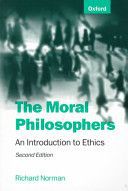
The Moral Philosophers adopts a historical approach to moral philosophy, taking in chronological sequence some of the major ethical philosophers of the past. Richard Norman introduces the thought of each figure as a coherent and comprehensive ethical theory, exploring their richness andcomplexity. Each theory is critically examined and presented as an attempt to surmount some of the deficiencies of its predecessor; and through this critical process the book moves towards some concluding suggestions about the content of an acceptable ethical theory. This new edition includes four new chapters: one on Nietzsche, and three which provide substantially extended coverage of twentieth-century moral philosophy, including discussions of contemporary utilitarianism, rights-based ethical theories, contractarian ethics and virtue ethics, and recentdebates between realism and anti-realism in ethics. The Moral Philosophers is designed for undergraduate students and the general reader, and is written in clear and non-technical language. It is intended for use as a basic text in an introductory course on ethics, with detailed recommended reading sections at the beginning of each chapter.
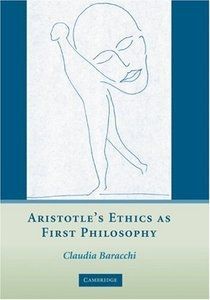
In Aristotle’s Ethics as First Philosophy, Claudia Baracchi demonstrates the indissoluble links between practical and theoretical wisdom in Aristotle’s thinking. Referring to a broad range of texts from the Aristotelian corpus, Baracchi shows how the theoretical is always informed by a set of practices, and, specifically, how one’s encounter with phenomena, the world, or nature in the broadest sense, is always a matter of ethos.
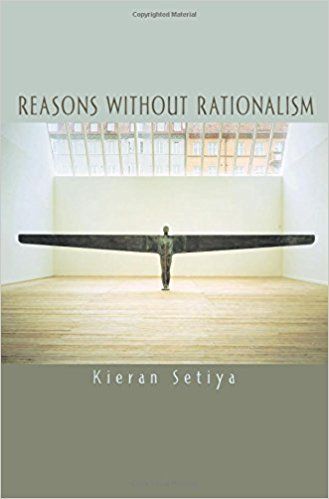
Modern philosophy has been vexed by the question “Why should I be moral?” and by doubts about the rational authority of moral virtue. In Reasons without Rationalism, Kieran Setiya shows that these doubts rest on a mistake. The “should” of practical reason cannot be understood apart from the virtues of character, including such moral virtues as justice and benevolence, and the considerations to which the virtues make one sensitive thereby count as reasons to act. Proposing a new framework for debates about practical reason, Setiya argues that the only alternative to this “virtue theory” is a form of ethical rationalism in which reasons derive from the nature of intentional action. Despite its recent popularity, however, ethical rationalism is false. It wrongly assumes that we act “under the guise of the good,” or it relies on dubious views about intention and motivation. It follows from the failure of rationalism that the virtue theory is true: we cannot be fully good without the perfection of practical reason, or have that perfection without being good. Addressing such topics as the psychology of virtue and the explanation of action, Reasons without Rationalism is essential reading for philosophers interested in ethics, rationality, or the philosophy of mind.
Electrifying when first delivered in 1973, legendary in the years since, Dieter Henrich’s lectures on German Idealism were the first contact a major German philosopher had made with an American audience since the onset of World War II. They remain one of the most eloquent explanations and interpretations of classical German philosophy and of the way it relates to the concerns of contemporary philosophy. Thanks to the editorial work of David Pacini, the lectures appear here with annotations linking them to editions of the masterworks of German philosophy as they are now available.Henrich describes the movement that led from Kant to Hegel, beginning with an interpretation of the structure and tensions of Kant’s system. He locates the Kantian movement and revival of Spinoza, as sketched by F. H. Jacobi, in the intellectual conditions of the time and in the philosophical motivations of modern thought. Providing extensive analysis of the various versions of Fichte’s Science of Knowledge, Henrich brings into view a constellation of problems that illuminate the accomplishments of the founders of Romanticism, Novalis and Friedrich Schlegel, and of the poet Hlderlin’s original philosophy. He concludes with an interpretation of the basic design of Hegel’s system.
This is the only environmental casebook of its kind, presenting current and classic cases with the detail required for students to experience serious and complex issues. The authors present cases of immediate interest to students in a balanced and impartial manner.
ما از اخلاق چه انتظاری داریم؟ این سوال شاید تاحدودی برای عموم مردم و یا متخصصان این رشته قابل پاسخ باشد؛ اینکه خوب بودن را به ما بیاموزد و در تنظیم روابط فردی م...

جشن کتاب تهران به ایستگاه سی و یکم رسیده است. حال و احوال نشر کتاب خوب نیست و باید فرهنگدوستان را به خرید و هدیه دادن کتاب ترغیب نمود. خانه اخلاقپژوهان جوان ب...

بنیاد کتابهای اخلاق اسلامی عمدتا پالایش جان از آلودگیها و آراستن آن به زیباییها است. اندیشه محوری این قبیل کتابها آن است که انسان فعلی آنی نیست که باید باشد...

-
0 Comments