Notice: تابع WP_Block_Type_Registry::register به طورنادرست فراخوانی شد. نامهای نوع بلوک نباید حروف بزرگ داشته باشند. لطفاً برای اطلاعات بیشتر، اشکال زدایی در وردپرس را مشاهده کنید. (این پیام در نگارش 5.0.0 افزوده شده است.) in /home/ethicsho/public_html/wp-includes/functions.php on line 5313
Warning: Use of undefined constant TDC_PATH_LEGACY - assumed 'TDC_PATH_LEGACY' (this will throw an Error in a future version of PHP) in /home/ethicsho/public_html/wp-content/plugins/td-composer/td-composer.php on line 109
Warning: Use of undefined constant TDSP_THEME_PATH - assumed 'TDSP_THEME_PATH' (this will throw an Error in a future version of PHP) in /home/ethicsho/public_html/wp-content/plugins/td-composer/td-composer.php on line 113 بایگانیهای 2024 - خانه اخلاق پژوهان جوان Notice: Trying to access array offset on value of type bool in /home/ethicsho/public_html/wp-content/plugins/wp-ulike/inc/general-functions.php on line 807
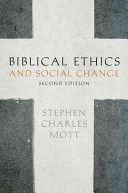
This scholarly synthesis of biblical studies and Christian social ethics is designed to provide a biblical argument for intentional institutional change on behalf of social justice. Stephen Charles Mott provides a biblical and ethical guide on ways to implement that change.The first part of the book, providing the biblical theology of intentional social change, deals with the central concepts in biblical and theological ethics: grace, evil, love, justice, and the Reign of God. Christian social change must be rooted not only in justice, but in the grace received through the death and resurrection of Christ. The second part evaluates ethical and theological methods for carrying out that intentional social change. It offers a study of evangelism, counter community, civil disobedience, armed revolution, and political reform. It shows the contribution of each as well as the strong limitations of each used in isolation.A recurring theme of the book is the scriptural insistence on the priority of justice as taking upon oneself the cause of the oppressed. Justice is understood on bringing back into the community those who are near to falling out of it. Political authority has a vital role in social change for justice. It is essential that a Christian use all available and legitimate means of meeting basic needs by providing for all what is essential for inclusion in society.In this revised edition, Mott updates the contemporary illustrations and includes his own further reflections in the last thirty years on this topic.
Richard Rorty is famous, maybe even infamous, for his philosophical nonchalance. His groundbreaking work not only rejects all theories of truth but also dismisses modern epistemology and its preoccupation with knowledge and representation. At the same time, the celebrated pragmatist believed there could be no universally valid answers to moral questions, which led him to a complex view of religion rarely expressed in his writings.In this posthumous publication, Rorty, a strict secularist, finds in the pragmatic thought of John Dewey, John Stuart Mill, Henry James, and George Santayana, among others, a political imagination shared by religious traditions. His intent is not to promote belief over nonbelief or to blur the distinction between religious and public domains. Rorty seeks only to locate patterns of similarity and difference so an ethics of decency and a politics of solidarity can rise. He particularly responds to Pope Benedict XVI and his campaign against the relativist vision. Whether holding theologians, metaphysicians, or political ideologues to account, Rorty remains steadfast in his opposition to absolute uniformity and its exploitation of political strength.
Robert Axelrod is widely known for his groundbreaking work in game theory and complexity theory. He is a leader in applying computer modeling to social science problems. His book The Evolution of Cooperation has been hailed as a seminal contribution and has been translated into eight languages since its initial publication. The Complexity of Cooperation is a sequel to that landmark book. It collects seven essays, originally published in a broad range of journals, and adds an extensive new introduction to the collection, along with new prefaces to each essay and a useful new appendix of additional resources. Written in Axelrod’s acclaimed, accessible style, this collection serves as an introductory text on complexity theory and computer modeling in the social sciences and as an overview of the current state of the art in the field.The articles move beyond the basic paradigm of the Prisoner’s Dilemma to study a rich set of issues, including how to cope with errors in perception or implementation, how norms emerge, and how new political actors and regions of shared culture can develop. They use the shared methodology of agent-based mo
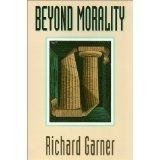
“Morality and religion have failed because they are based on duplicity and fantasy. We need something new….” With this startling statement, Richard Garner begins to define a system of behavior that will nurture our capabilities for love and language, for creation and cooperation.The satisfying personal and social strategy for living Garner proposes is “informed, compassionate amoralism.” To do without morality, he argues, is to reject the idea that there are intrinsic values, objective duties, and natural rights. Leaving illusions behind us and learning to listen to others and to ourselves may be what we need to lead us out of the darkness.Garner builds his case on a survey of moral definitions and arguments from ancient Greece forward. Beyond Morality revisits the tenets of Christianity and Eastern religious, providing readers with a meaningful overview of the history of moral thought.Quotations illuminate and illustrate the text, adding to the value of Beyond Morality as a textbook for ethics courses. Author note: Richard Garner is Professor of Philosophy at The Ohio State University.
ما از اخلاق چه انتظاری داریم؟ این سوال شاید تاحدودی برای عموم مردم و یا متخصصان این رشته قابل پاسخ باشد؛ اینکه خوب بودن را به ما بیاموزد و در تنظیم روابط فردی م...

جشن کتاب تهران به ایستگاه سی و یکم رسیده است. حال و احوال نشر کتاب خوب نیست و باید فرهنگدوستان را به خرید و هدیه دادن کتاب ترغیب نمود. خانه اخلاقپژوهان جوان ب...

بنیاد کتابهای اخلاق اسلامی عمدتا پالایش جان از آلودگیها و آراستن آن به زیباییها است. اندیشه محوری این قبیل کتابها آن است که انسان فعلی آنی نیست که باید باشد...

-
0 Comments