Notice: تابع WP_Block_Type_Registry::register به طورنادرست فراخوانی شد. نامهای نوع بلوک نباید حروف بزرگ داشته باشند. لطفاً برای اطلاعات بیشتر، اشکال زدایی در وردپرس را مشاهده کنید. (این پیام در نگارش 5.0.0 افزوده شده است.) in /home/ethicsho/public_html/wp-includes/functions.php on line 5313
Warning: Use of undefined constant TDC_PATH_LEGACY - assumed 'TDC_PATH_LEGACY' (this will throw an Error in a future version of PHP) in /home/ethicsho/public_html/wp-content/plugins/td-composer/td-composer.php on line 109
Warning: Use of undefined constant TDSP_THEME_PATH - assumed 'TDSP_THEME_PATH' (this will throw an Error in a future version of PHP) in /home/ethicsho/public_html/wp-content/plugins/td-composer/td-composer.php on line 113 بایگانیهای 2013 - خانه اخلاق پژوهان جوان Notice: Trying to access array offset on value of type bool in /home/ethicsho/public_html/wp-content/plugins/wp-ulike/inc/general-functions.php on line 807
KEY BENEFIT: Valuable guide, helps develop the critical thinking skills needed to become effective patient advocates. Pinpointing the systematic methods of reasoning through an ethical dilemma, this is the ultimate resource to resolving ethical issues in a system undergoing fundamental change. KEY TOPICS: The fourth edition reflects contemporary issues such as informed consent, abortion, death and dying, and behavior control. Numerous case studies are also included. Nurses, nursing students, physicians and clergy.
Debates over the ethics of war, economic redistribution, resource consumption and the rights and responsibilities associated with membership of a political community are just some of the major conflicts of principle identified by Thomas Kane which characterize world politics today. According to the author, debates such as these are being drawn towards increasingly polarized positions represented by strongly universalist and particularist moral and political ideologies, such as cosmopolitanism and republicanism. Kane analyzes each of these areas, identifying that the potential for ideologically-driven conflict will constitute the greatest challenge facing scholars and policy makers in the twenty-first century.
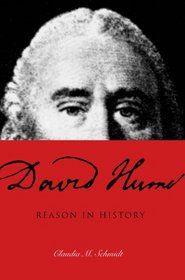
In his seminal Philosophy of David Hume (1941), Norman Kemp Smith called for a study of Hume “in all his manifold activities: as philosopher, as political theorist, as economist, as historian, and as man of letters, ” indicating that “Hume’s philosophy, as the attitude of mind which found for itself these various forms of expression, will then have been presented, adequately and in due perspective, for the first time.” Claudia Schmidt seeks to address this long-standing need in Hume scholarship. Against the charges that Hume holds no consistent philosophical position, offers no constructive account of rationality, and sees no positive relation between philosophy and other areas of inquiry, Schmidt argues for the overall coherence of Hume’s thought as a study of “reason in history.” She develops this interpretation by tracing Hume’s constructive account of human cognition and its historical dimension as a unifying theme across the full range of his writings. Hume, she shows, provides a positive account of the ways in which our concepts, beliefs, emotions, and standards of judgment in different areas of inquiry are shaped by experience, both in the personal history of the individual and in the life of a community. This book is valuable at many levels: for students, as an introduction to Hume’s writings and issues in their interpretation; for Hume specialists, as a unified and intriguing interpretation of his thought; for philosophers generally, as a synthesis of recent developments in Hume scholarship; and for scholars in other disciplines, as a guide to Hume’s contributions to their own fields.
In recent years the concepts of individual autonomy and political liberalism have been the subjects of intense debate, but these discussions have occurred largely within separate academic disciplines. Autonomy and the Challenges to Liberalism contains essays devoted to foundational questions regarding both the notion of the autonomous self and the nature and justification of liberalism. Written by leading figures in moral, legal and political theory, the volume covers inter alia the following topics: the nature of the self and its relation to autonomy, the social dimensions of autonomy and the political dynamics of respect and recognition, and the concept of autonomy underlying the principles of liberalism.
ما از اخلاق چه انتظاری داریم؟ این سوال شاید تاحدودی برای عموم مردم و یا متخصصان این رشته قابل پاسخ باشد؛ اینکه خوب بودن را به ما بیاموزد و در تنظیم روابط فردی م...

جشن کتاب تهران به ایستگاه سی و یکم رسیده است. حال و احوال نشر کتاب خوب نیست و باید فرهنگدوستان را به خرید و هدیه دادن کتاب ترغیب نمود. خانه اخلاقپژوهان جوان ب...

بنیاد کتابهای اخلاق اسلامی عمدتا پالایش جان از آلودگیها و آراستن آن به زیباییها است. اندیشه محوری این قبیل کتابها آن است که انسان فعلی آنی نیست که باید باشد...

-
0 Comments